Good bedroom clothes storage does two jobs at once. It keeps garments easy to see and reach, and it stores them in ways that reduce pressure, stretching, damp and deep creasing. If your wardrobe feels messy, the problem is often not a lack of furniture. It is usually that different types of clothing are being stored the same way when they need different treatment.
The most useful approach is to choose storage around the clothes you actually own. A rail full of jumpers will sag them. Deep drawers full of shirts will hide half your wardrobe. Vacuum bags can save space, but they are not right for everything. Sensible storage for clothes in a bedroom starts with fabric, shape, frequency of wear and the care label, then works outward to rails, shelves, boxes and routines.
Start with what your clothes need
Before buying organisers, sort your clothes into groups that reflect how they behave in storage.
Start with fabric. Natural fibres such as wool, cotton, linen and silk all crease and respond to pressure differently. Wool knitwear can stretch if hung for long periods. Linen creases quickly if crushed into overfilled drawers. Silk can snag on rough baskets or exposed zip teeth. Synthetics such as polyester and elastane blends often bounce back better from folding, but they can still hold sharp creases if packed too tightly for months.
Then look at structure. Tailored jackets, pleated skirts, shirts with collars, dresses with shaped shoulders and trousers with a front crease usually benefit from hanging. Soft T-shirts, leggings, knitwear and denim often do better folded. The more built-in shape a garment has, the more likely it is to need support.
Next, sort by wear frequency. Daily clothes should be the easiest to reach. Occasionwear, bulky winter layers and spare sets of bedding can go higher up, lower down or further back. This sounds obvious, but it is the step people skip when they end up dragging five things out to reach one.
Finally, check care labels before making assumptions. In the UK, care labelling for textile products follows recognised symbols used across Europe, but brands still vary in how specific they are. If a manufacturer says “store folded”, “reshape while damp” or gives fibre-specific warnings, follow that over general storage advice. This matters especially for knitwear, coated fabrics, embellished pieces and garments labelled dry clean only.
A quick first sort often helps:
- Hang category: blazers, coats, shirts, dresses, pleated items, formal trousers
- Fold category: jumpers, cardigans, T-shirts, jeans, joggers, knit dresses
- Drawer category: underwear, socks, vests, sleepwear, gym basics
- Special care category: silk, cashmere, beaded pieces, leather, suede, occasionwear
If you are not sure how a fabric behaves over time, it helps to understand the fibre first. Our guide to modal or cotton for everyday clothes is useful if you are weighing up softness, drape and how garments cope with regular wear and storage.
What should be hung and what should be folded?
As a general rule, hang clothes that crease badly, have tailored structure, or are easier to wear straight from the rail. Fold clothes that can stretch under their own weight or become misshapen on a hanger.
Usually best hung:
- Shirts and blouses
- Blazers and suit jackets
- Trousers with a pressed crease
- Dresses made from woven fabrics
- Skirts, especially pleated or lined styles
- Coats and trench coats
- Jumpsuits that wrinkle easily
Usually best folded:
- Jumpers and cardigans
- T-shirts and long-sleeved tops
- Sweatshirts and hoodies
- Jeans
- Leggings and joggers
- Knit dresses
- Pyjamas and loungewear
Usually best in drawers or smaller compartments:
- Underwear
- Socks and tights
- Bras
- Vests
- Swimwear
- Scarves and thin accessories
There are some important exceptions.
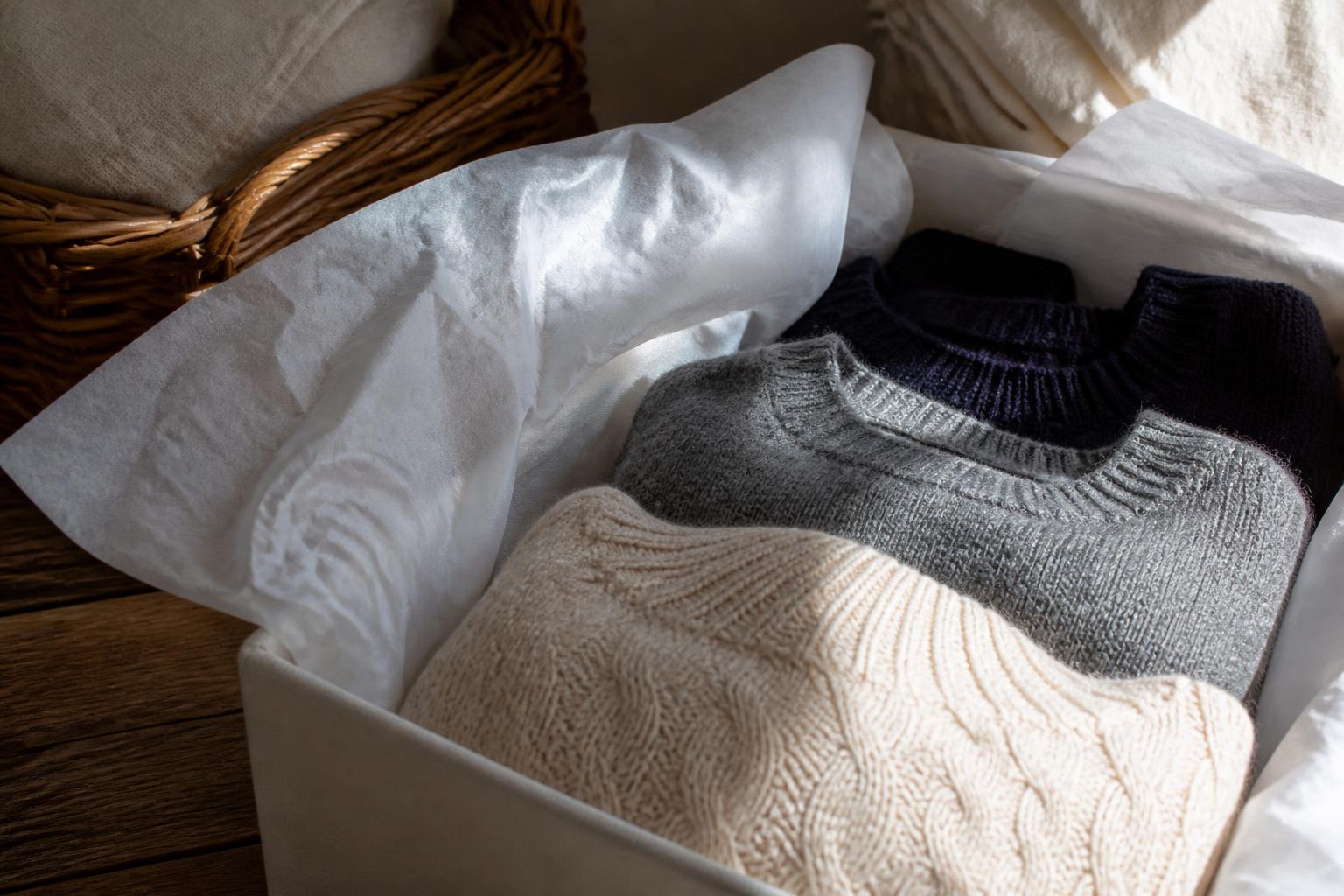
Heavy knitwear should almost always be folded, even if wardrobe space is tight. Hanging pulls at the shoulders and can leave hanger bumps that are difficult to steam out. Fine knits can be folded flat in short stacks, ideally no more than five or six items high, so the bottom pieces are not compressed for months.
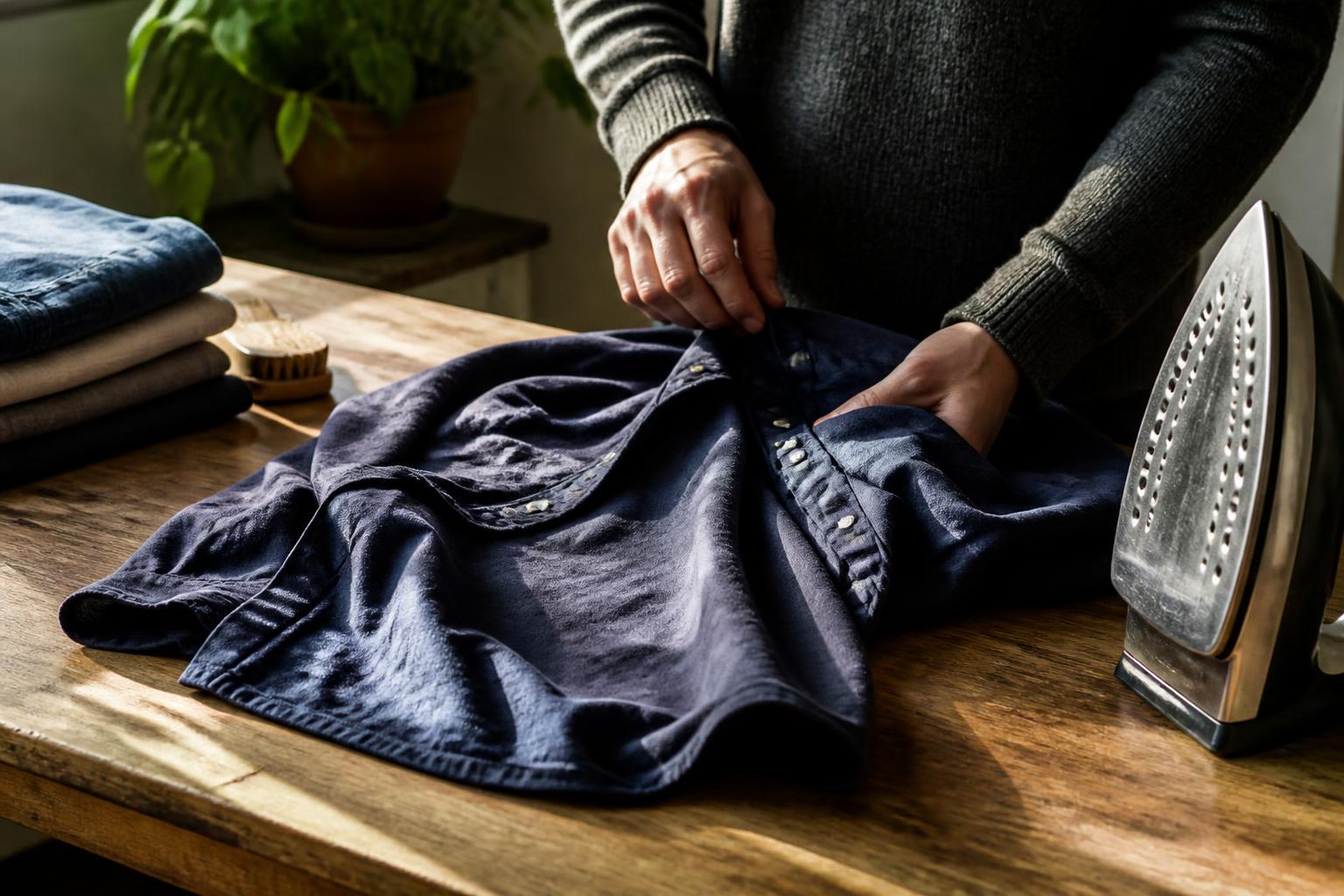
Shirts are usually better hung, but if you wear them casually and do not mind a quick iron or steam, folding can work in a small room. Fold them with buttons fastened at the centre to help them keep shape, and avoid overpacking the shelf.
Trousers can go either way. Formal wool trousers, linen trousers and anything with a sharp crease are better hung. Jeans and casual cotton trousers fold well.
Delicate dresses depend on cut and fabric. Bias-cut silk can stretch on the wrong hanger. Heavy beading can distort a bodice if left hanging unsupported. In those cases, careful folding with acid-free tissue is safer for long storage, though most people will only need that for occasional pieces.
Hangers matter as much as the decision to hang. Thin wire hangers can leave marks and do not support shoulders properly. Padded hangers suit delicate blouses. Wooden or broad-shouldered hangers suit jackets and coats. Slim velvet hangers are a good compromise in smaller wardrobes because they save space and stop straps slipping, but they are less ideal for very heavy outerwear.
If a care label conflicts with the general rule, the label wins. That is particularly true for garments with special finishes, garment dye, bonded fabrics or trims. If you own pieces with unusual wash and colour behaviour, our guide to what garment-dyed clothes mean for care and colour can help you avoid storage mistakes that lead to fading or patchy wear.
How to organise a small bedroom without buying loads of storage?
A small bedroom needs better use of space, not endless containers. Too many boxes create the illusion of organisation while making clothes harder to find and easier to forget.
Start by reducing visual and physical crowding in the wardrobe. If clothes are packed tightly on the rail, they crease more and you cannot see what you own. Aim for enough room to slide hangers along without dragging. If that means moving some folded items off the rail and onto a shelf, do that first before buying anything.
Use your wardrobe in zones.
Top shelf: Store less-used items here, such as occasionwear in breathable garment bags, spare knitwear, or out-of-season accessories. Avoid shoving everyday T-shirts onto a high shelf where they will become untidy within days.
Eye level and chest height: This is prime space. Keep your most worn clothes here, such as work shirts, daily trousers, favourite dresses or current-season layers.
Lower section: Use it for folded jeans, knitwear, storage boxes for accessories, or a laundry basket if the wardrobe base is deep enough and ventilation is good.
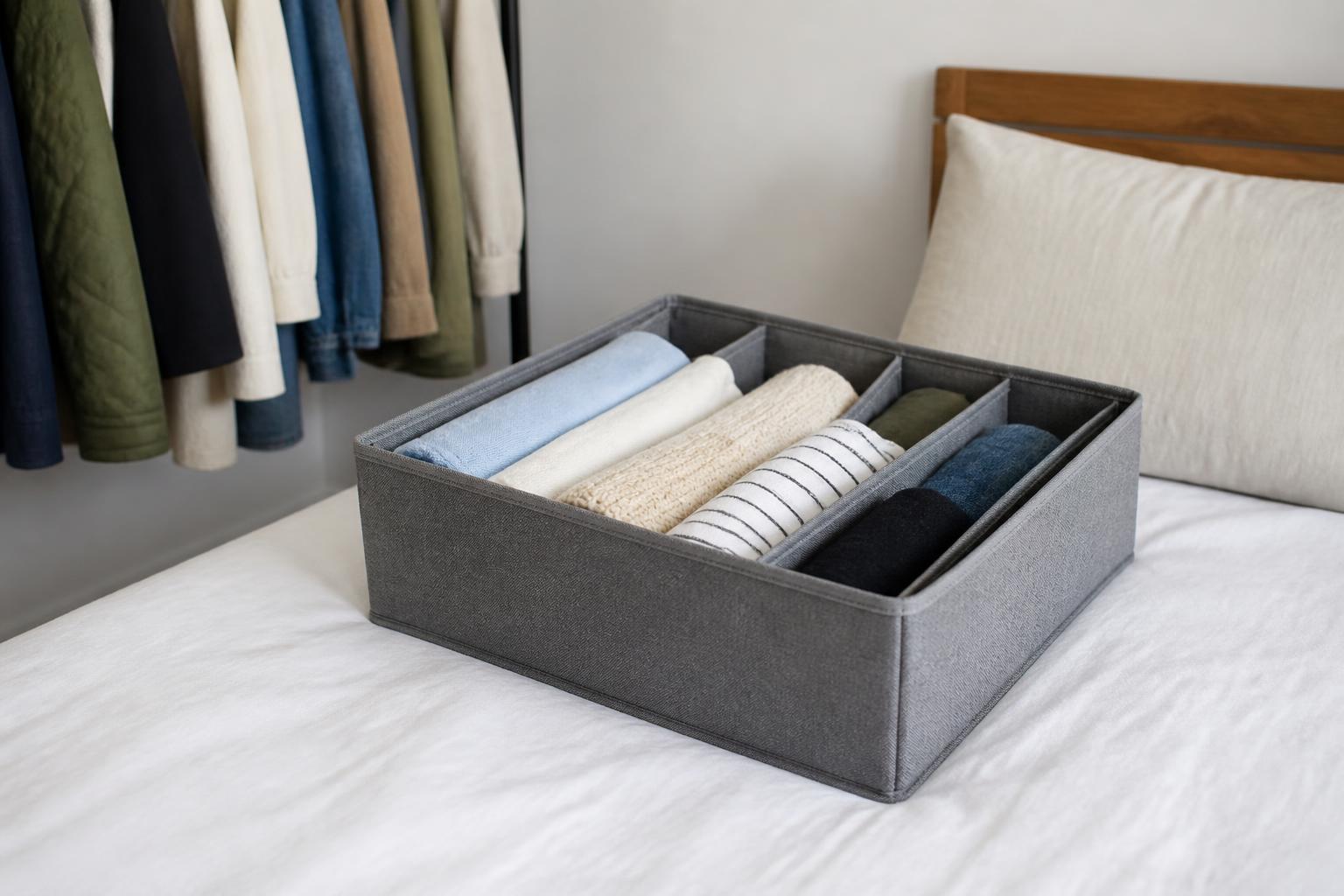
Drawers: Assign one type of item per drawer where possible. If that is not realistic, divide by function. For example, one drawer for underwear and socks, one for gym and sleepwear, one for T-shirts. Simple cardboard or fabric dividers are enough. You do not need fitted acrylic inserts unless they solve a genuine problem.
Under the bed: This is useful space, but only if clothes are protected from dust and can still breathe. Flat zip cases, low lidded boxes or wheeled under-bed containers work well for off-season items, spare knitwear and less-used denim. Avoid stuffing soft bags so full that fabrics are crushed against the bed slats. We have a full guide to under-bed clothes storage that keeps garments wearable if you want to use that space without creating creases and dust marks.
Over-door and wall hooks: These are best for tomorrow’s outfit, a dressing gown, or a small number of regularly worn pieces. They are not a substitute for a wardrobe. Too many clothes on hooks end up creased, hidden and overloaded at the shoulders.
A few low-cost ways to improve storage without buying major furniture:
- Swap bulky mismatched hangers for one slim, consistent style
- Add one extra shelf inside a wardrobe if there is unused vertical space
- Use shallow boxes on high shelves, labelled by category
- Fold vertically in drawers so each item is visible
- Store handbags stuffed with clean paper so they keep shape and can hold scarves inside
- Keep a small mend-and-decide basket for items that should not go back into the main wardrobe yet
One of the biggest causes of clutter is keeping awkward clothes in circulation. If something needs a button sewn on, a stain treated or a hem fixed, it should not sit mixed in with ready-to-wear items. A tiny repair kit near the wardrobe is often more useful than another storage box. Our guide to building a fabric care kit that actually gets clothes worn again covers the basics that stop minor issues turning into wardrobe backlog.
How do you store out-of-season clothes safely?
Seasonal rotation works best when done cleanly and deliberately. Putting away clothes straight after wear, especially if they carry body oils, deodorant marks or food traces, increases the risk of set-in stains, stale smells and pest problems.
Wash or dry clean items before storage if the care label allows it. Make sure they are fully dry before packing. Even slight damp can lead to mildew, particularly in UK homes where bedrooms may have condensation or limited airflow in colder months. If you have ever opened a storage box and found that musty smell, tackle the cause before storing more. Our advice on how to stop washing coming out with a damp smell is useful here, because clothes that go into storage less than fully fresh rarely improve with time.
Choose storage by fabric and duration.
For a few months:
- Fold clean items into breathable fabric bags, lidded boxes or under-bed cases
- Use garment bags for coats, suits and dresses that need hanging
- Avoid plastic dry cleaning covers for long-term storage, as they can trap moisture
For longer storage:
- Use sturdy lidded boxes in a dry, stable room
- Add acid-free tissue between delicate folds if a garment creases or abrades easily
- Keep heavier items at the bottom, lighter and more delicate pieces above
Vacuum bags are tempting because they save space, but use them carefully. They are generally fine for durable items such as puffer coats, spare bedding or robust synthetics if you need short-term compression. They are less suitable for wool, structured tailoring, silk, leather or anything you do not want deeply creased. Compression can flatten fibres and stress seams.
To reduce damp risk, avoid storing clothes against external walls if that part of the room gets cold or shows signs of condensation. Do not put boxes directly on a floor that feels damp. In older UK homes, wardrobes on outside walls can be noticeably colder than the rest of the room, which matters more in winter.
To reduce pest risk:
- Store only clean clothes
- Shake out woollens before packing
- Check storage areas every month or two
- Keep dust levels down in wardrobes and under the bed
- Be cautious with scented sachets and oils, which can transfer to fabric or irritate skin
Cedar blocks and lavender sachets are commonly used, but they are not magic fixes. They can help freshen a storage area, yet cleanliness and dryness matter far more than fragrance. If you suspect moth activity, isolate affected items and inspect seams, underarms and folds rather than simply adding more scent.
When the season changes, rotate with a one-in, one-out mindset. Bring current-season clothes forward and move the rest back only after checking condition, fit and whether you actually wore them last year.
Set up a wardrobe that is easier to maintain
The best storage system is the one you can reset in ten minutes, not the one that looks perfect for a weekend and then collapses on Tuesday.
Start with laundry return. Decide where each category goes and make it easy to put back. If folded clothes belong in drawers, leave enough room to replace them without refolding the whole stack. If shirts are hung, keep empty hangers available so clean washing does not end up on a chair.
Create a simple triage point. We like three categories:
- Ready to wear
- Needs repair or stain treatment
- Not wearing, review later
This stops half-usable clothes drifting around the bedroom. If an item needs attention, deal with it promptly or contain it neatly. A small basket or cloth bag is enough. What matters is that it does not return to the main wardrobe until it is wearable.
Declutter by use, not fantasy. Instead of asking whether you might wear something one day, ask:
- Did I wear this in the last year?
- If not, was there a specific reason?
- Would I notice if it disappeared tomorrow?
That approach is kinder and more practical than forcing a dramatic clear-out. It also suits second-hand shopping and wardrobe repair better, because the goal is not a minimalist aesthetic. It is a wardrobe that works.
Keep everyday clothes easiest to reach. If you wear the same six jumpers, four pairs of trousers and a handful of tops on repeat, let them have the best space. Store occasional items slightly less conveniently. This is one of the simplest ways to improve storage for clothes in a bedroom without buying anything at all.
Review the system every few months, especially at season change. Look for warning signs:
- clothes stuffed into gaps
- hangers doubled up
- clean laundry left waiting for days
- a chair becoming a second wardrobe
- items repeatedly overlooked because they are buried
If that is happening, the answer is usually less density, clearer categories and a small amount of maintenance, not a shopping trip.
A workable wardrobe should support real life. Some weeks you will keep up with folding. Some weeks you will not. The aim is not showroom storage. It is a bedroom where clothes stay in decent condition, mornings are simpler, and you can see what you already own well enough to wear it properly.

Questions about this article or a correction to suggest? Get in touch. Read more about our editorial approach.