Under-bed clothes storage can work very well, but only if it protects fabric from the two things that do most of the damage in UK homes, moisture and pressure. If clothes go under the bed slightly dirty, not fully dry, or packed too tightly into airtight plastic, they often come back smelling stale, creased beyond an easy shake-out, or marked by mildew. If they go in clean, dry, well sorted and lightly packed, they can stay perfectly wearable for months.
The main trick is to treat under-bed space as a short to medium-term wardrobe extension, not a dumping ground. It is best for off-season items, occasional wear and spare bedding-sized knitwear, not for anything delicate, valuable, frequently worn or prone to crushing. A little planning at the start saves a lot of rewashing, re-ironing and regret later on.
When under-bed storage works well
Under the bed is useful when wardrobe space is tight and the clothes you need every week cannot all hang properly. In many UK homes, especially flats, box rooms and older houses with limited built-in storage, it gives us one of the few large horizontal spaces available. It is particularly helpful for rotating seasons, storing jumpers in summer, linen shirts in winter, holiday clothes, occasionwear you wear a few times a year, and maternity or size-fluctuation pieces you are not ready to pass on.
It also works well when the bed frame allows decent airflow and easy access. A raised divan, slatted frame or bed with enough clearance for shallow boxes is usually better than a low platform bed where items scrape the floor every time they are pulled out. If you can reach the storage without moving furniture and without unpacking half the room, you are far more likely to check it and use it properly.
The wardrobe problems it solves are usually practical ones. It frees up rail space for daily dressing. It helps keep categories together. It stops winter woollens being crushed at the back of a packed cupboard in July. It can also help households share limited storage more fairly, especially where one person has more bulky items such as knitwear, uniforms or sports kit.
It is a poor choice when the room is prone to damp, condensation or poor ventilation. If the bedroom regularly feels cold and clammy, if the windows stream with condensation in winter, or if anything stored low to the ground picks up a musty smell, under-bed storage is risky. It is also poor for garments that need to hang to keep their shape, such as structured blazers, tailored coats, pleated dresses and some occasionwear. If a piece is expensive to clean, difficult to replace, or emotionally important, we would not put it under the bed unless the conditions are genuinely good.
If you are trying to make a small home work harder overall, our guide to seasonal wardrobe storage that works in a small home covers when to store, when to keep things in circulation, and how to avoid simply hiding clutter.
Which clothes can go under the bed and which should not
The best candidates are clean, dry clothes that fold well and do not rely on hanging structure. Think knitwear, T-shirts, casual cotton shirts, denim, leggings, pyjamas, scarves and out-of-season basics. Soft garments made from cotton, linen, many wool knits and sturdy blends usually cope well when folded with care.
Fibre matters. Natural fibres can breathe, but they also react to damp. Wool and cashmere can store well under the bed if they are fully clean and protected from moths, but they should never be compressed hard into overfilled bags. Cotton is generally forgiving, though it can emerge heavily creased if folded too tightly. Linen stores well if you accept some creasing, but sharp fold lines can become stubborn over time. Synthetics are less likely to absorb moisture from the air, but they can trap odour and may not benefit from sealed storage if they were put away after wear without a proper wash.
Structure matters just as much as fibre. Unstructured cardigans, jersey dresses and folded knitwear are suitable. Tailored jackets, coats with canvassed fronts, trousers with a pressed crease, and garments with shoulder padding are not ideal. Sequins, beads, fine lace, wired bras and anything with embellishment can snag on zips, rough seams or storage lids. Leather and suede should generally stay out from under the bed unless the room conditions are stable and you are using breathable storage, because both materials dislike trapped moisture.
Frequency of wear is a useful sorting rule. If you wear it weekly, it should probably not live under the bed. The point is to create breathing space in your main wardrobe, not to make everyday dressing awkward. Clothing you might need at short notice, such as a black jumper for work, school PE kit backups, or a rain layer during a British spring, should stay accessible elsewhere.
Always check the care label before deciding. If a garment is labelled dry clean only, reshape dry, store flat, or keep away from light and moisture, take that seriously. In the UK, care labels follow widely recognised textile labelling standards, but practical wording can vary by brand. If you are ever unsure what the symbols mean, our guide to how to read clothes care symbols without ruining favourites is a useful refresher before you pack anything away.
How to prepare clothes before storing them
Every item should be clean before storage, even if it looks fine. Invisible marks are often the ones that set hardest over time. Body oils, deodorant residue, perfume, food splashes and skin cells all attract odour and pests. Moths are interested in soiled natural fibres far more than freshly washed ones.
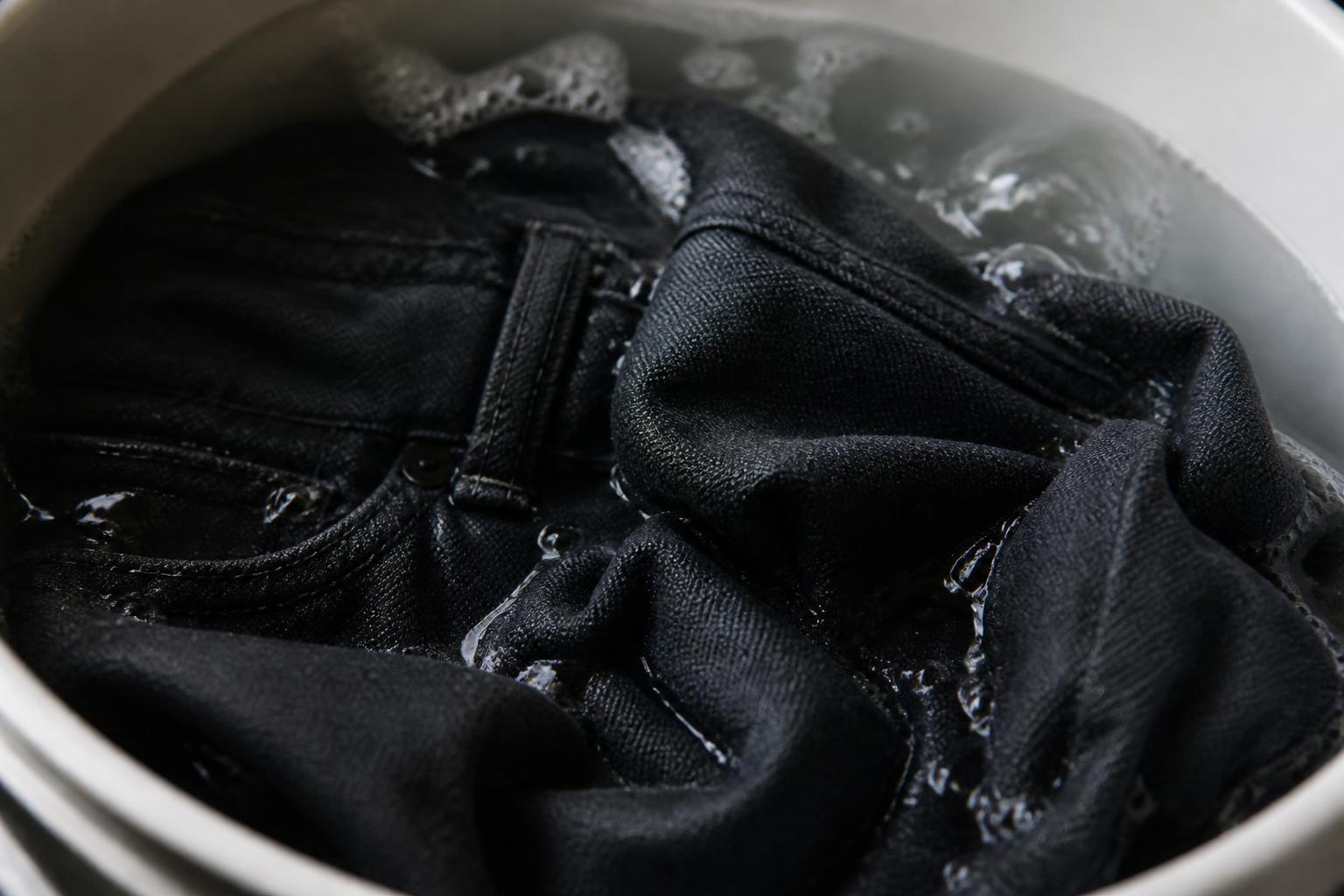
Drying matters just as much as washing. Clothes must be fully dry all the way through, not just touch dry on the surface. Waistbands, pocket corners, thick seams and knitted cuffs often hold moisture longer than expected. In the UK, where indoor drying is common, it is worth giving laundry extra time before folding it away. If you use a heated airer or dry clothes near a window, do not assume the centre of a folded jumper is dry because the outside feels warm.
Do quick repair checks before storing. Sew on loose buttons. Clip stray threads rather than pulling them. Mend small holes in knitwear before they widen. Replace broken zip pulls if needed. It is much easier to deal with minor repairs now than to rediscover damaged clothes six months later, when the issue has worsened and you need the item straight away.
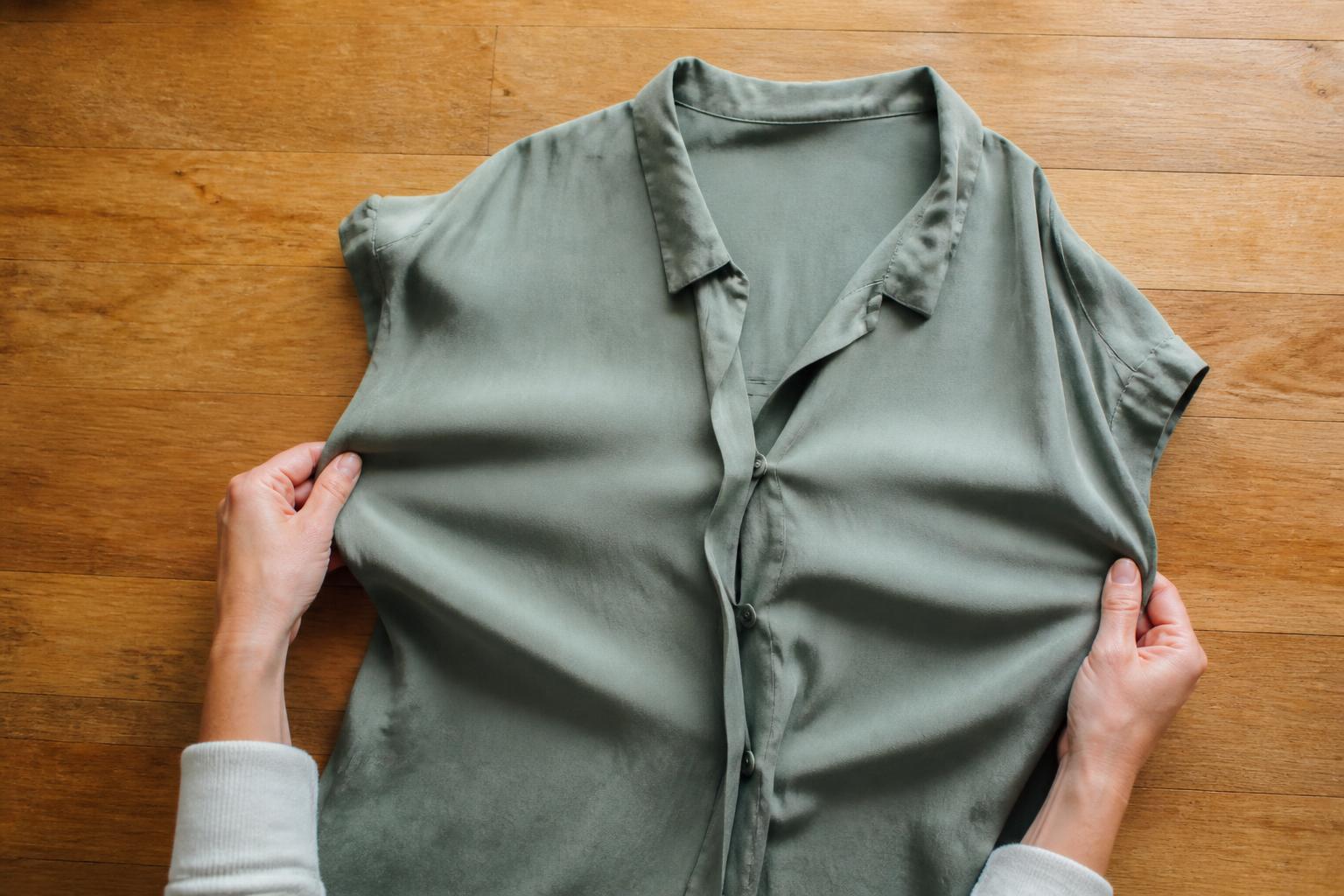
Then check the fold and shape. Brush off lint and surface dust. Empty pockets. Fasten zips and a couple of buttons on shirts or cardigans so they keep their line without pulling. For knitwear, fold sleeves in neatly and avoid hanging before storage, as this can stretch the shoulders. For trousers, fold along existing creases rather than making new sharp ones where possible.
This is also the moment to respect care-label limits. If a garment says cool iron only, do not blast it with heat to make it look tidier before packing. If it says dry flat, make sure it has actually been dried flat after washing. We cover these fabric-by-fabric considerations in fabric care that keeps clothes wearable for longer, especially where storage and laundering affect each other.
How to choose under-bed storage without trapping moisture
The best under-bed clothes storage protects from dust while still allowing some airflow. In most UK bedrooms, fully airtight storage is not the safest default unless the room conditions are consistently dry and the garments inside are completely clean and moisture-free. Trapped humidity is what causes that stale smell that sends everything back to the wash basket.
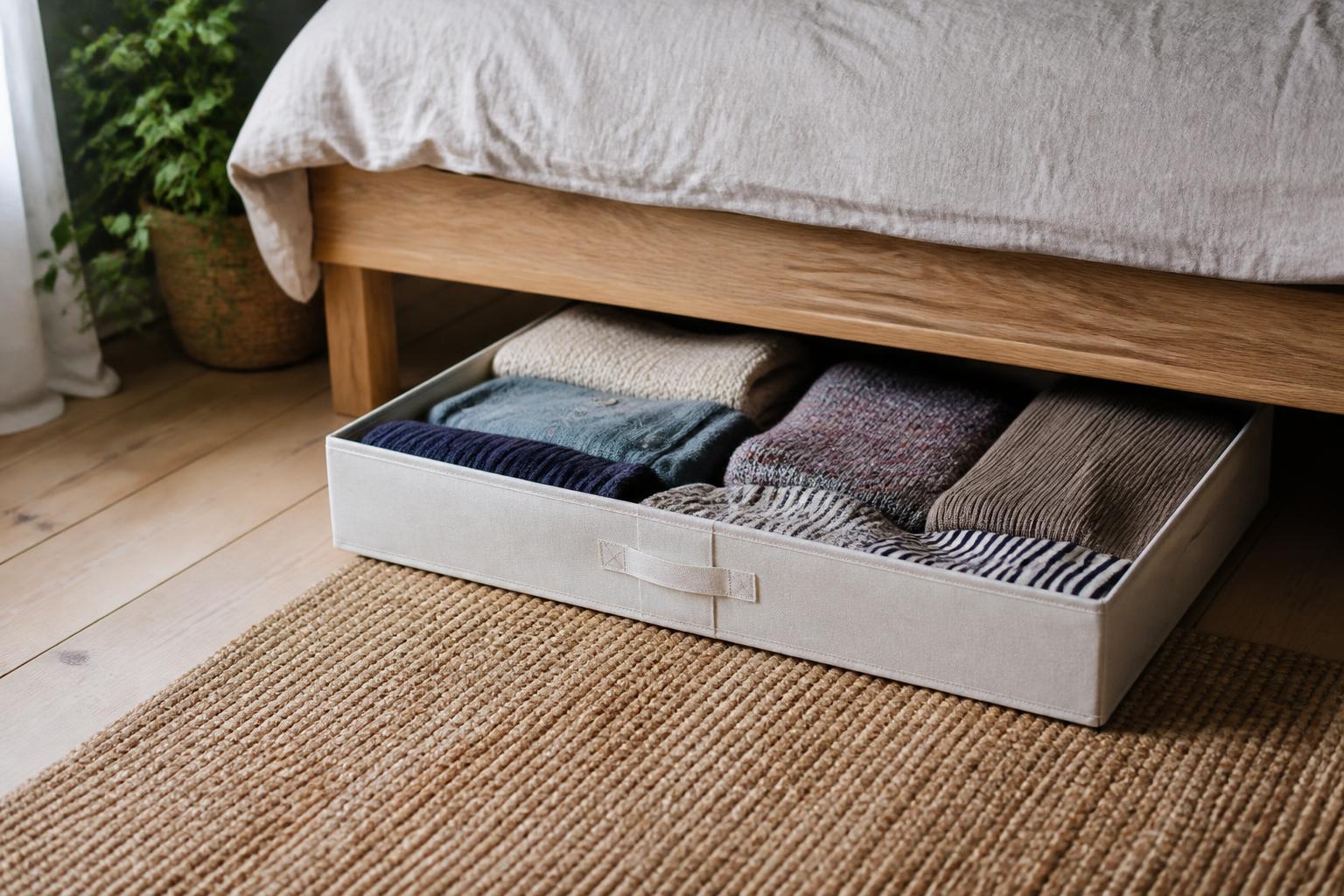
Fabric under-bed bags with zip tops can work well if the material is breathable and reasonably sturdy. They are light, easy to slide out and often less likely to knock against bed slats than rigid boxes. The downside is that cheaper versions can collapse, snag, or let in dust through weak seams and zip gaps.
Rigid boxes are better for shape and stacking, though stacking under a bed is often limited by height. Look for smooth interiors, secure but not vacuum-tight lids, and enough depth for the garments you actually own. Shallow boxes are usually more useful than deep ones because they reduce the temptation to pile clothes into a compressed heap. If you choose plastic, avoid over-sealing damp-prone fabrics. A box that closes well against dust but is opened regularly for checks is often safer than one clipped shut and forgotten.
Cardboard storage boxes are usually the weakest option under beds in UK homes. They can absorb moisture from the floor-level air, soften over time, and become a harbour for silverfish if conditions are poor. They are acceptable for very dry rooms and short-term use, but not our first choice.
Vacuum bags are a special case. They save space, but they are hard on structure. We would reserve them for robust, bulky items such as puffer coats or spare duvets, not everyday clothing, wool knitwear, tailored pieces or anything with elastic that you want to last. Compression can leave fibres flattened and creases very pronounced.
Whatever you choose, measure the clearance under the bed properly, including any centre supports or drawers, before buying storage. Leave a little spare height so containers slide easily and air can move around them. If the floor is cold or the room has a history of damp, raising boxes slightly on low-profile runners or using a bed frame with better clearance can help.
How to pack clothes so they come out wearable
Pack by type and season, not by whatever happens to be nearest. One box for summer tops, one for winter knitwear, one for occasionwear accessories, is far easier to manage than a mixed box of random maybes. The more specific the grouping, the less rummaging you do, and the less likely everything is to come out crushed.
Fold loosely rather than tightly. We want clothes supported, not compacted. For jumpers and cardigans, fold them flat with sleeves tucked in, then stack only a few high. Put heavier knits at the bottom and lighter ones above. For T-shirts and casual tops, a file-fold arrangement can work in shallow boxes because it lets you see each item without disturbing the rest. For trousers and jeans, fold once or twice depending on the box depth, but avoid forcing thick denim into a too-shallow container where it bows the lid.
Separate delicate from rough fabrics. Denim zips, hooks, sequins and bra fastenings can all catch on softer items. If you are storing mixed categories, place delicate pieces in cotton pillowcases or lightweight garment bags within the main container. Avoid dry-cleaning plastic covers, which can trap moisture and yellow over time.
Do not overfill. This is the main reason clothes come out unwearable. If you have to press down hard to close the lid or zip, the container is too full. Overpacking creates hard crease lines, strains fibres and makes it impossible to remove one item without disturbing everything else.
Labelling matters more than people think. A simple label on the end or top, such as “summer dresses, size 12” or “winter scarves and gloves”, stops boxes becoming mystery storage. If several people in the household share the space, add names. We also find it useful to put a date on the label if the clothes are likely to stay stored for more than one season.
Keep a simple note of what is under the bed and what is not. This can be a phone note, a list inside the wardrobe door, or just labels you can read at a glance. Forgotten items are often the ones that end up unworn for years, then no longer suit your life when they finally resurface.
How often to check stored clothes
In most UK homes, checking every two to three months is sensible, even if you are storing clothes for a full season. That is frequent enough to catch damp, pests and stale air before damage sets in, but not so frequent that the system becomes a chore. In autumn and winter, when condensation is more common, monthly checks are better if your bedroom tends to run cold.
When you check, do not just glance at the lid. Open the container. Smell the air inside. Lift the top layer and look at folds, corners and the base. Signs to watch for are mustiness, any grey or black spotting, insect casings, fine dust that looks different from ordinary lint, and sharp fold lines becoming stress points. With wool and cashmere, look for tiny irregular holes or areas that seem thinned out.
If something smells stale but shows no signs of damp, airing it for a day near an open window, away from direct strong sun, may be enough before repacking. If there is any sign of mildew, wash or dry clean according to the care label before the item goes back into storage. Do not simply add a scented sachet and hope for the best. Fragrance covers a problem, it does not solve it.
It is also worth checking the room itself. If clothes under the bed keep feeling slightly damp, the problem may be the bedroom environment rather than the storage method. In UK homes that means looking at ventilation, condensation on windows, furniture pushed tightly against cold external walls, and whether laundry is being dried in the same room without enough airflow. If the room conditions are poor, no storage box will fully compensate.
A final useful habit is to rotate stored clothes back into use before they have been packed away too long. When the seasons change, bring everything out, reassess what still fits your life, and only put back what genuinely needs another round of storage. Under-bed space works best when it supports an active wardrobe, not when it becomes a long-term archive.
Done well, under-bed clothes storage gives us extra capacity without asking us to buy a whole new furniture system. The clothes stay cleaner, easier to find and more wearable because we have packed them with their next use in mind. That is the standard we aim for with every part of wardrobe care, practical enough for real homes, and good enough to keep everyday clothes in service for longer.

Questions about this article or a correction to suggest? Get in touch. Read more about our editorial approach.