If you have ever wondered what garment dyed means, the short answer is this: the item is made first, then dyed as a finished garment. A T-shirt, sweatshirt, pair of trousers or overshirt is cut and sewn in a pale or undyed fabric, and only after that goes into the dye bath.
That is different from the more common route, where the fabric is dyed first and then turned into clothes. The result is often a softer, washed-in look with slightly uneven highs and lows of colour, especially around seams. It can also affect how you wash, store and buy the item, particularly if you want your wardrobe to stay practical rather than precious.
What garment dyed means
Garment dyeing is exactly what it sounds like. We take a finished piece of clothing and dye the whole thing after construction. That means the body fabric, stitching, pocket bags, trims and seam edges all go through the finishing process together.
With fabric dyeing, sometimes called piece dyeing, the cloth is dyed on the roll before it is cut. A factory then uses that pre-dyed fabric to make the garment. This usually gives a more even, consistent result because the colour is already set across the fabric before any sewing happens.
That difference in timing matters. When a garment is dyed after sewing, the colour reaches the finished item in a slightly less uniform way. Areas with more layers, such as seams, plackets, hems and pocket edges, can absorb dye differently from flatter sections. That is why garment-dyed clothes often have a softer, lived-in appearance from day one.
This method is common in casual clothing. Think washed tees, sweatshirts, cotton trousers, overshirts and some linen pieces. It is less often used where exact colour matching is critical across large production runs, or where the fabric and trims react very differently to dye.
You may also see the term used a bit loosely in product descriptions. Sometimes brands mean a true post-construction dye process. Sometimes they are really describing a washed or overdyed finish that aims for a similar look. If the exact method matters to you, it is worth reading beyond the headline claim.
How garment-dyed clothes usually look and feel
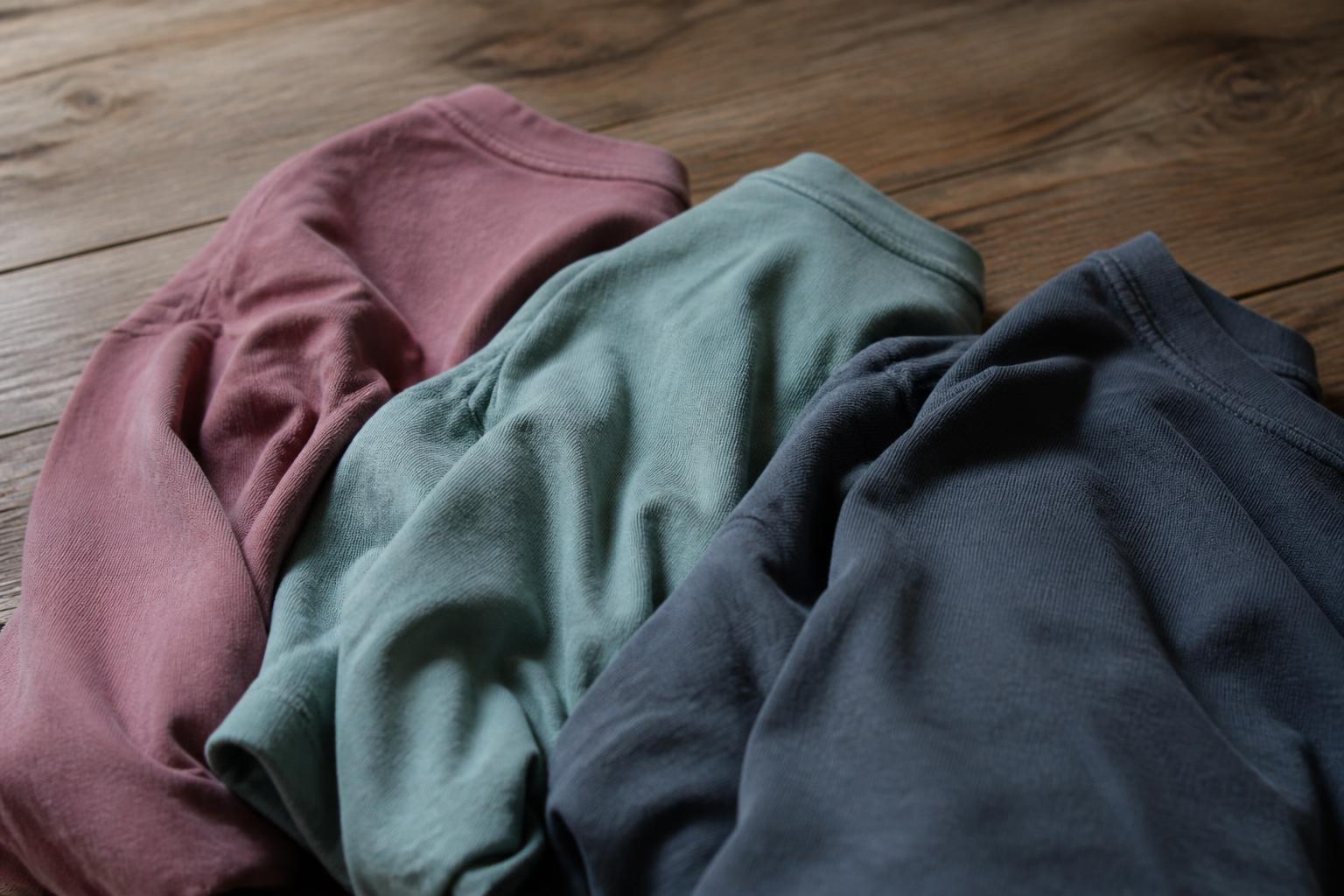
The main reason people like garment-dyed clothing is the finish. It tends to look less flat and less stark than a standard solid dye. Colour can appear slightly chalky, sun-faded, dusty or broken in, even when the item is brand new.
Seams are often the easiest clue. Because seam allowances fold and stack fabric, they can catch dye differently. You may notice darker seam lines, lighter edges, or a faint halo effect around stitching. On some garments this is subtle. On others, especially heavier cottons, it is part of the design.
The handle often changes too. Garment-dyed pieces are frequently washed after dyeing, which can leave them feeling softer and less crisp than a new item dyed earlier in production. A cotton tee may feel less stiff. A pair of canvas trousers may feel less raw and more comfortable straight away.
Variation is normal. Two supposedly identical garment-dyed pieces can differ slightly in depth of colour, especially across different production batches. That does not automatically mean poor quality. It is often part of the finish. If you like neat, uniform colour, this may not be for you. If you prefer clothes that do not look pristine or formal, it can be a useful middle ground.
Some fibres take this treatment better than others. Cotton and linen are common because they accept dye well and suit a washed look. Blended fabrics can be trickier. If the sewing thread, zip tape, drawcord or elastane content reacts differently, you may see contrast effects. Sometimes that is intentional. Sometimes it just means the trims stay lighter or darker than the main fabric.
This is also why online shopping can be a little more uncertain with garment-dyed items. Product photos may show one version of a colour that arrives a touch greener, browner, duskier or more faded in real life. If you need a precise navy to match existing workwear, or a true black that reads smart rather than washed, check the retailer’s wording carefully and look for customer photos where possible.
Does garment dyed affect washing and colour loss?
It can, yes, but not in one simple way.
Garment-dyed clothes are often more likely to shed a bit of excess dye early on, especially in deep shades such as navy, olive, rust, charcoal, red and black. That does not mean they are faulty. It means you should be more cautious for the first few washes. Wash dark colours separately or with similar shades, avoid overfilling the drum, and do not leave damp clothes sitting in a pile.
Fading is also part of the deal more often than with a flatter, more stable fabric dye. Many people buy garment-dyed clothing because it fades attractively. The problem only starts if you wanted the original shade to stay exact. If you buy a washed black sweatshirt, expect it to keep shifting with wear, laundering and sunlight.
Shrinkage risk depends on the fibre, the construction and whether the item was pre-washed or pre-shrunk after dyeing. Garment dyeing itself does not guarantee dramatic shrinkage, but it does mean you should pay attention to the care label from the start. In the UK, clothing sold to consumers must carry fibre composition labelling, and care instructions are widely provided even though the familiar care symbols are not, in themselves, a blanket legal requirement in the same way for every product category. In practice, the label is still your best guide because it reflects what the maker says that specific item can handle.
If the label says wash at 30°C, do that. If it says wash separately, turn inside out, or reshape while damp, take it seriously. Garment-dyed items often reward gentler washing. Cooler water, a colour detergent rather than a harsh heavy-duty one, and air drying away from direct sun will usually help the finish last longer. Tumble drying is where many soft, washed garments lose shape fastest.
For second-hand buys, ask or check whether the item has already gone through its first few washes. A garment-dyed cotton top that has been worn and laundered several times may actually be easier to live with than a brand new one, because a lot of the initial excess dye and movement has already happened.
If you are not confident about symbols, our guide to reading clothes care symbols clearly will save guesswork. And if you want the basics that make most everyday clothes last longer, we cover them in fabric care that keeps clothes wearable for longer.
A few practical points help with colour loss:
- Wash inside out to reduce surface abrasion.
- Use a shorter, cooler cycle where the label allows.
- Avoid optical brighteners on dark shades.
- Dry away from strong direct sunlight.
- Do not spot-treat aggressively without testing an inside area first.
If an item continues to bleed heavily after several careful washes, that is less normal. At that point, it may be a finishing problem rather than simply the character of garment dyeing.
Is garment dyed better quality?
Not necessarily. Garment dyeing tells you more about appearance and finish than about build quality.
A garment-dyed sweatshirt can be brilliantly made, with dense cotton, stable ribbing, tidy seams and good recovery. It can also be flimsy, thin and badly sewn. The dye process does not guarantee either outcome. It is one piece of information, not a verdict.
What garment dyeing can suggest is a certain design intention. It often points to a softer, more casual, less formal look. It may also suggest the maker wanted depth of colour, seam character and a broken-in feel. None of that tells you whether the elbows will bag out, whether the collar will twist, or whether the knees will go shiny after a season.
To judge quality, look at the basics:
- Fabric weight and fibre content.
- Seam neatness and whether stitching is secure.
- Whether hems sit flat.
- Whether rib cuffs recover after stretching.
- Whether the garment keeps its shape on a hanger and on the body.
- How the care instructions match the reality of your life.
For example, a garment-dyed linen shirt may look lovely, but if it creases heavily, loses buttons and needs ironing after every wash, it may not suit an everyday wardrobe. A simpler cotton overshirt with a similar washed finish might earn its keep far better. We always come back to use, not just surface appeal. If you are trying to buy fewer, better things, it helps to work out what your clothes really cost to wear, rather than assuming a special finish makes an item better value.
There is also a difference between durability and how wear shows up. Garment-dyed clothes can age in a way people find appealing. Fading at seams, elbows and pocket edges may look intentional rather than shabby. That does not mean the garment is lasting longer. It means the visual change may be easier to accept.
What to check before buying new or second-hand
When you are buying new, start with the product description but do not stop there. “Garment dyed” on its own is not enough to tell you how the item will behave.
Check the fibre content first. A 100 per cent cotton tee or sweatshirt is usually straightforward. Linen and cotton-linen blends can look excellent but may crease and soften quickly. Blends with polyester or elastane may keep shape better, but the colour can take differently across components.
Then look for care wording. Does the brand mention washing separately, colour transfer, or shade variation? Those are useful signs that the description is honest. If there is no mention of likely variation at all, but the photos clearly show a washed, uneven finish, assume some inconsistency is part of the product.
For new clothes, it helps to ask yourself three practical questions:
- Do we want this colour to stay crisp and exact, or would gentle fading be fine?
- Will this item sit next to pale clothes, upholstery or bags where dye transfer matters?
- Are we willing to follow the care label properly, especially for the first few washes?
For second-hand shopping, inspect with a different eye. Some fading and seam contrast are normal in garment-dyed clothes, so the trick is telling normal ageing from hard wear.
Check these areas closely:
- Collar edge and back neck for sweat fade or roughness.
- Underarms for discolouration or stiffness.
- Cuffs, hems and pocket edges for thinning.
- Seat and knees on trousers for shine or fabric loss.
- Side seams for twisting, which can suggest shrinkage or poor construction.
- Care label, if still present, for washing guidance and fibre content.
A good second-hand garment-dyed piece often looks a little softened overall but still feels sound in the fabric. A tired one may have gone patchy in a way that looks accidental rather than designed, or the surface may feel dry and abraded.
It is also worth checking whether the colour finish works with the rest of your wardrobe. Garment-dyed tones can be lovely on their own but awkward in practice. A washed olive may clash with your usual navy. A faded black may not look right with smarter trousers or shoes. A dusty pink sweatshirt may be easy to wear at home but hard to layer for work or travel. If an item is only useful with one outfit, it needs to be very good to justify the space.
For storage, treat dark garment-dyed pieces with the same common sense you would use for denim or saturated cotton. Make sure they are fully dry before putting them away, do not press them into contact with pale items if they are still very new, and keep them out of prolonged direct sunlight if they live on open rails. If wardrobe space is tight, our advice on seasonal wardrobe storage in a small home helps prevent accidental fading and fabric stress.
The useful way to think about garment dyeing is this: it is a finish, not a promise. It can give clothes softness, depth and a worn-in look that suits everyday dressing well. It can also mean a bit more colour movement, a bit more variation, and a greater need to read the label before throwing everything in together.
Once you know what garment dyed means, it becomes much easier to decide whether you actually want it. If you like relaxed colour, visible character and clothes that do not mind looking lived in, it can be a very good fit. If you want strict uniformity, sharp colour matching and minimal change over time, you may be happier with fabric-dyed basics instead. The best choice is the one that suits how you really wash, wear and repeat your clothes.

Questions about this article or a correction to suggest? Get in touch. Read more about our editorial approach.