If you need to put clothes away for a few weeks or a few months, the safest approach is simple. Store only clean, fully dry items, choose the right method for each garment, use containers that protect against dust and damp without crushing the fabric, and keep everything in the most stable part of the house.
Most damage during temporary clothes storage does not come from the storage period itself. It comes from putting things away slightly dirty, slightly damp, tightly packed, or in places that get cold, humid or hot. A little preparation saves a lot of rewashing, reshaping and regret later.
What temporary clothes storage actually means
Temporary clothes storage usually means clothing is being put away with the clear intention of using it again fairly soon. In UK homes, that often means one season to the next, a house move, decorating, making space for a new baby, clearing a spare room, storing occasionwear between events, or packing away maternity, school or work clothes that are not needed right now.
That is different from long-term storage, where clothes may sit untouched for many months or years. The shorter the storage period, the more people tend to rush it. That is often when problems start.
The main risks people are trying to avoid are predictable:
- mildew or a stale, damp smell
- yellowing or set-in stains that were not obvious at the time
- moth or pest damage
- deep creasing
- stretched shoulders or necklines
- colour transfer between garments
- dust and general household grime
- forgetting what is packed where
In the UK, moisture is usually the biggest issue. A home can feel dry enough day to day while still having cupboards, under-bed spaces or outside walls that hold enough humidity to affect fabric. Lofts and garages are especially risky because temperatures swing so much through the year.
Temporary storage also tends to involve everyday clothes rather than museum pieces. That matters, because the best method is not the most elaborate one. It is the one you will actually do properly. A clean T-shirt folded into a labelled box in a dry spare room is far safer than a silk blouse flung on a wire hanger in a damp wardrobe because you ran out of time.
What to do before anything goes into storage
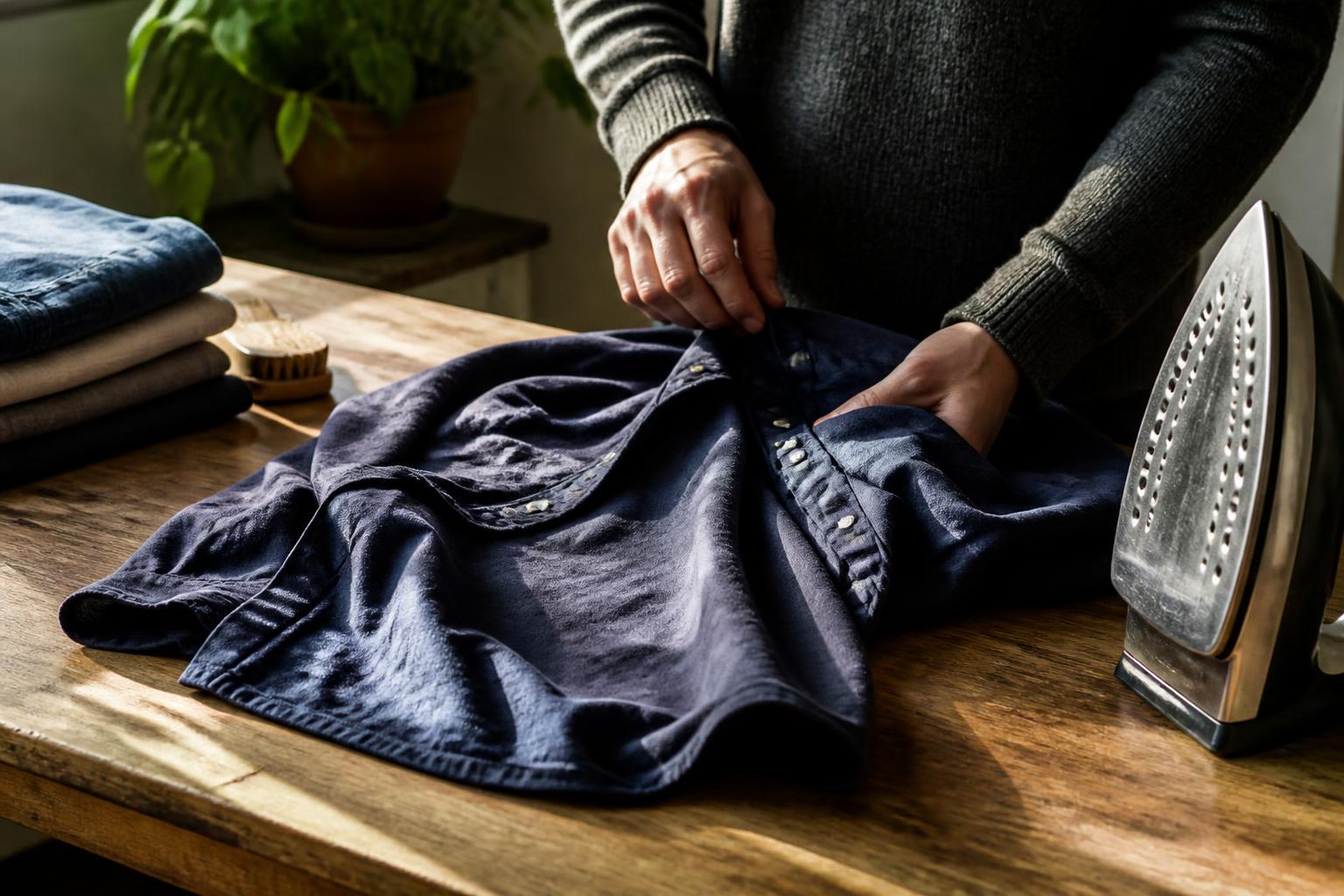
Before anything goes into storage, clean it. Even if a garment looks fine, invisible marks from deodorant, body oils, food, perfume or makeup can oxidise and become harder to remove later. Stains also attract pests.
Wash or dry clean according to the care label. If the label says dry clean only, do not guess. For washable items, make sure they are completely dry before packing. Not almost dry, completely dry. Waistbands, cuffs, thick seams and padded areas often hold moisture longer than the rest of the garment.
If you are dealing with marks first, sort those before storage rather than hoping they will come out later. Our guide to getting makeup out of clothes without ruining them is useful for the sort of stains that often get missed on collars and necklines.
A few basic checks make a real difference:
- empty every pocket
- remove tissues, receipts and lip balm
- loosen belts if they are attached
- fasten zips
- do up a few buttons on shirts and dresses
- tie drawstrings loosely
- brush off surface dust and lint
- check hems, seams and missing buttons
Fastening garments helps them keep their shape and stops straps, sleeves and trims tangling around other items. It also reduces stress on the fabric when you fold or lift them.
Care labels matter here because storage is part of garment care. Wool, silk, linen, viscose and blends all behave differently. A heavy knitted dress and a crisp cotton shirt do not want the same treatment. If you are unsure how a fabric tends to behave in storage, our broader guide to wardrobe care that helps clothes last longer covers the habits that make clothes easier to keep in good condition.
If anything already smells slightly musty after washing, fix that before packing. Storage will intensify the problem, not solve it. We have covered how to stop washing coming out with a damp smell if that is a familiar issue.
Should you fold, hang or box each type of clothing?
The safest storage method depends on weight, structure and how easily the item creases or stretches.
Fold most everyday clothes. That includes:
- T-shirts
- jumpers
- knitwear
- jeans
- joggers
- leggings
- sweatshirts
- casual dresses in stable fabrics
- pyjamas
- children’s clothes
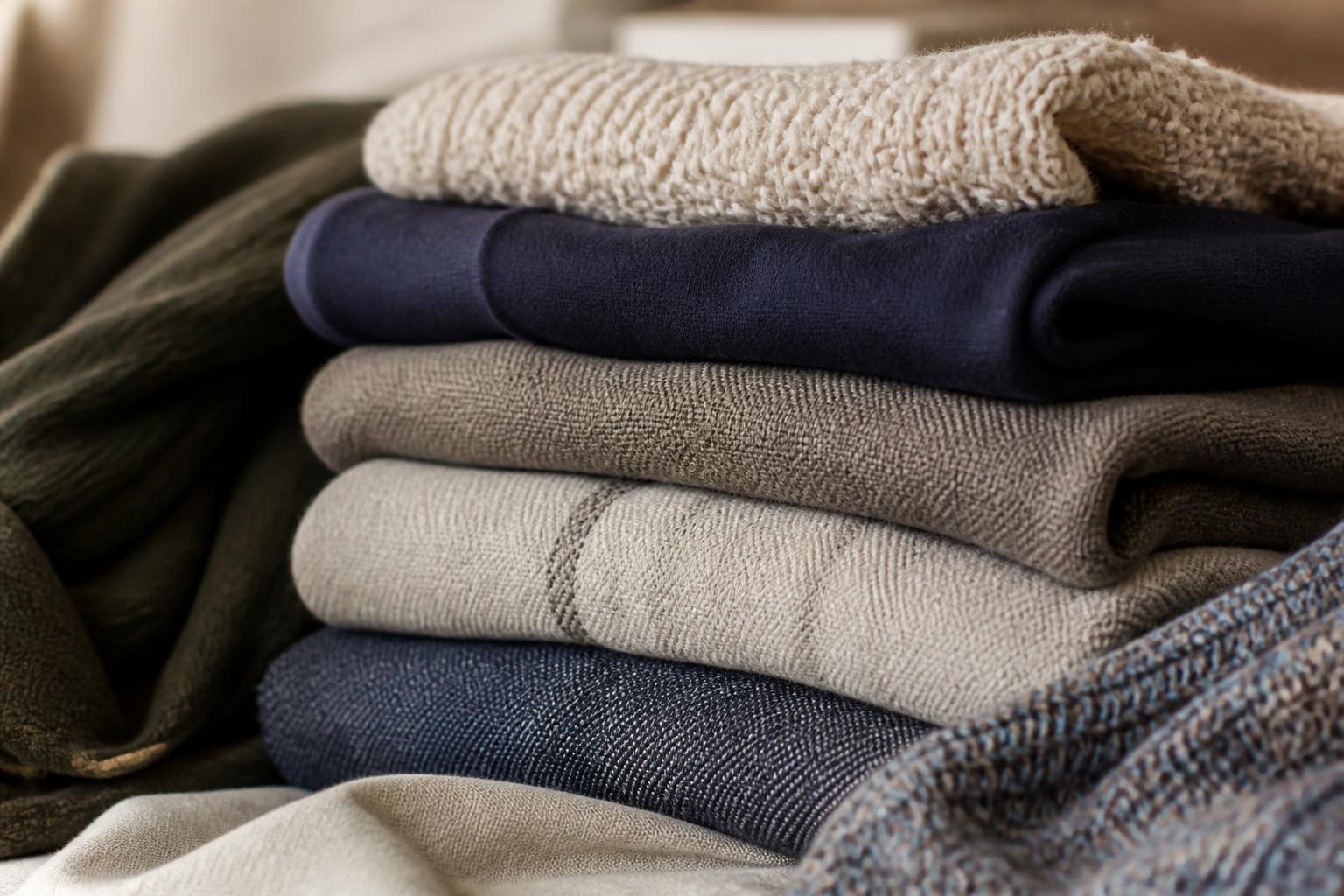
Folding is usually best because it supports the whole garment. Hanging for months can pull knitwear out of shape, especially at the shoulders. Heavy jersey can also lengthen on a hanger.
Hang structured items that benefit from keeping their shape, such as:
- blazers
- tailored jackets
- coats
- formal shirts
- pleated dresses that crease easily
- suits
- occasionwear with built-in structure
Use proper hangers for these, ideally shaped hangers that support the shoulder line. Avoid thin wire hangers. They can leave pressure marks and distort the garment over time.
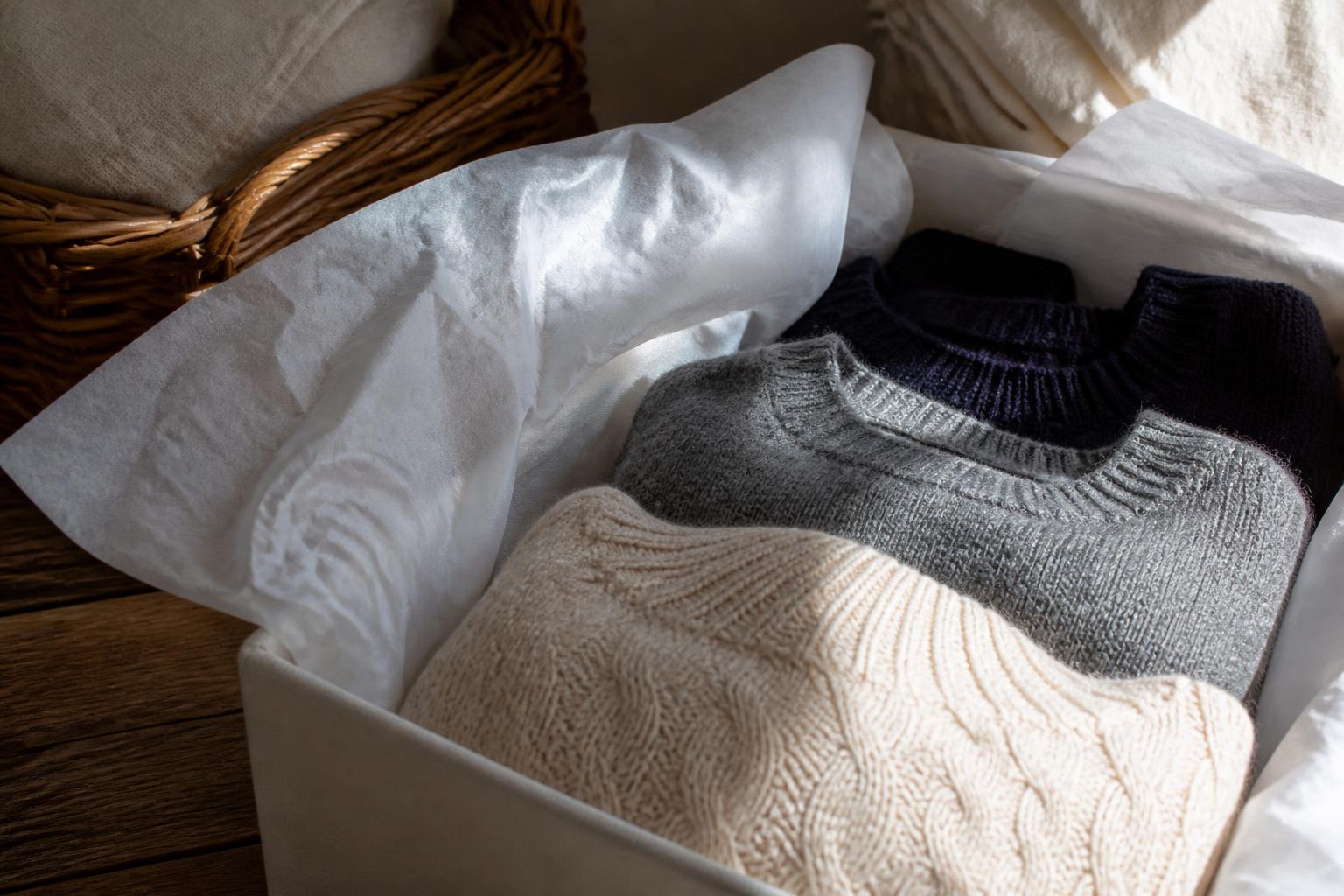
Box delicate or embellished items that could snag. This includes clothing with sequins, beads, lace panels, fragile straps or specialty trims. Fold them carefully with acid-free tissue if you have it, or with clean cotton pillowcases or plain white tissue if you do not. The aim is to reduce friction and stop hard trims pressing into the fabric.
For knitwear, always fold. Even lighter knits can grow if left hanging. Cashmere, merino and lambswool are especially vulnerable to shoulder bumps and lengthening. If moths are a concern, make sure these pieces are very clean before they go away.
For trousers, folding is usually fine for temporary storage. If you are storing tailored work trousers and want to preserve a crease, hang them over a trouser bar or clip hanger with padding. For denim, folded stacks work well.
For shirts and blouses, either method can work. If you have good wardrobe space in a dry room, hanging is practical. If space is tight, fold them neatly into a box rather than cramming them onto a rail where they will crease and crush each other anyway.
For special fabrics, be guided by how they behave in real life. Linen creases easily but stores well if clean and dry. Viscose can hold fold lines more sharply, so avoid pressing too many items on top of it. Garment-dyed pieces may rub off slightly or fade unevenly if stored badly, especially in sunlight, so keep them out of direct light and away from pale items. Our piece on what garment-dyed clothes mean for care and colour explains what to watch for.
How to pack clothes so they stay dry, clean and easy to find
For most temporary clothes storage, the best containers are clean, sturdy and easy to stack without crushing the contents. In practice, that often means lidded plastic boxes for some items and breathable fabric storage bags or cotton garment bags for others.
Plastic boxes are useful because they protect against dust and are less vulnerable to damp from the floor than cardboard. They are a good choice for folded everyday clothes, children’s outgrown sizes, spare bedding and seasonal basics. But do not pack clothes into a box if they are even slightly damp, and do not compress them so tightly that air cannot move at all when you first close the lid.
Breathable storage is better for some fabrics and for garments that dislike being compressed. Cotton garment bags work well for coats, suits and dresses on hangers. Avoid storing clothes long term in the thin plastic covers that come back from the dry cleaner. They trap moisture and can encourage yellowing or stale smells.
Vacuum bags can save space, but they are not ideal for many clothes. They flatten loft and padding, can set hard creases, and are risky for wool, tailoring and anything with structure. We would use them sparingly, mainly for robust items such as spare bedding, puffer coats for a short period, or occasional bulk storage where space is the overriding issue. Even then, avoid overdoing it.
A few packing rules help:
- sort by season, size or category
- keep heavy items at the bottom
- do not overfill containers
- leave delicate fabrics uncrushed
- keep dark and light items separate if colour transfer is possible
- label every box on at least two sides
Labelling sounds obvious until you are six boxes into a cupboard and cannot remember where the school jumpers are. Be specific. "Summer tops, size 12, washed and ready to wear" is better than "clothes".
If you are using cardboard because it is what you have, choose clean, dry boxes with lids and keep them off the floor. Cardboard is more vulnerable to damp and pests, so it is not our first choice for garages, lofts or under-bed spaces near an outside wall.
To reduce damp and pest problems, focus on cleanliness and location first. Scented sachets are optional, not a solution. Cedar blocks can help with smell and may discourage moths a little, but they do not replace washing garments properly and storing them in a dry place. If you use moisture absorbers, keep them positioned so they cannot leak onto fabric.
Under-bed storage can work very well if the room is dry and the containers are low, clean and easy to slide out for checks. We have written more about under-bed clothes storage that keeps garments wearable if that is the space you are relying on.
Where to keep stored clothes in a UK home
In a typical UK home, the best place to store clothes temporarily is a dry, lived-in room with a fairly stable temperature. A spare bedroom, a landing cupboard in the heated part of the house, or a clean wardrobe away from an outside wall is usually better than a loft, shed or garage.
Good storage spots tend to have three things in common:
- stable temperature
- low risk of condensation
- enough access that you can check items without a full clear-out
Spare rooms are often ideal, especially if you can use a wardrobe, chest of drawers or stacked lidded boxes. Even a corner of a bedroom is better than a garage if the bedroom is dry and heated.
Under-bed space is useful in many homes, but choose the bed carefully. A bed in a room that gets condensation on windows all winter is not the same as one in a well-ventilated spare room. Keep containers sealed against dust, but do not wedge them against a damp outside wall.
Lofts are usually poor for clothing storage in the UK unless they are properly converted, insulated and dry. Most lofts face temperature extremes, dust and fluctuating humidity. That can lead to mildew, brittle elastic, stale smells and insect problems. If you have no alternative, use sealed boxes, keep clothes well away from insulation and roof edges, and check them more often.
Garages are also risky. They are often colder, damper and more attractive to pests than the rest of the house. Even when they seem dry, concrete floors and metal doors can create moisture issues. We would avoid storing clothing there unless it is for a very short period in robust, well-sealed containers raised off the floor.
Built-in cupboards can be excellent or terrible. An airing cupboard may be too warm for some fabrics if packed tightly, but a dry hall cupboard can be ideal. Cupboards on external walls can trap condensation. If a cupboard smells musty before you start, do not put clothes in it until the cause is sorted.
When temporary storage turns into longer storage
A lot of temporary storage quietly becomes long storage. Seasonal clothes stay packed because the weather shifts. Baby clothes remain boxed because there is no decision yet about what to keep. Occasionwear sits untouched between weddings and work events. Once storage goes beyond a couple of months, it is worth checking in.
As a rule, inspect clothes every few months if possible. You do not need a full repack every time, but do look for:
- any sign of damp or stale odour
- condensation inside containers
- pests or moth activity
- sharp fold lines setting in
- yellowing on pale fabrics
- distortion on hung items
For folded clothes, refold along different lines if storage is stretching out. This helps prevent permanent creases and reduces pressure on the same points. For hung clothes, make sure the hanger is still supporting the garment properly and nothing has slipped or stretched.
Air items occasionally if they have been packed for a while, especially natural fibres such as wool, cotton and linen. Choose a dry day and a clean indoor space rather than hanging them outside in direct sun for hours. Sunlight can fade colours and weaken some fabrics over time.
If you realise the storage period is going to be much longer than planned, change your approach. That may mean moving items from soft zip bags into sturdier boxes, replacing wire hangers, adding better labels, or relocating everything from the loft to a bedroom cupboard. Temporary methods that are fine for a fortnight are often not good enough for six months.
It is also worth editing as you go. If you unpack a box and realise half the contents no longer fit, suit your life or feel worth keeping, do not automatically store them again. Temporary clothes storage works best when it supports a wardrobe you actually use, not one you are paying for in space and effort.
Done well, storing clothes temporarily is not complicated. Clean first, dry thoroughly, choose the right support for each garment, avoid damp corners and check in before small issues become permanent damage. That is usually all it takes to keep clothes wearable, findable and ready for the moment you need them again.

Questions about this article or a correction to suggest? Get in touch. Read more about our editorial approach.