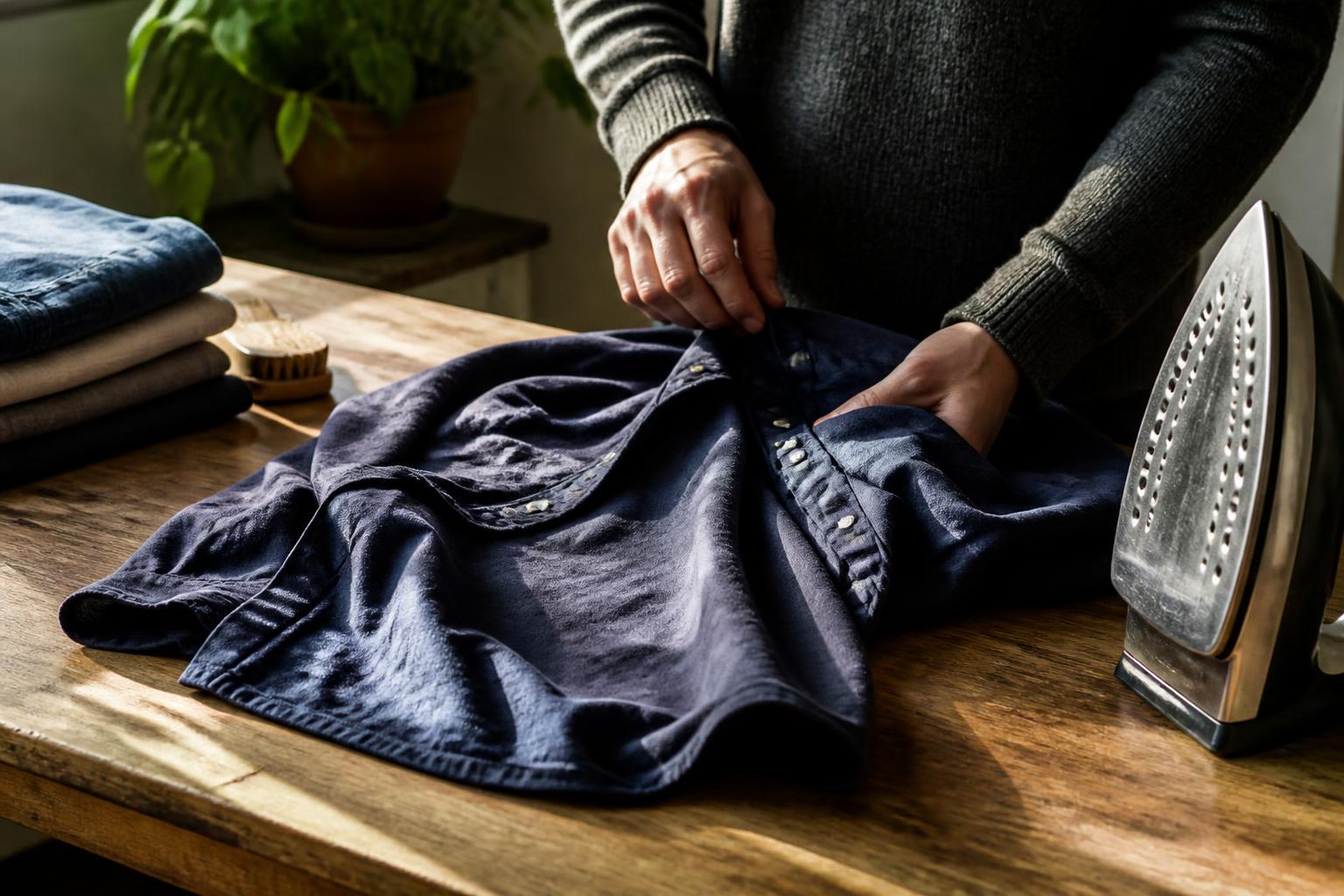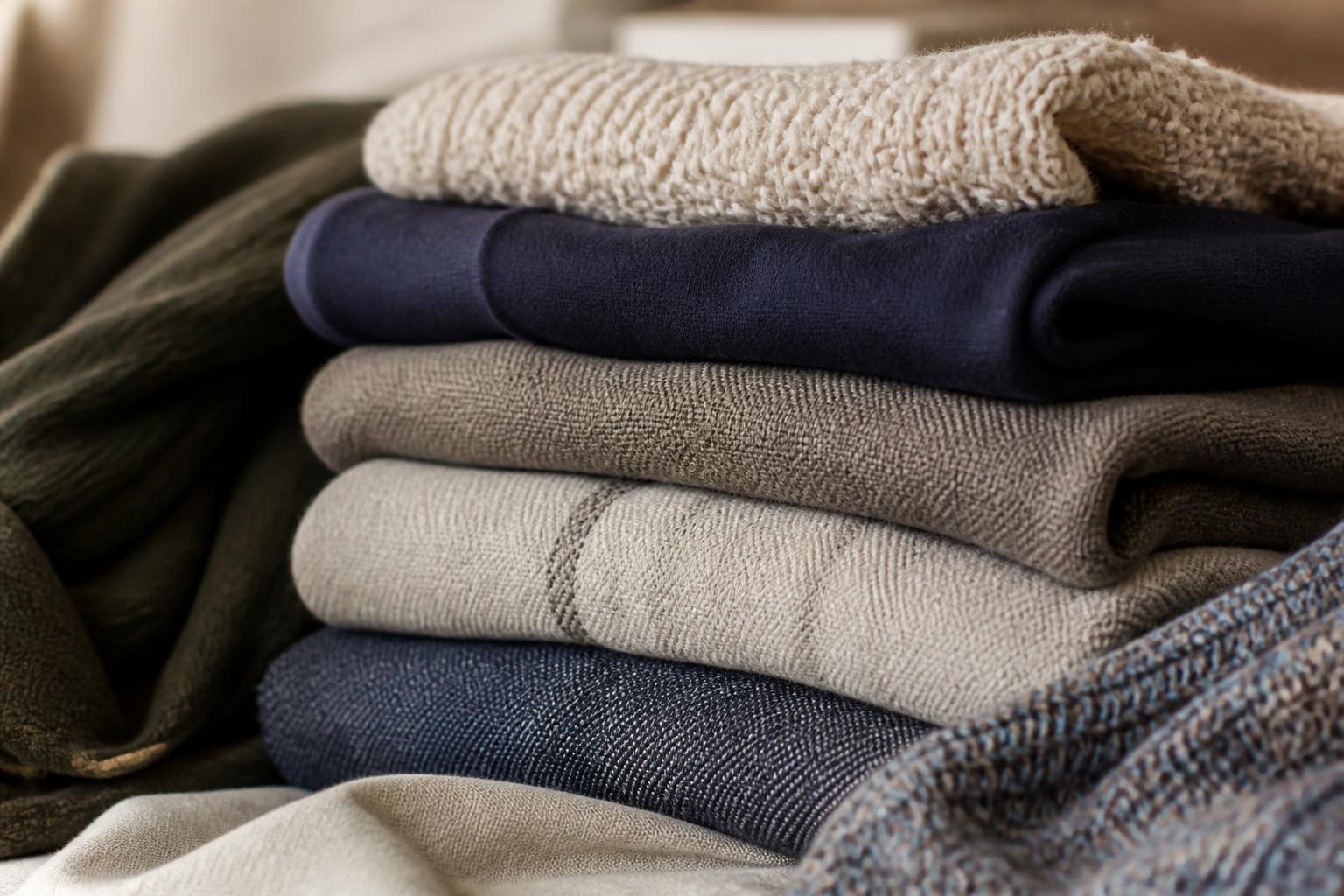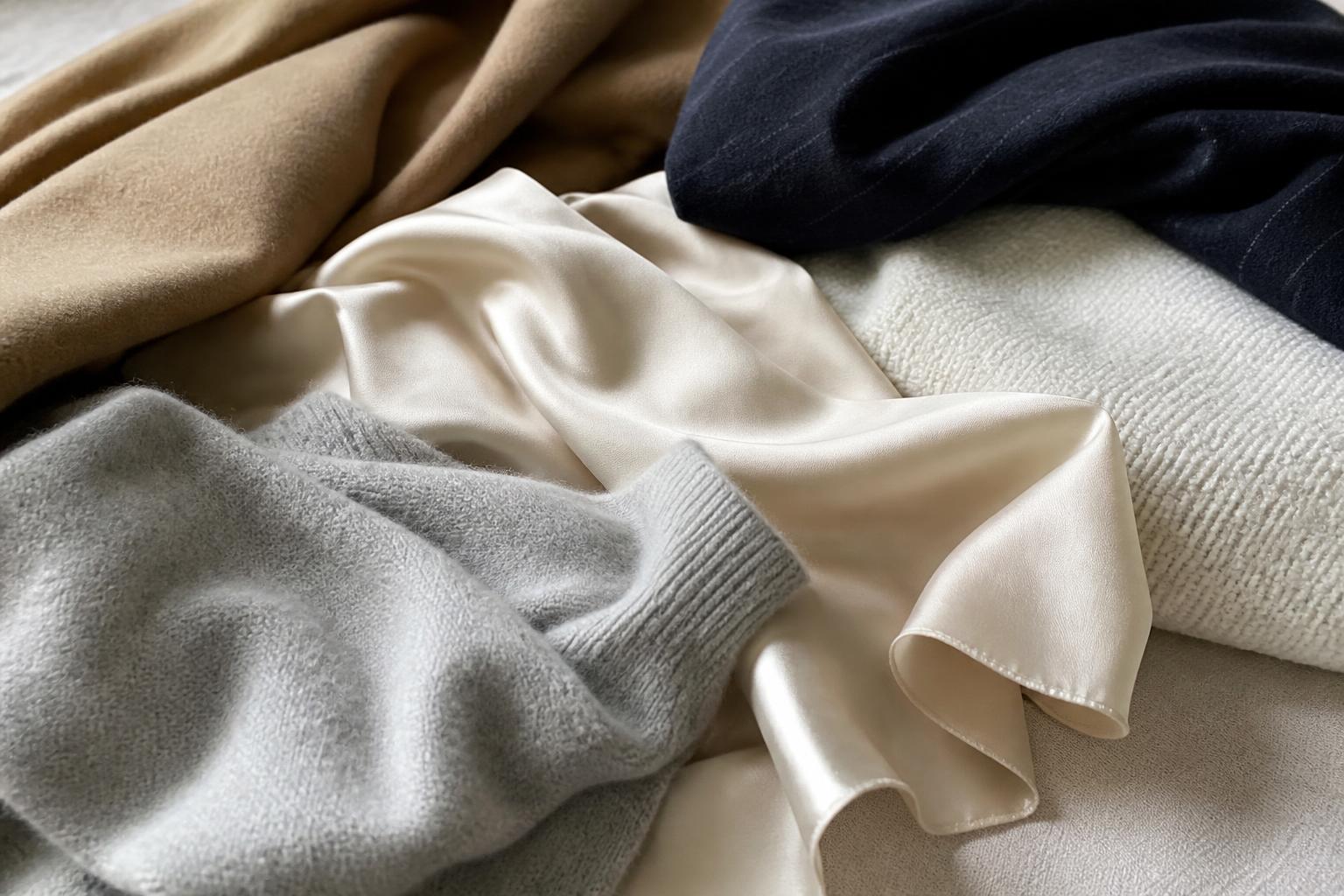
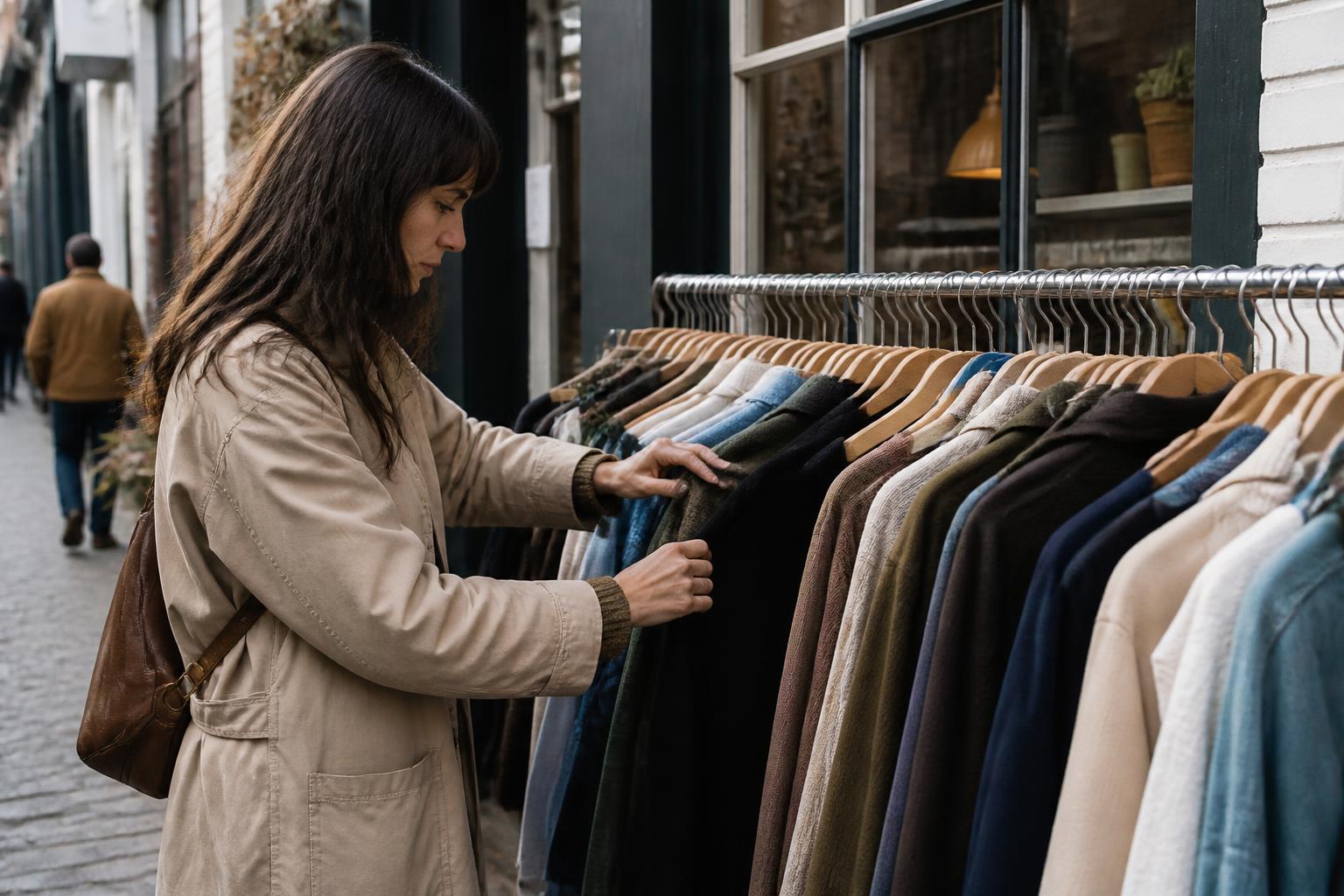
Choosing fabrics that last is less about finding one “best” fibre and more about matching the material to the job your clothes actually do. In a real UK wardrobe, that means thinking about damp weather, radiators, small drying racks, frequent washing, commuting, and whether you will genuinely hand wash, steam, de-pill or reproof something once you own it.
The most useful way to judge materials for clothing is to look at three things together. First, the fibre content. Second, the fabric structure, such as jersey, poplin, twill or knit. Third, the care label. A cotton T-shirt, a cotton shirt and a cotton canvas overshirt may all be mostly cotton, but they will not wear, wash or crease in the same way. If you buy with that in mind, you end up with clothes you will keep wearing rather than pieces that become chores.
What fabric choice actually changes in daily wear
Fabric choice affects comfort first. Some fibres trap warmth, some release it, some feel dry against the skin, and some cling once there is any heat or sweat involved. Wool can regulate temperature surprisingly well, even in lighter weights. Linen feels airy in summer. Cotton is generally comfortable but can stay damp for longer than people expect. Polyester often dries quickly, but some versions hold odour and feel less breathable in close-fitting garments.
It also changes how often you need to wash something. Wool jumpers and many woven outer layers can usually be aired between wears. A polyester gym top may look fine after one session but smell much worse than a cotton one. A viscose blouse may need washing after a single warm day because it shows perspiration quickly and can feel limp once damp.
Drying time matters more in British homes than brands tend to admit. If you do not have a tumble dryer, or only use one selectively, heavier cottons can take a long time to dry indoors. Denim, sweatshirting and thick jersey are the obvious examples. Wool knits can also take time, and they need flat drying space. Polyester and nylon dry faster, which is genuinely useful in activewear, school uniform layers and travel clothes.
Creasing is another daily issue. Linen creases readily. That is not a flaw, but it is only charming if you actually like the look. Pure viscose can crease and lose its shape on a hanger. Cotton poplin shirts often need ironing if you want a crisp finish. Polyester-rich fabrics usually crease less, which is one reason they are so widely used in workwear and occasionwear.
Durability is not just about whether a fibre is “strong”. It is about where and how the garment wears out. Trousers fail at the inner thigh, seat and knees. Knitwear pills under arms and at the sides. Shirt collars and cuffs wear from skin, friction and washing. A robust fibre in the wrong construction can still fail quickly. A delicate fibre in the right garment can last years.
Repairability matters too. Woven fabrics are usually easier to patch neatly than fine knits. A simple cotton or wool coat can often be re-lined, re-buttoned or darned. A thin viscose dress with seam slippage is harder to save. A waterproof shell needs the right repair approach or you create new leaks, which is why we cover how to patch waterproof clothing without making leaks worse separately.
How to read fibre content and care labels before you buy
Start with the composition label. In the UK, garments must give fibre content, usually as percentages. That tells you the main fibres, but not the whole story. A top listed as 100% cotton may still have polyester sewing thread, fusible interfacing in the placket, or synthetic trim. A blazer may have one fibre in the outer fabric and another in the lining. Check all parts listed.
Then read the care symbols and any written instructions. This is where many buying mistakes happen. People see “wool” and assume hand wash, or see “polyester” and assume easy care. The manufacturer’s instructions should come first, because they reflect the garment’s full construction, not just the fibre. A washable wool jumper may say machine wash on wool cycle. A viscose dress may be dry clean only because the fabric shrinks, the dye is unstable, or the internal structure distorts in washing.
Use the two labels together. If the composition says 70% viscose, 30% linen and the care label says dry clean only, do not buy it expecting to machine wash because “linen is washable”. If a jacket is mostly cotton but the lining is acetate and the shoulder structure is fused, the outer fibre tells you very little about real care.
A few practical checks help before you buy.
Look for:
- Wash temperature and whether hand wash means true hand wash, not a quick cold machine cycle
- Whether tumble drying is prohibited
- Whether the item can be ironed at normal heat or only low heat
- Whether dry cleaning is recommended or required
- Extra wording such as “reshape whilst damp”, “dry flat”, or “wash separately”
“Dry clean only” deserves a pause, not automatic rejection. For a tailored wool coat you wear for years, occasional professional cleaning may be realistic. For a casual blouse you will need to clean often, it may be a poor fit for your life. UK dry cleaning costs vary enough that it is better to think in terms of frequency than a fixed figure. If you know you will resent paying for care, leave it.
If manufacturer guidance conflicts with general fabric advice, follow the garment label. That is especially true for viscose, coated fabrics, pleated items, bonded fabrics, and garments with linings or trims. It also applies to second-hand pieces where previous washing may already have changed the size or handle.
The main clothing fibres and what they are good at
Cotton is easy to understand and usually easy to wear. It is breathable, washable and widely available in everything from T-shirts to denim and corduroy. Its weak point is that it absorbs moisture and can dry slowly in heavier fabrics. It can also shrink if poorly pre-treated or washed too hot. Cotton works well for everyday tops, shirts, jeans, casual dresses and children’s clothes.
Linen is strong, breathable and excellent in warm weather. It dries faster than heavy cotton and tends to soften with wear. It does crease, often immediately, and some people love that while others do not. Linen shirts, trousers and summer dresses can last well if the cloth is not too thin. Very open or lightweight linen can wear through at stress points.
Wool is one of the most useful fibres in a practical wardrobe. It insulates, regulates temperature, resists odour and often needs less washing than cotton or synthetics. Wool coats, knitwear and socks can be excellent value over time. The limits are moth risk, possible itch, and the fact that some wool garments felt or shrink badly with careless washing. Merino is softer than many traditional wools but often finer and more prone to holes in very lightweight knits.
Silk feels good, drapes well and can regulate temperature better than people expect. It works for blouses, linings, scarves and some knitwear. It is less forgiving with perspiration, abrasion and careless stain treatment. Water spotting, seam strain and surface scuffs are common issues. If you will not hand wash carefully or pay for specialist cleaning when needed, silk may not earn its keep.
Viscose, sometimes labelled rayon, is made from regenerated cellulose. It often feels soft, cool and fluid, which is why it appears in dresses, blouses and linings. The downside is that it can shrink, twist, crease and weaken when wet. Cheap viscose can pill or go shiny quickly. Better quality viscose can be lovely, but it is one of the fibres where label reading matters most. We cover some of the same judgement calls in how to judge pricey fabrics before you buy.
Polyester is durable, quick drying and resistant to creasing. Those are real advantages, especially in outerwear, linings, uniforms, pleated garments and activewear. Its drawbacks are comfort and odour in some uses. In close-fitting tops, cheap polyester can feel clammy and hold smells. In a coat lining or a travel blouse, it may be entirely sensible.
Nylon is strong, light and abrasion resistant. It is common in tights, activewear, outerwear and bag linings. It often outperforms polyester where toughness matters, such as rucksacks or waterproof shells. On its own, it is less common in everyday fashion garments, but it is valuable in blends and technical fabrics.
Elastane, also called spandex or Lycra as a brand name, adds stretch. Usually it appears in small percentages. A little can improve comfort and recovery in jeans, fitted trousers, jersey tops and sportswear. Too much can shorten the life of a garment if the elastic fibres break down, leading to bagging, rippling or loss of shape. It is useful, but not free.
When blends help and when they cause problems
Blends are common because they solve practical problems. Cotton with a little elastane can make jeans easier to wear. Wool blended with nylon can improve sock durability. Linen mixed with cotton can soften creasing and reduce cost. Polyester blended into viscose or cotton can improve crease resistance and drying time.
In other words, blends are not automatically lower quality. Often they are the reason a garment works in normal life. The question is whether the blend improves the part of the garment that matters to you.
Good examples include:
- Wool and nylon in socks or knitwear for abrasion resistance
- Cotton and elastane in trousers for movement
- Polyester in shirting or dresses where low creasing is useful
- Linen and viscose where a softer drape is wanted than pure linen gives
Problems start when the blend creates care complications, poor ageing, or harder repairs. A heavily elastane-rich denim can lose shape and become difficult to alter cleanly. A bonded fabric with mixed layers may delaminate and be almost impossible to mend invisibly. A cheap poly-viscose knit may pill from the first few wears. Blends can also complicate end-of-life handling, because mixed fibres are harder to recycle and often less suited to fibre-to-fibre processing.
Alterations can be trickier too. Stretch wovens need a different approach from stable cloth. Slippery synthetic blends may show needle marks. Heat-sensitive fibres limit pressing, which matters when taking in seams or shortening hems.
This is also where marketing claims need caution. “Recycled blend”, “performance fabric” and “easy care” can all mean very different things in wear. If you are looking at recycled content specifically, our guide to judging recycled-fibre clothing before you buy will help you separate useful information from vague labelling.
How to match materials to the garment you need
For T-shirts, think first about washing frequency and skin feel. Cotton jersey is still the easiest everyday option for many people. It is breathable and simple to wash, though it can shrink and fade. Cotton with a little elastane helps shape retention in fitted styles. For sport or very fast drying, polyester or nylon blends are practical, but choose them for the job, not because they sound advanced.
For shirts, cotton poplin, oxford and twill are dependable choices. Linen shirts are excellent for warm weather if you accept creasing. Viscose shirts drape well but often need gentler care and can look tired faster at collars and cuffs. If you need a shirt for regular office wear with minimal ironing, a cotton-polyester blend may be more useful than pure cotton.
For knitwear, wool is usually the strongest all-round choice for warmth, odour resistance and longevity, especially in medium gauges. Merino works well for lighter layers. Cotton knitwear is useful in milder weather but can stretch and feel heavy. Acrylic and polyester knits may be cheaper and easy to wash, but they often pill more and can feel sweaty indoors.
For trousers, look at friction points. Cotton twill, denim and wool suiting all have their place. A little elastane can help, but too much often means the knees and seat bag out sooner. Linen trousers are comfortable in heat but may bag at the knees and crease heavily. Viscose trousers can drape nicely but need checking for seam strain and seat wear.
For dresses, the right material depends on whether you want structure or drape. Cotton and linen are easier to wash and generally easier to mend. Viscose and silk drape beautifully but ask more of you in care. Polyester dresses can be practical for travel and occasionwear if the fabric is not too sweaty or static-prone. Always check whether the dress has a lining, and what that lining is made from.
For coats, the outer fabric and the lining both matter. Wool coatings remain hard to beat for warmth and repairability in smart coats. Cotton gabardine works in trench-style coats. Technical shells rely on synthetics and membranes, where care is more specialised. If you are buying for wet weather, focus less on fibre prestige and more on construction, seam sealing and whether you will maintain the finish. We cover that in how to choose waterproof clothing that lasts.
For activewear, synthetics usually earn their place. Polyester and nylon blends dry quickly, hold shape and cope with repeated washing. The trade-off is odour retention and eventual loss of stretch. Buy close-fitting performance fabrics only if you need them. For walking, yoga or low-sweat use, a simple cotton layer or merino blend may suit you better.
What to check second-hand or before keeping a difficult fabric
Second-hand shopping is where fabric knowledge pays off quickly. Start with the surface. Check for pilling under the arms, along side seams, at cuffs and between the thighs. Pilling is not always a deal-breaker, especially on wool knitwear that can be de-pilled, but heavy fuzz on synthetics can signal rapid future wear.
Look for thinning in high-friction areas. Hold trousers and knitwear up to the light at knees, seat, elbows and inner thighs. Check shirt collars and cuffs for fraying. On dresses and blouses, inspect underarms for colour loss, stiffness from deodorant build-up, or weakened cloth.
Examine seams for strain. Gaping stitches, pulled thread lines and tiny holes next to seams often mean the fabric has been under tension and may not recover. This matters especially with viscose, silk and lightweight wovens. Seam slippage is difficult to fix neatly once the cloth is damaged.
Check the lining, not just the outer fabric. A coat with a sound wool outer and shredded lining is still salvageable, but you need to know what you are taking on. Re-lining costs real money and is only worth it when the outer garment deserves it. In skirts and dresses, worn lining at the seat or underarms can make a garment unpleasant to wear even if the shell looks fine.
Watch for shrinkage and distortion. Twisted side seams in T-shirts, puckered plackets, shortened sleeves, and rippled zips can all suggest poor washing history. With wool jumpers, compare cuff and hem elasticity and look for felting. If a garment already looks misshapen on the hanger, assume it will be worse on the body.
Then ask the home-care question honestly. Can you wash it in your actual home? Do you have flat drying space for a heavy wool jumper? Will you steam or iron linen? Will you hand wash silk, or will it sit in the laundry basket until you give up? A difficult fabric is only worth keeping if its care routine matches your life.
Finally, think about mending and storage. Can you replace the buttons, patch the elbow, darn the cuff, or take up the hem? Will it need moth protection, broad hangers, or breathable storage? The clothes that last in real wardrobes are not the ones with the grandest fibre story. They are the ones whose materials, care needs and weak points you can realistically manage, wear after wear.

Questions about this article or a correction to suggest? Get in touch. Read more about our editorial approach.