If you want to rescue a white shirt with sweat marks, the safest route is usually simple. Treat fresh marks before they go through a hot wash or tumble dryer, use a stain treatment that suits the fabric, and only move on to stronger soaking methods for older yellow underarm staining. Heat is what turns a manageable mark into a stubborn one.
For most washable cotton and cotton-blend shirts, that means rinsing the area in cool water, working in a small amount of liquid detergent, then washing according to the care label. For older yellowing, a longer soak with an oxygen-based laundry product is often more effective than scrubbing or reaching straight for chlorine bleach. If you have been searching for how to get sweat stains out of white shirts, the key is to work out whether you are dealing with fresh sweat, deodorant residue, or set-in yellowing first.
What causes sweat stains on white shirts?
Sweat itself is not always the main problem. Fresh perspiration is usually water, salts, and body oils. On its own, it may leave a faint tide mark or a stale smell, but it does not always create the deep yellow staining people expect.
The yellow underarm marks that show up on white shirts are often a mix of sweat, skin oils, deodorant or antiperspirant residue, and repeated heating in the wash or dryer. Antiperspirants that contain aluminium compounds can react with sweat and fabric over time, especially in the underarm area where the cloth is under friction all day. That is why one shirt can look dingy under the arms even when the rest still looks bright.
It helps to think of these as three different problems.
Fresh sweat marks are recent, usually still slightly damp or only just dried, and may come with odour more than visible staining. These are the easiest to treat.
Deodorant build-up tends to feel waxy, stiff, or slightly chalky. You may see a white residue on the inside of darker clothes, but on white shirts it often shows up as a rough patch that traps dirt and turns yellow later.
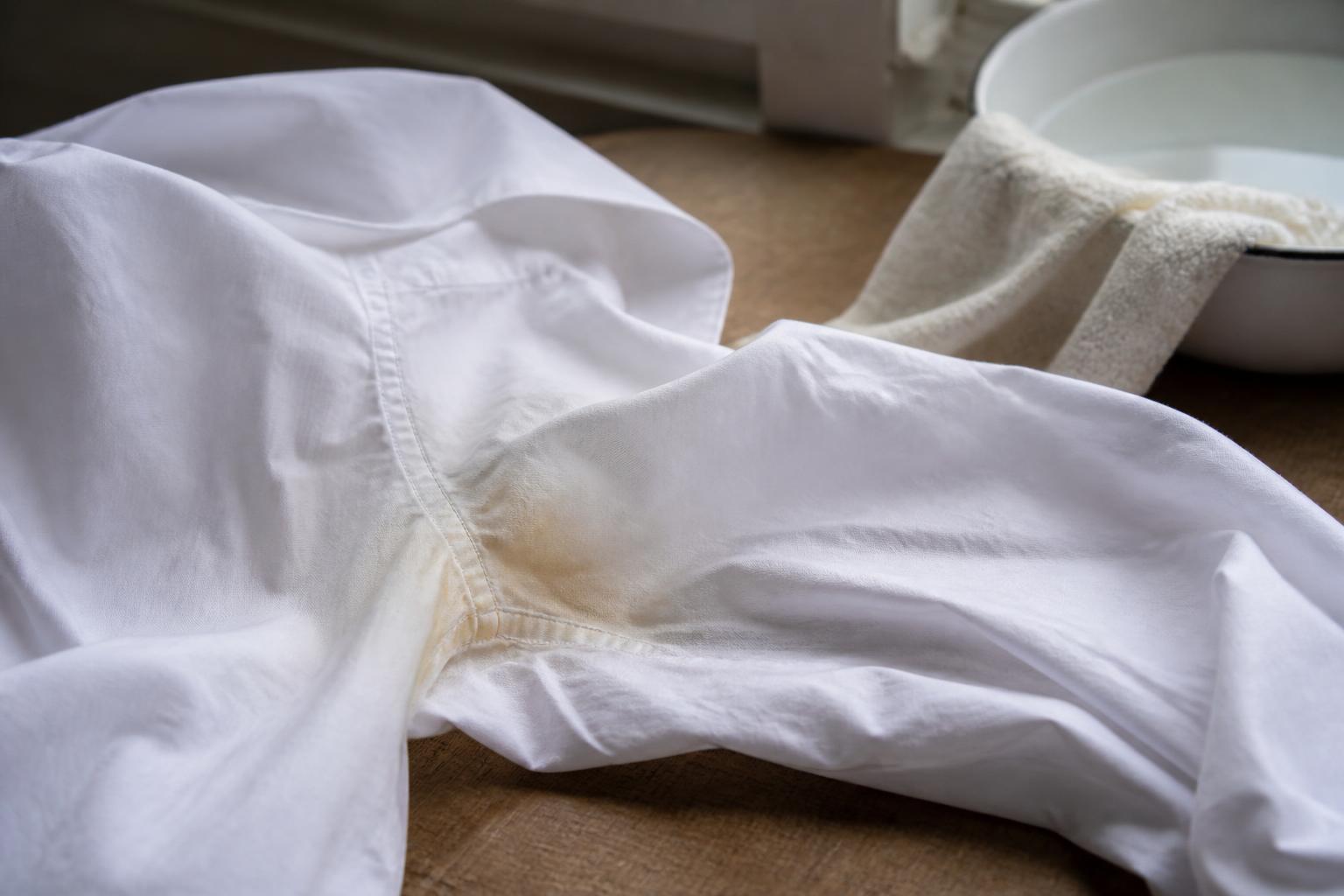
Older yellow underarm marks are set-in staining. They have usually gone through several washes, may be darker at the centre of the underarm seam, and often need soaking rather than a quick spot clean.
Knowing which one you are dealing with saves time and prevents over-treating the fabric. A recent sweat mark does not need harsh treatment. A shirt with years of build-up will rarely come clean with a normal wash alone.
Check the care label before you start
Before you do anything, check the care label inside the shirt. It tells you what the fabric can tolerate, and that matters more than any stain tip. A white work shirt might look sturdy, but the safe method for crisp cotton poplin is not always the same as the safe method for linen, viscose blend, or a shirt with shell buttons and fused collars.
Start with three things on the label.
First, look at the wash tub symbol and the temperature. If the label allows a 30°C or 40°C wash, that gives you room to use most standard laundry detergents. If it says hand wash only, do not assume a stain remover is harmless just because the shirt is white.
Second, check the fibre content. Cotton usually tolerates pre-treatment and soaking well. Linen can also cope with careful stain treatment, but it creases easily and can go rough if scrubbed too hard. Polyester blends often release stains more easily than pure natural fibres, but they can hold onto odour. Delicate fibres such as silk or shirts with a high viscose content need a different approach and often should not be soaked in heavy-duty stain products at all.
Third, inspect trims and construction. Contrast piping, dark embroidery, covered buttons, collar stays, and interfacing can all react differently in a soak. If there is any coloured stitching or trim near the underarm seam, test your product on an inside seam first.
A crossed triangle means do not bleach. In the UK, that includes the usual chlorine bleach products, and you should still be cautious with oxygen bleach if the garment is delicate. If the symbol is a plain square with a circle inside and dots, that refers to tumble drying. If tumble drying is not allowed, do not use the dryer to “see if the stain has gone”. Once heat sets the mark, removal gets harder.
If you are building up a basic stain routine at home, it helps to keep a few reliable supplies rather than a cupboard full of single-use products. We set out the useful basics in our guide to a fabric care kit that actually gets clothes worn again.
How to treat fresh sweat marks before washing
For fresh sweat marks, quick treatment is usually enough. The aim is to remove salts, oils, and deodorant residue before they settle into the fibres.
Use this method for washable cotton, linen, and most sturdy blends.
- Turn the shirt inside out.
- Rinse the underarm area with cool or lukewarm water. Avoid hot water.
- Apply a small amount of liquid laundry detergent directly to the mark. A standard biological detergent often works well on body oils, but if the shirt is delicate or your skin is sensitive, use what you normally trust on that fabric.
- Gently work the detergent in with your fingers or a soft cloth. Do not scrub with a stiff brush.
- Leave it for 10 to 15 minutes.
- Wash the shirt according to the care label, ideally with similar whites.
If the mark is more about odour than staining, adding the shirt to a proper wash cycle promptly is often enough. Letting sweaty clothes sit in a laundry basket for days gives bacteria and residue time to settle in. If your shirts are coming out of the wash still smelling stale, the issue may not be the shirt alone. It can also be detergent build-up, low-temperature washing, or a slow drying routine. We cover that in our guide to why clothes smell after washing and how to fix it.
A few practical notes help here.
Do not pour neat deodoriser sprays, perfume, or fabric conditioner onto the underarm area. They do not remove the residue causing the stain.
Do not use bar soap unless you know it rinses clean on that fabric. Some soaps leave their own residue behind, which can make the patch look dull over time.
Do not move straight from rinsing to tumble drying. Check the shirt in good light after washing. If the mark remains, treat it again while the fabric is still damp.
How to lift yellow underarm stains from white shirts
Older yellow marks need a more deliberate approach. The safest effective method for most white cotton shirts is a soak with an oxygen-based stain remover or laundry whitener, followed by gentle rubbing and a normal wash. In the UK, these are widely sold as oxygen stain removers for whites and colours. Read the product label and follow its dilution instructions.
Here is the method we use for washable white shirts with established yellowing.
First, patch test if there is any doubt about trims, stitching, or mixed fibres. Use an inside seam or hem.
Next, fill a basin, sink, or clean bucket with warm water, not hot. Add the oxygen-based product at the amount stated on the pack for soaking. Stir it in fully before the shirt goes in.
Submerge the shirt and make sure the underarm area is properly soaked. Leave it for the time recommended by the product. For light yellowing, that may be enough. For heavier staining, a longer soak may help, provided the product instructions allow it.
After soaking, lift the shirt out and inspect the area. If the mark has loosened but not disappeared, apply a little liquid detergent to the damp stain and rub the fabric gently against itself, or use a soft laundry brush with a very light hand. Focus on the stained area, not the whole underarm seam.
Then wash the shirt as normal, following the care label. Use a good detergent and choose a temperature the label allows. For many white cotton shirts in the UK, 40°C is a useful middle ground, but the label comes first.
Air dry the shirt and check it properly before applying any heat.
If the yellowing is still there but lighter, repeat the process once more. Older stains often lift in stages. One soak may remove the surface residue, while a second treatment clears what remains in the fibres.
For very stubborn build-up, some people use a paste made from laundry detergent and an oxygen-based stain remover. This can work, but keep it for robust fabrics and use a light touch. Smearing on a gritty paste and scrubbing hard is a quick way to roughen the cloth under the arms so it looks worn even if the stain fades.
There are limits. If a shirt has been repeatedly overheated, treated with unsuitable products, or worn until the fibres themselves have discoloured, you may improve it without getting it back to bright white. At that point, the practical question is whether it is still perfectly serviceable under a jumper or jacket, or whether it is time to retire it from office duty.
What to avoid if you do not want to make the stain worse
The biggest mistake is heat. Hot water, a hot iron, and especially a tumble dryer can set both sweat and deodorant staining. If you are not sure the mark has gone, do not dry it with heat.
The second mistake is over-scrubbing. Underarm fabric is already under strain from friction, body heat, and regular washing. Aggressive brushing can thin the cloth, raise the surface, and leave the area looking grey and worn. Gentle repetition works better than force.
Be careful with bleach. Many people assume white shirts can take any bleach, but chlorine bleach can weaken cotton fibres, react badly with some finishes, and sometimes make yellowing worse rather than better. If the care label says do not bleach, take that seriously. Even where bleach is not specifically banned, oxygen-based products are usually the safer first choice for washable shirts.
Never mix cleaning products. In particular, do not combine bleach with vinegar, ammonia, or other household cleaners. Apart from damaging the fabric, some combinations produce dangerous fumes. Use one method at a time, rinse thoroughly, and keep the process simple.
Do not guess with delicate shirts. White silk, fine viscose blends, and shirts labelled dry clean only need more caution. If the garment is expensive, sentimental, or difficult to replace, professional cleaning may be the sensible option.
Also be realistic about age and wear. Some underarm areas are not just stained, they are degraded. If the fabric has gone stiff, thin, or slightly brittle, you may get some visual improvement but not a full rescue.
How to stop sweat stains building up again
Prevention is less about buying special products and more about timing and routine. White shirts last longer when sweat and deodorant residue do not get the chance to sit in the fabric for days at a time.
Wash shirts promptly after wear, especially in warm weather or if you wear antiperspirant daily. You do not need to panic-wash everything after one short outing, but a shirt worn close to the skin for a full day should not be left in a heap until the weekend if you can help it.
Let the shirt air out before it goes in the laundry basket. Hanging it over a chair or on a hook for a few hours helps moisture evaporate. Stuffing a damp shirt straight into a full basket encourages odour and residue to settle.
Allow deodorant or antiperspirant to dry before getting dressed. This is one of the simplest ways to reduce transfer onto the fabric. If you can see product sitting on the skin, it is likely to end up on the shirt.
Use the right amount of detergent, and rinse well. Too little may not shift body oils. Too much can leave its own residue behind. If your laundry often feels coated or smells musty after washing, your wash routine may need adjusting. Our guide on how to stop washing coming out with a damp smell is useful if the problem is happening across your wardrobe.
Rotate shirts rather than wearing the same favourites into the ground. This matters more than people think. A small working wardrobe can still be sensible, but if one white shirt is doing too much of the heavy lifting, the underarms and collar will show it quickly.
Choose fabrics with your real use in mind. If you run warm, commute on foot, or spend long days in shirts, easy-care cotton blends may stay presentable with less fuss than very fine pure cottons. We look at that more broadly in our piece on how to choose fabric that lasts in a real wardrobe.
Finally, check shirts before storing them away. A faint mark that is barely visible when damp from wear can darken over time if it is put back in the wardrobe untreated. A quick rinse and wash now is much easier than trying to reverse months of set-in yellowing later.
White shirts do not need a perfect-care lifestyle to stay in use. Most sweat marks come down to catching them early, choosing a method that matches the fabric, and keeping heat away until you know the stain has gone. That is usually all it takes to turn a shirt from “for the rag bag” back into something you will actually wear.

Questions about this article or a correction to suggest? Get in touch. Read more about our editorial approach.