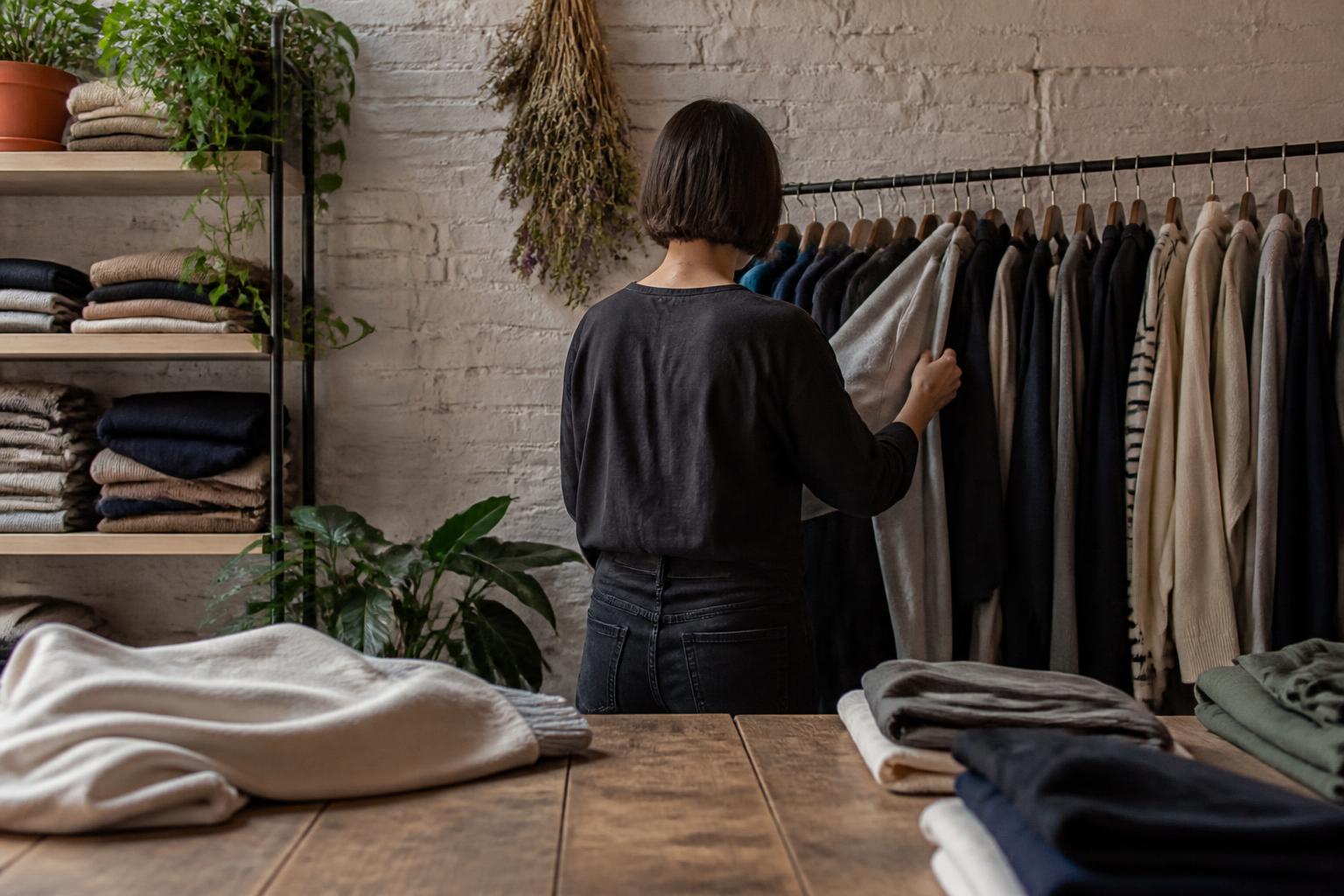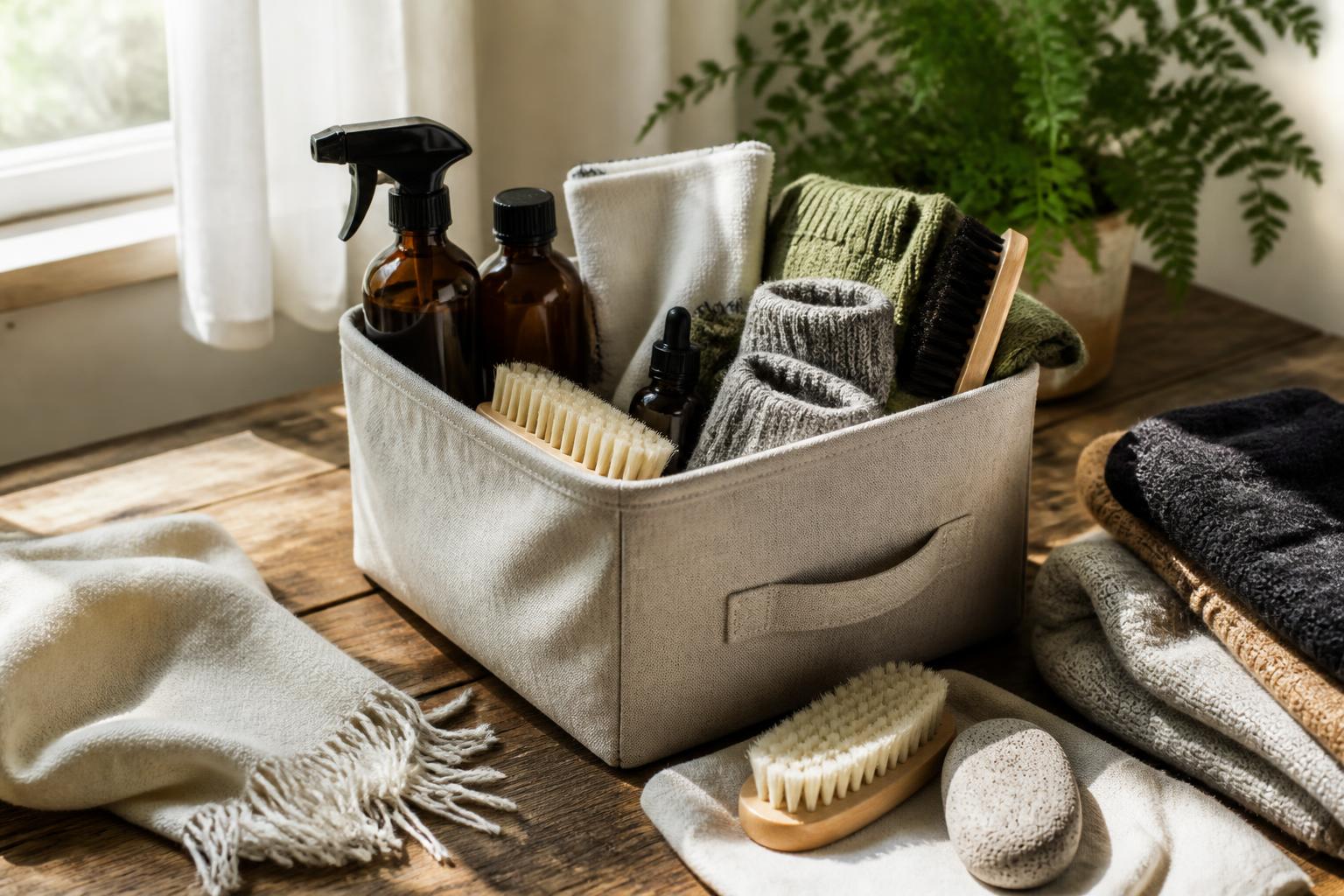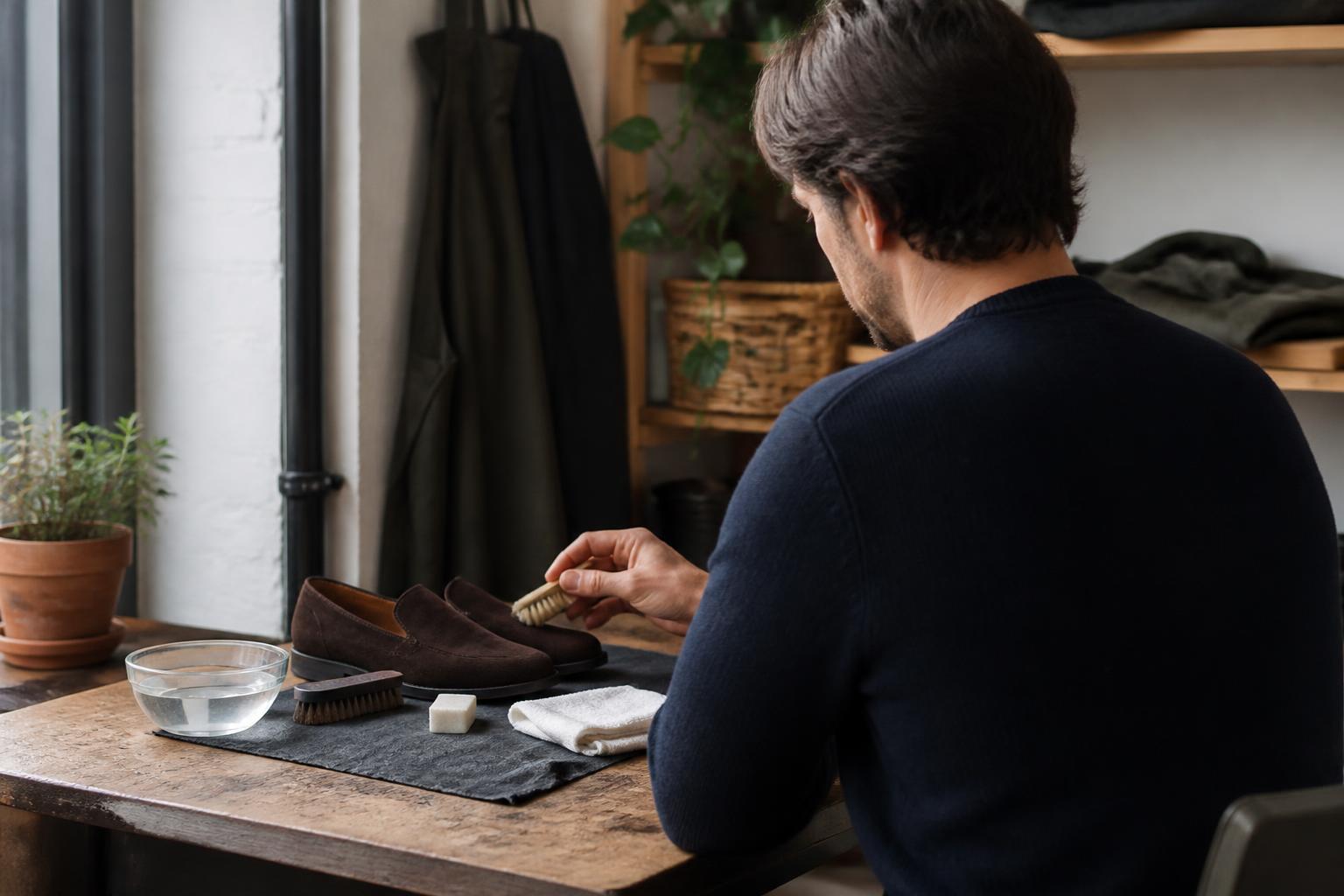
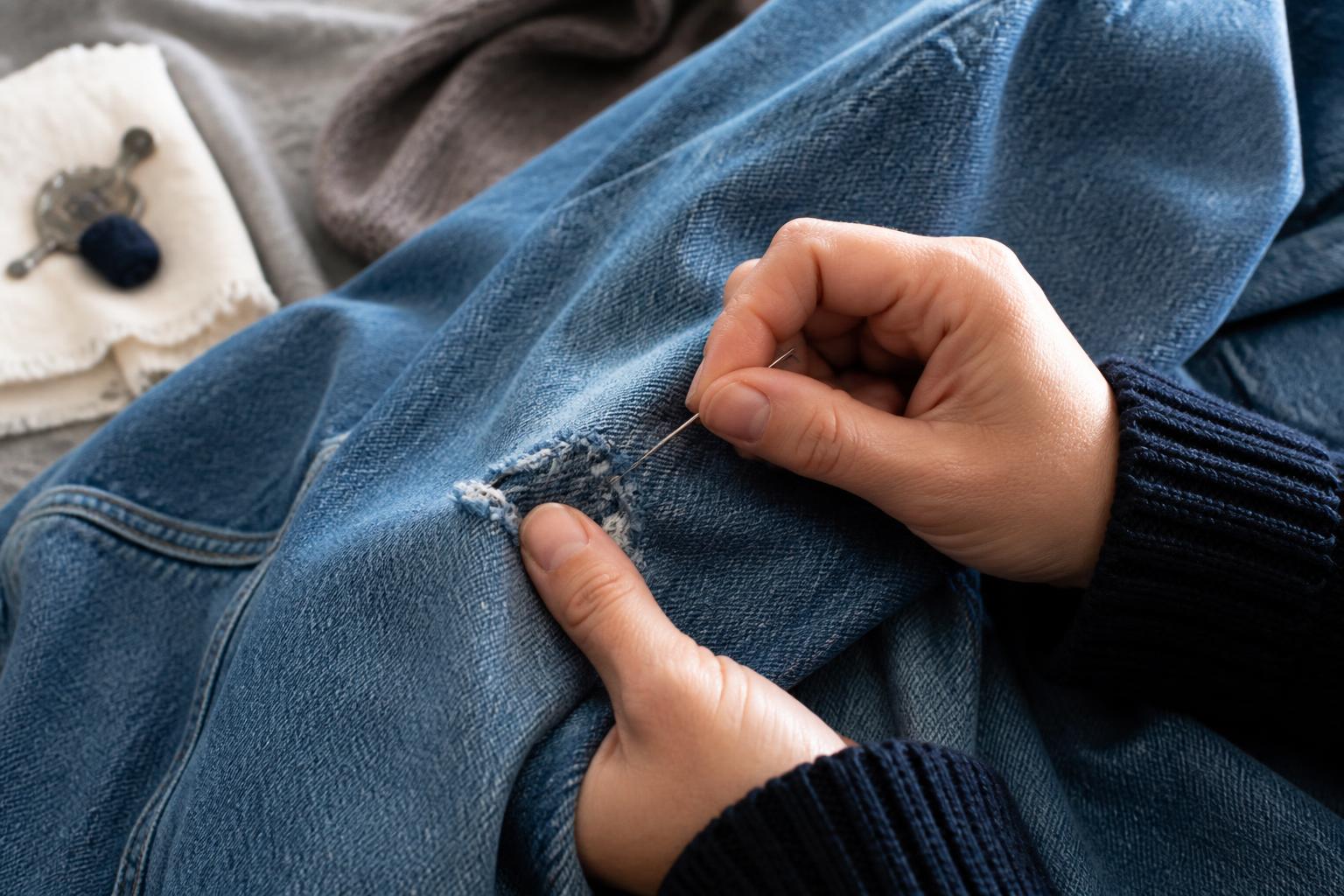
A good sustainable fashion blog should make your wardrobe easier to run. It should help you decide what to wash, mend, store, buy second-hand, and leave on the rail. If it only gives you vague encouragement to “shop better” or presents sustainability as a personal aesthetic, it is not doing enough for most real wardrobes.
For UK readers, the most useful articles are the ones that turn broad principles into decisions you can make on a Tuesday evening. Can this jumper be hand washed safely? Is this coat worth repairing? Does a missing fibre label make a second-hand buy too risky? That is where a sustainable fashion blog earns its keep, by helping you keep clothes in use for longer without pretending every choice is simple or every garment can be saved.
What a sustainable fashion blog should actually help you do
The point of reading a sustainable fashion blog is not to collect ideals. It is to make practical choices with the clothes you already own, and to buy more carefully when you need something new or second-hand.
For most people, that means help with five things.
First, garment care. You need clear guidance on care symbols, washing temperatures, drying methods, stain treatment, and storage. Good advice should reduce avoidable damage such as shrinkage, colour loss, misshaping, and mildew.
Second, repair triage. Not every torn seam needs a tailor, and not every worn-out item is worth saving. A useful blog helps you tell the difference between a quick home fix, a professional repair, and an item that has reached the end of practical use.
Third, second-hand buying. The environmental case for buying used is only part of the story. In real life, readers need help checking condition, fibre content, fit risk, and whether missing labels make a purchase too uncertain.
Fourth, planning. A wardrobe works better when you can see what you wear, what needs mending, and what categories are already covered. Good editorial guidance helps you spot gaps, duplication, and false bargains.
Fifth, claims. Sustainability language is often broad, flattering, and hard to compare. A reliable blog should help you read product descriptions with a cool head.
That practical focus matters because “sustainable” is not one single action. Sometimes the best option is washing less often. Sometimes it is paying for a zip replacement. Sometimes it is not buying a second-hand item because the fabric is too delicate for your routine. Sometimes it is learning how to read clothes care symbols without ruining favourites so you stop guessing.
A sustainable fashion blog is most useful when it treats your wardrobe as a system, not a shopping mood. We think that is especially important in the UK, where weather, smaller homes, shared laundry arrangements, and mixed-quality high street clothing all affect what is realistic.
How to judge whether advice is trustworthy
Not all clothing advice deserves equal confidence. Some articles are careful and specific. Others repeat brand marketing, flatten important differences between fabrics, or skip the caveats that stop people damaging their clothes.
Start with the source of the claim. If an article says one fibre is always “better” than another, check whether it explains on what basis. Better for what, exactly? Durability, washing frequency, microfibre shedding, ease of repair, biodegradability, or comfort in use are not the same thing. Advice you can trust usually narrows the question rather than making sweeping promises.
Look for evidence of garment-level thinking. Reliable writers talk about fibre blends, construction, lining, coatings, trims, and care instructions. They do not imply that “cotton”, “wool”, or “polyester” each behave as one uniform category. A 100 per cent wool jumper, a wool-acrylic blend, and a machine-washable merino base layer all need different handling.
Watch for absolute language. Phrases such as “always wash cold”, “never use detergent X”, or “this fabric does not need washing” are usually too blunt to be useful. Better advice explains when a rule applies, when it does not, and what to check on the care label first.
Environmental claims need the same caution. In the UK, consumer protection rules require traders not to mislead. General green claims can still be slippery if they are not backed by clear information. If a product is described as “eco-friendly”, “responsible”, or “conscious”, ask what specific feature supports that wording. Is it recycled content, a lower-impact dye process, repairability, or simply a broad brand statement? If the article repeats a claim without explaining its limits, treat it carefully.
Country differences matter too. Product labelling and market practice often overlap between the UK and the EU, but they are not identical in every detail. If you are reading advice based on EU consumer frameworks or retailer policies, check whether it reflects UK buying conditions, UK returns practice, and the labels you actually see on garments sold here. That does not make EU-based advice useless, but it may make it less directly applicable.
Trustworthy writing also admits uncertainty. Sometimes the honest answer is that you cannot tell enough from an online listing. Sometimes a second-hand coat without a fibre label is simply a risk. Sometimes a stain treatment that is safe on sturdy cotton is not safe on silk or acetate. Good advice makes room for “it depends”, then tells you what it depends on.
Finally, notice whether the article helps you avoid unnecessary spending. If every problem somehow leads to buying a new specialist product, be cautious. Useful wardrobe guidance should often save you money, not just redirect it.
How to use blog advice for care labels, washing and storage
The safest way to use clothing-care advice is to treat a blog as a guide to interpretation, not a replacement for the garment’s own instructions.
Start with the care label. In the UK, as elsewhere, manufacturers’ instructions are your first reference point because they relate to that specific item’s materials and construction. A blog can help you understand what the symbols mean and what methods are usually safest, but it should not encourage you to ignore the label casually. If you need a refresher, our guide to fabric care that keeps clothes wearable for longer is built around that principle.
When the label says hand wash, ask what sort of hand wash is realistic. For a sturdy cotton knit, that may mean cool water, a short soak, gentle pressing rather than rubbing, and drying flat. For a structured garment, embellished item, or anything with glued components, “hand wash” may still be risky enough that spot cleaning or professional cleaning is the better route.
When the label is missing, move more cautiously. Missing care information is common in second-hand shopping and older clothes. In that case, use the most conservative method that fits the likely fibre and construction. Cool water, minimal agitation, colour separation, and air drying are often safer starting points than a normal mixed wash. But “safer” does not mean guaranteed.
Storage advice also needs translating into your own home. A blog may tell you to store wool clean, dry, and protected from moths. In practice, that means checking pockets, laundering or airing before storage, and using sealed boxes or properly closed bags if moths are a known issue. In many UK homes, especially smaller or damper ones, lofts and garages are poor places for clothing because temperature swings and moisture can do real damage.
Shape matters as much as cleanliness. Knitwear usually stores better folded than hung, because hanging can stretch shoulders and length over time. Tailored jackets generally do better on supportive hangers that hold the shoulder shape. Waterproofs and coated items need extra care, because folding along the same lines for months can stress some finishes. If storage is your weak point, our tips on seasonal wardrobe storage that works in a small home cover the practical basics.
General washing guidance is most useful when you apply it garment by garment. Ask:
- What does the label say?
- What is the fibre content?
- Is the garment dyed dark or brightly coloured?
- Does it have stretch, lining, interfacing, or trims?
- Is it robust enough for normal agitation?
- Will heat damage shape, coating, or elasticity?
That short checklist will prevent more mistakes than any one-size-fits-all laundry rule.
How a sustainable fashion blog can help with repairs and keeping clothes in use
Repair advice is at its best when it helps you assess the problem before you reach for tools or spend money.
The first step is triage. Identify whether the issue is structural, surface-level, or cosmetic. A missing button, dropped hem, loose hook, or opening seam is often a straightforward fix. A tear at a high-stress point, crumbling faux leather, thinning fabric across the seat, or delaminating waterproof membrane is a different matter.
A good sustainable fashion blog should help you ask three useful questions.
Can this be repaired securely?
Will the repair hold under normal wear?
Is the repair worth the time or cost compared with how much useful life the garment has left?
That last question matters. Keeping clothes in use is the goal, but not every item justifies extensive work. A cheap top with badly thinning fabric may not survive a neat-looking mend for long. A quality coat with a broken zip often does justify professional repair because the rest of the garment may have years left in it.
The best repair guidance is specific about methods and limits. For example, repair tape can be helpful on some waterproof garments, but only if the surface is properly prepared and the damage is suitable for patching. It is not a magic answer for every rip. We cover that in how to patch waterproof clothing without making leaks worse.
Look for advice that distinguishes between visible and invisible repairs, temporary and durable fixes, and home versus professional jobs. Reattaching a button is a sensible beginner task. Replacing a coat zip, altering shoulders, or rebuilding worn crotch seams usually needs more skill and may be better handled by a tailor or specialist repair service.
Good repair content also respects wear patterns. Knees, elbows, cuffs, inner thighs, underarms, and pocket corners take repeated stress. If one area has failed because the fabric is worn thin, simply stitching over the damage may not last. Reinforcement, patching, or accepting that the garment is near the end may be more realistic.
This is where cost-per-wear thinking is useful. A repair does not have to restore an item to “like new” condition to be worthwhile. It only needs to return enough function to justify keeping it in rotation. Sometimes a clearly visible patch on a gardening jacket is a success. Sometimes a work shirt can move into home-use duty. Extending use counts, even if the garment changes role.
What to look for in second-hand shopping guidance
Second-hand advice is only useful if it goes beyond “buy pre-loved”. The practical questions are what make the difference.
Start with condition. Good guidance should tell you to inspect high-wear areas first, cuffs, hems, underarms, inner thighs, seat, knees, pocket edges, zip area, and lining. These spots often reveal more than the front view. Pilling is not always serious, but thinning fabric, seam strain, permanent staining, cracked coatings, and warped knit structure are bigger warnings.
Next, check the fibre label. The label tells you far more than marketing copy. It helps you judge shrink risk, warmth, breathability, likely washing method, and whether a garment suits your routine. A blazer that is dry clean only may still be a good buy, but only if you are willing to maintain it properly. If the fibre label is missing, think carefully before buying online, where you cannot inspect handle and weight in person.
Fit risk matters more second-hand because returns may be limited or unavailable. Useful blog advice should encourage you to compare measurements, not just size tags. UK sizing varies widely across brands and decades. Shoulder width, rise, inseam, pit-to-pit width, and garment length are often more reliable than the nominal size.
Missing care information is another real issue. If a used item has no care label, ask whether you would still know how to clean it safely. With a plain cotton shirt, perhaps yes. With a lined dress in an uncertain fabric blend, perhaps not. The more delicate or structured the garment, the more that missing information matters.
Watch for guidance on repairs before purchase. A missing button is one thing. A broken zip, torn lining, stretched-out cuffs, or peeling faux leather is another. The right question is not “Can this be fixed at all?” but “Can this be fixed at a cost and effort that still make sense?”
Second-hand buying advice should also warn you away from false bargains. Cheap is not the same as useful. If an item needs specialist cleaning, multiple repairs, and careful storage you cannot provide, it may not be a sustainable choice for you, however virtuous it sounds in theory.
Finally, the best guidance keeps your actual wardrobe in view. Buying used still adds clutter if it does not match what you wear, wash, and maintain. A good article helps you pause before purchasing, especially when an item is attractive but awkward for your life.
How to build a reading habit that improves your wardrobe
You do not need to read everything. In fact, trying to absorb every sustainable fashion article going often leads to overwhelm, not a better wardrobe.
A more useful habit is problem-led reading. Start with the issue in front of you. If you have shrunk knitwear before, read about care labels and drying shape. If you keep buying second-hand trousers that do not fit, read about measurements and fabric behaviour. If moths are the recurring problem, focus on storage and cleaning before seasonal packing.
Keep a short running list on your phone or in a notebook. Categories might include: items needing repair, things you avoid wearing because they need care, gaps in seasonal storage, and purchases you are considering. Then read with that list in mind. You will take in more, and you are less likely to drift into aspirational content that does not help.
It also helps to make one change at a time. Wash knitwear flat for a month. Learn three care symbols properly. Sew on the missing buttons. Stop buying second-hand items without measurements. Small changes are easier to keep, and they often save more money than dramatic wardrobe resets.
Be selective about whose advice you return to. The most useful sustainable fashion blog for you will probably be the one that solves repeated everyday problems in plain English, not the one with the most polished imagery or the broadest moral language. Practicality builds trust.
We also think it helps to revisit core topics. Care labels, storage, repairs, and cost-per-wear are not one-off reads. They become more useful as your wardrobe changes and as you get better at spotting what actually causes waste in your own clothes.
If you want this kind of reading habit to pay off, judge success by outcomes you can see. Fewer laundry mistakes. Fewer unworn impulse buys. More clothes repaired before the damage spreads. Better storage through winter. More confidence when a second-hand listing is missing information. Those are real improvements.
A sustainable fashion blog should not pressure you into a perfect wardrobe or a saintly shopping identity. It should help you use what you own, buy with more care when needed, and avoid preventable mistakes. If it does that consistently, it belongs in your regular reading.

Questions about this article or a correction to suggest? Get in touch. Read more about our editorial approach.