If you want to judge fashion designers fairly, ignore the broad promise first and inspect the practical details. The most useful question is not whether a brand calls itself sustainable, ethical or conscious. It is whether the garment is likely to earn its place in your wardrobe, last with ordinary care, and come with enough honest information for you to understand what you are buying.
That matters because many claims made by sustainable fashion designers are not exactly false, but they are often incomplete. A dress can be made from a lower impact fibre and still be hard to wash, easy to snag, impossible to alter and poor value if it spends most of its life unworn. We get a clearer picture when we look at fabric, construction, care needs, repairability, transparency and second-hand prospects together.
What counts as a more responsible fashion designer
A more responsible designer is not simply one who uses the right language. We would expect to see evidence in a few specific areas.
First, the clothes should be designed for use, not just for launch images. That means sensible seam finishes, enough hem allowance to alter where possible, linings that do not fail before the outer fabric, and closures that can be repaired or replaced. If a piece needs specialist dry cleaning after every wear, or creases beyond easy recovery, that affects how responsible it is in real life.
Second, the fibre and fabric choices should be explained with some precision. “Natural”, “planet-friendly” and “eco” tell us very little. A useful product page states the fibre composition clearly, for example 100% organic cotton, 70% wool and 30% recycled nylon, or outer and lining listed separately. If there is a certification claim, readers should be able to see what it applies to. Organic cotton may refer to the fibre, but not necessarily the dyeing, trims or finished garment.
Third, labour and production claims should be specific enough to check. “Made ethically in Europe” is vague. “Cut and sewn in Leicester” or “knit in Scotland” is better, but still not the whole story if the fabric was sourced elsewhere and finishing happened in another country. In the UK, “Made in Britain” or “Made in the UK” usually refers to the place of substantial manufacture, but that does not mean every stage happened here. It is reasonable to ask where fabric, knitting, dyeing, printing and final assembly took place.
Fourth, a responsible designer should not present one good feature as though it settles everything. Recycled polyester has a place, especially in outerwear or bags where durability matters, but it is still a synthetic fibre with washing and end-of-life limitations. Deadstock can prevent existing fabric being wasted, but it does not automatically mean a garment is well made or easy to wear. Organic linen may sound ideal, but if the item is unlined, transparent and shrinks badly, the result may still be a poor purchase.
What can we realistically assess as shoppers? Usually these things:
- Fibre content
- Care label requirements
- Country of manufacture, if given
- Visible construction and finishing
- Availability of repair help, spare buttons and replacement parts
- Transparency pages, supplier lists and policy documents
- Whether the design suits our actual wardrobe and routine
What usually needs evidence or qualification?
- “Low impact”
- “Carbon neutral”
- “Zero waste”
- “Living wage”
- “Circular”
- “Biodegradable”
- “Plastic-free”
- “Locally made”
These are not worthless claims, but they need context. “Biodegradable” wool with polyester thread, fusible interfacing, synthetic lining and plastic buttons is not straightforwardly biodegradable as a finished garment. “Locally made” in the UK may reduce some transport, but it does not tell us about fabric sourcing, wages or expected lifespan. For a broader view of how these ideas affect ordinary buying decisions, our guide to what ethical fashion means for your everyday wardrobe is a useful place to start.
Which signs are worth checking before you buy?
The most helpful checks are often the least glamorous.
Start with the fibre details. Read the full composition, not just the headline material. A “wool coat” may be a wool blend with a polyester lining and acrylic interlining. That does not make it bad, but it changes warmth, breathability, pilling risk and cleaning needs. If a brand highlights one preferred fibre, check whether it is actually the main fabric, a small percentage blend, or only part of the trim.
Then look for the care label information before purchase. Many brands now include this on the product page. If they do not, that is a gap. A silk blouse marked dry clean only, cool iron, do not spot clean, may be fine for occasional wear. It is less convincing as an everyday staple. A jumper that requires hand washing flat and reshaping can still work, but only if you know you will actually do it.
Construction tells you a great deal. On close photos, look for:
- Straight, even stitching
- Seams that lie flat rather than twisting
- Pattern matching where relevant, especially checks and stripes
- Buttons sewn on securely, ideally with spare buttons included
- Zip insertion that sits smoothly
- Adequate facings or linings in lighter fabrics
- Reinforcement at stress points such as pocket corners and underarms
If the brand sells knitwear, check whether they mention gauge, ply, yarn source or whether the knit is fully fashioned. A fully fashioned knit, shaped during knitting rather than cut from fabric panels, can indicate better make, though it is not a guarantee on its own.
Spare parts matter more than brands often admit. A coat with unusual buttons is easier to keep in use if replacements are supplied. A bag with a proprietary strap attachment becomes less practical if hardware cannot be replaced. Shoes are a separate category, but the same principle applies to heel tips, soles and insoles. If we cannot maintain an item, its sustainability claim weakens quickly.
Transparency pages can be useful, if they say something concrete. Good signs include named factories, a supplier list, information on order volumes, repair services, or explanation of why certain fibres are used. Weak signs include moodboard language, stock imagery of sewing machines, and long values pages with no operational detail.
One more check is often overlooked, whether the garment fits with the wardrobe you already have. A responsible purchase is not only about production, it is also about use. If you are unsure how to test that, our piece on how to use a sustainable fashion blog in real life sets out a practical way to compare inspiration with what you genuinely wear.
How garment care changes the sustainability picture
Care is where many good intentions fall apart. A garment that survives frequent wear, ordinary washing and simple storage may serve you better than one with stronger marketing and weaker practicality.
Washing is the first issue. In the UK, many households rely on standard machine cycles and indoor drying for much of the year. Clothes that tolerate that routine are easier to keep in use. Delicate items are not automatically irresponsible, but their care burden should be counted honestly. A white top that cannot be washed above 30°C, marks easily and needs steaming after every wear may not suit a busy wardrobe.
Drying matters too. Heavy cottons can take a long time to dry indoors. Wool usually benefits from flat drying, which takes space. Viscose can lose shape when wet. Synthetics dry quickly but may hold odour. None of this creates a simple ranking, but it does affect which fabric works in your home.
Storage is part of the picture. Knitwear needs folded storage to avoid stretching. Tailoring may need proper hanging space. Leather needs ventilation and occasional conditioning. If a designer piece requires a level of storage you do not have, it may deteriorate despite careful buying.
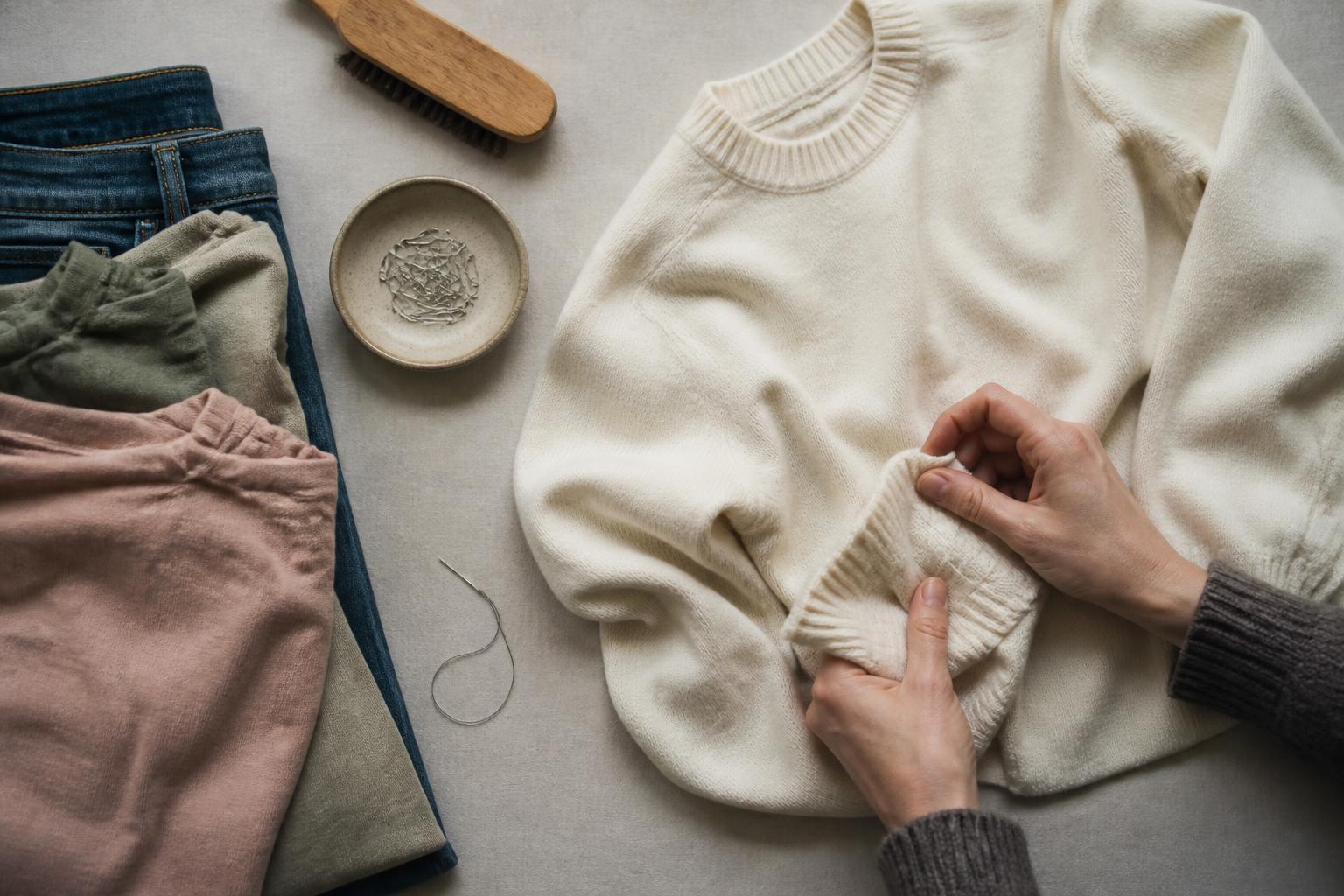
Repair needs should be considered before purchase, not after damage. Ask yourself:
- If the zip fails, can a tailor replace it?
- If the hem drops, is there enough fabric to rework it?
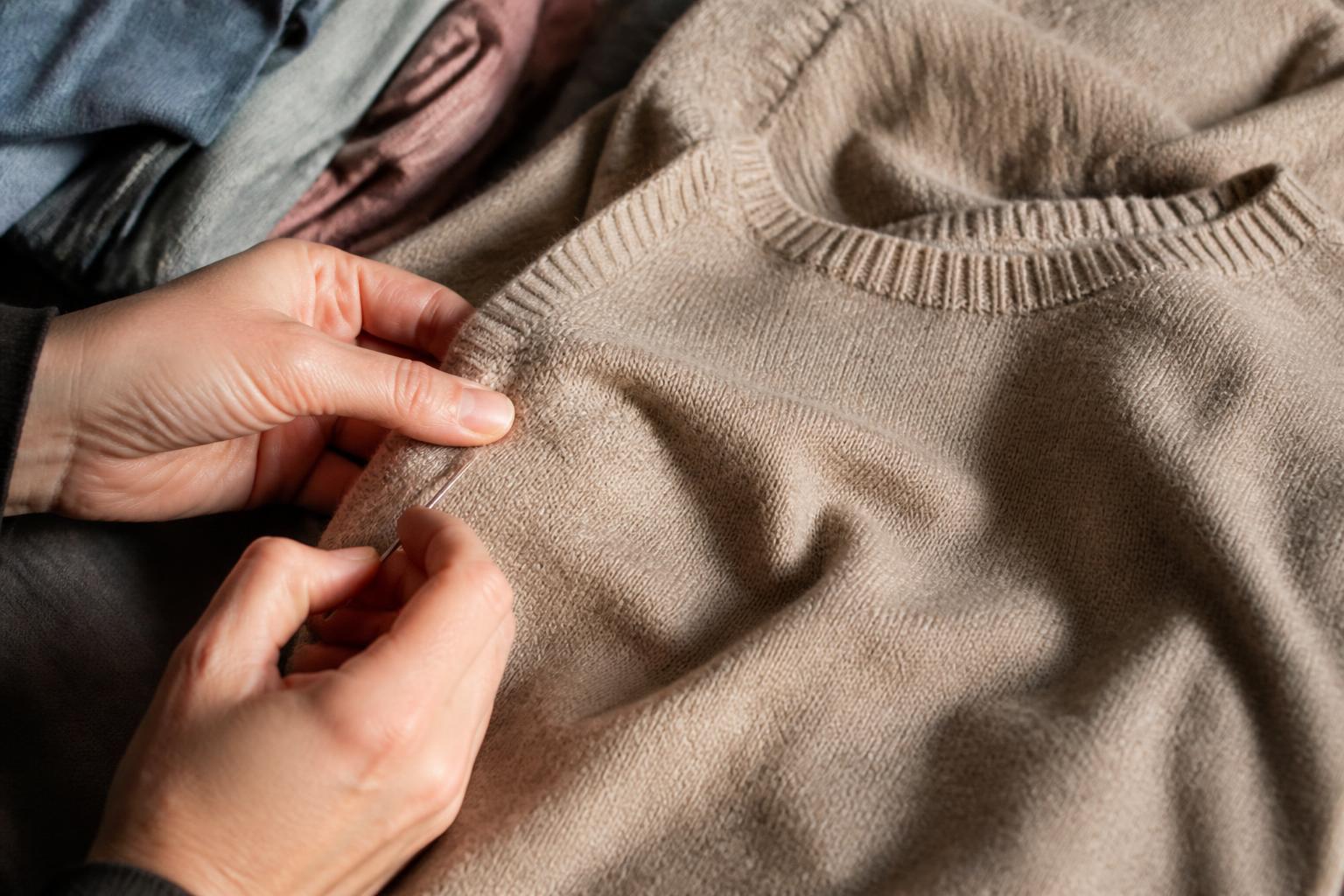
- If the knit snags, will the texture hide repair?
- If the sole wears down, can a cobbler resole it?
- If the lining tears, is it straightforward to mend?
These are ordinary questions, but they are central to whether a garment stays in service. We often find that supposedly elevated pieces are harder to repair than simpler ones because of bonded seams, decorative hardware, very fine fabric or tightly costed construction.
Care labels also need reading with some caution. In the UK, brands must provide certain textile labelling information, particularly fibre composition under retained EU law as it operates here, but care symbols themselves are not a universal guarantee of best possible care. Some labels are conservative, partly to reduce risk. That means “dry clean only” does not always mean a garment would be ruined by any other method, but we would never assume otherwise before buying. Unless you are willing to experiment, judge the garment by the care instructions supplied.
For many people, the most sustainable piece is the one they can wash, dry, store and mend without much friction. That is not a lesser standard. It is the difference between a wardrobe that functions and one that becomes a maintenance project. If you want examples of clothing choices that work better under normal UK conditions, see our guide to sustainable mens fashion that works for a real UK wardrobe, which is useful well beyond menswear alone.
How to compare common claims without oversimplifying
Some claims deserve neither blind trust nor automatic dismissal.
Recycled claims can be meaningful, especially where virgin synthetics are hard to avoid, such as waterproof shells, swimwear or some linings. But check what is recycled, by how much, and whether that improves the garment enough to justify the price. A jacket with a recycled polyester outer may still have mixed materials that make recycling at end of life difficult. Recycled content is one factor, not a final verdict.
Organic claims are strongest when clearly tied to the fibre and, ideally, backed by a recognised certification. Organic cotton can reduce reliance on certain chemical inputs at farm level, but it does not tell us about durability, dyeing, transport or garment construction. An organic T-shirt that twists after two washes is still poor value.
Deadstock claims need careful reading. Deadstock usually means existing surplus fabric, often from larger production runs. That can be a sensible use of material already made. It can also mean limited ability to reproduce a successful style, inconsistent fibre information, and occasional compromise on spare fabric for repairs or alterations. We would treat deadstock as a material sourcing detail, not proof of overall responsibility.
Made in the UK is often appealing to UK shoppers, and it can support shorter supply chains, easier oversight and domestic skills. But it is not automatically lower impact or more ethical than production elsewhere. Fabric may still be imported, and local manufacturing costs can encourage very lightweight construction if a brand is chasing a price point. Also, “designed in London” is not the same as made in the UK. If the place of manufacture matters to you, look for a direct statement.
Small-batch claims can indicate caution about overproduction, but they can also be used as a soft-focus quality signal without much substance. Producing 50 dresses instead of 5,000 does not tell us whether the fabric pills, whether workers were paid properly, or whether the style was fitted on more than one body shape. Small-batch can be positive, but it is not a shortcut.
The most sensible approach is to compare claims side by side:
- What exactly is being claimed?
- Which part of the garment does it apply to?
- Is there evidence, certification or a named supplier?
- What limitation is not being discussed?
- Does the claim improve the garment for your actual use?
That last point matters. A “made in the UK” linen blazer that creases instantly and needs dry cleaning may be less useful to you than a well-cut second-hand wool blazer made elsewhere that can be brushed, aired and altered easily. If you want another framework for separating image from substance, our article on how to judge luxury fashion brands without the marketing uses the same practical lens.
When second-hand is the better option
Sometimes the better choice is not to buy from the designer at all.
Second-hand can be the lower impact option when the item already exists in abundance, when the original retail price was inflated relative to quality, or when you are testing whether a style will actually work for you. This is especially true for tailoring, coats, leather bags, denim jackets and occasionwear, all categories where good pieces often outlast their first owner.
Designer second-hand is also useful when the brand's current claims are attractive but the new item still feels risky. Perhaps the fabric is delicate, the fit is unfamiliar, or the price leaves no room for disappointment. Buying pre-owned lets you assess whether the piece type suits your life before paying full retail.
What should you inspect first?
For coats and jackets, check cuffs, collar edges, underarms, lining tears, missing buttons and moth damage. For knitwear, inspect elbows, side seams, pilling, shrinkage and any thinning around the neckline. For bags, check corners, strap anchors, zip action, lining stains and whether the hardware finish is wearing through. For dresses and trousers, look at seam allowances, hems, seat wear and signs of alteration.
Always ask for fibre composition and care label photos if they are not shown. This matters as much second-hand as it does new. A bargain cashmere jumper that has already felted, or a viscose dress that distorts after washing, is rarely a bargain.
It is also worth checking whether the design has enough life left in the parts that matter. Leather can age beautifully, but cracked strap edges and torn anchor points are expensive to fix. Tailoring can be altered, but only within the fabric available. Shoes can often be improved with a resole or heel tip replacement, but severe upper damage is another matter.
Second-hand is not automatically the best route. If a used item needs immediate dry cleaning, relining, reheeling and zip replacement, the total cost may exceed a better new purchase. But where quality is solid and repairs are manageable, pre-owned often gives you access to better materials and construction than the same budget buys new.
The key is to judge the item, not the fantasy around it. Fashion designers can make worthwhile clothes. Some do the hard work of better sourcing, clearer disclosure and stronger construction. But the responsible choice is rarely decided by one claim on a swing tag. It is decided by whether the garment is honest about what it is, practical to care for, repairable when things go wrong, and likely to be worn often enough to justify its place in your wardrobe.

Questions about this article or a correction to suggest? Get in touch. Read more about our editorial approach.