Good inside wardrobe storage does one job better than any spare box under the bed. It keeps the clothes you actually wear supported, visible and easy to reach, so they come out ready to wear rather than crushed, stretched, musty or forgotten. A wardrobe is not just a place to hide clothing. It is where daily-use garments either keep their shape or slowly lose it.
That is why the best storage inside a wardrobe is not the one with the most inserts. It is the one that suits the clothes you own, the depth and height of the wardrobe, and the way you get dressed on an ordinary weekday. If shirts are packed so tightly you stop wearing them, or jumpers are stacked so high they slump at the bottom, the storage is not doing its job.
What inside wardrobe storage needs to solve
Storage inside a wardrobe has a narrower job than general bedroom storage. Under-bed boxes, blanket chests and spare-room shelves can hold overflow, off-season items or things you wear rarely. Inside the wardrobe, we need space that protects clothes in active rotation.
That means three practical things.
First, access. If you cannot pull a hanger out without dragging three others with it, or open a drawer because a hanging organiser blocks it, you will start stuffing things back in. Clothes become creased, buttons catch, knitwear gets snagged, and the pieces at the back disappear from use.
Second, visibility. Most of us wear what we can see. Wardrobe storage works best when categories are easy to scan at a glance. That usually means hanging similar items together, keeping folded stacks low enough to recognise, and containing small pieces so they do not spread across shelves. Good visibility reduces duplicate buying as well. You are less likely to buy another black top because the one you own was buried under denim.
Third, garment support. This is the part people skip. Different fabrics and garment types need different support if they are to stay wearable. Tailored jackets usually do better on shaped hangers. Heavy knitwear often stretches if left hanging. Bias-cut dresses can distort if stored badly. Trousers folded sharply over a thin rail may hold a hard crease where you do not want one. The point of inside wardrobe storage is not only to fit more in. It is to help clothes keep their shape between wears.
In many UK homes, wardrobes are also working against common housing issues. Box rooms, fitted wardrobes on outside walls, older properties with variable insulation, and bedrooms that are not heated consistently can all create stale air and trapped moisture. So the storage plan has to allow airflow, not just neatness.
Start with a quick wardrobe audit before you add organisers
Before buying shelf dividers, extra rails or drawer boxes, count what actually needs storing. Most disappointing wardrobe organisers fail because they were bought for an imagined wardrobe, not the real one.
Take everything out, or at least work category by category. Then sort into four groups:
- Must hang
- Better folded
- Needs containing
- Elsewhere storage
Must hang usually includes shirts, blouses, dresses, skirts, tailored trousers, suits, lightweight jackets and pieces that crease badly. Better folded usually includes knitwear, sweatshirts, T-shirts if you have enough shelf space, denim, leggings and anything heavy that may stretch on a hanger. Needs containing covers underwear, socks, belts, scarves, tights, swimwear and small accessories. Elsewhere storage is for occasionwear, off-season coats, holiday items or anything you wear rarely.
Count each group. You do not need a spreadsheet unless you like one. A simple note on your phone is enough. What matters is knowing, for example, that you have 18 shirts to hang, 6 dresses, 10 jumpers to fold, 8 pairs of jeans, and one drawer currently trying to hold every sock, bra and belt you own.
Then measure the usable interior of the wardrobe. That means:
- Width of each rail section
- Drop from rail to floor or shelf
- Shelf depth
- Drawer internal dimensions
- Door clearance
- Whether the wardrobe is full depth or shallow
A standard clothes hanger needs more depth than many older wardrobes comfortably offer. If your wardrobe is shallow, front-facing hanging may crush sleeves and shoulders against the door. In that case, slim hangers help, but there is still a physical limit. A hanging shelf unit that looks useful online may steal too much depth in real life.
This audit also shows whether you have a clothing problem or a storage problem. If the rail space fits 35 hanging items without crowding and you are trying to store 60, no organiser will fix that. You either need to move some items elsewhere, rotate seasonally, or reduce duplication. Our guide to seasonal wardrobe storage that works in a small home goes further on what should stay in the wardrobe and what can move out.
How to divide rails, shelves and drawers by garment type
Once you know your clothing mix, divide the wardrobe by how garments behave, not by vague ideas of tidiness.
For rails, keep similar lengths together. Shirts and blouses can share one section. Trousers, if hung full length or folded over clip hangers, need another. Dresses need the tallest drop. Grouping by length stops hems bunching on the floor or over lower shelves.
Shirts do best on proper hangers that support the shoulder line. Very thin wire hangers can leave marks and distort shape over time. Slim velvet hangers save space, but check that they are not so sharply angled that they leave points at the shoulder, especially on soft cotton shirts and fine knits. For structured blazers and coats, slightly broader hangers are worth the extra room.
Trousers can be stored a few ways. Tailored trousers usually hang well from clip hangers with the clips placed at the waistband or from bars that fold them neatly. Denim is more forgiving and can be folded on a shelf if rail space is tight. If you dislike a centre crease, avoid hanging trousers over a narrow bar for long periods.
Dresses depend on fabric and cut. Light day dresses usually hang well. Heavy jersey or knitted dresses can lengthen on the hanger, so watch for stretching at the shoulders or straps. Dresses with built-in loops should be secured with those loops, not left sliding off the hanger.
Knitwear should usually be folded, not hung. This is one of the easiest ways to keep clothes wearable for longer. Wool, cashmere, merino and heavier cotton knits can all stretch under their own weight. Fold jumpers flat, with the heaviest ones at the bottom of a short stack. Keep shelf stacks low enough that you can lift one out without toppling the rest. Four to six items per stack is often manageable. More than that and the bottom pieces get crushed and forgotten.
Denim can be folded on shelves, stacked by style or colour if that helps you find what you need. Because jeans are heavy, avoid overfilling one shelf. The stack becomes awkward and pulls at the fabric when you tug a pair from the middle.
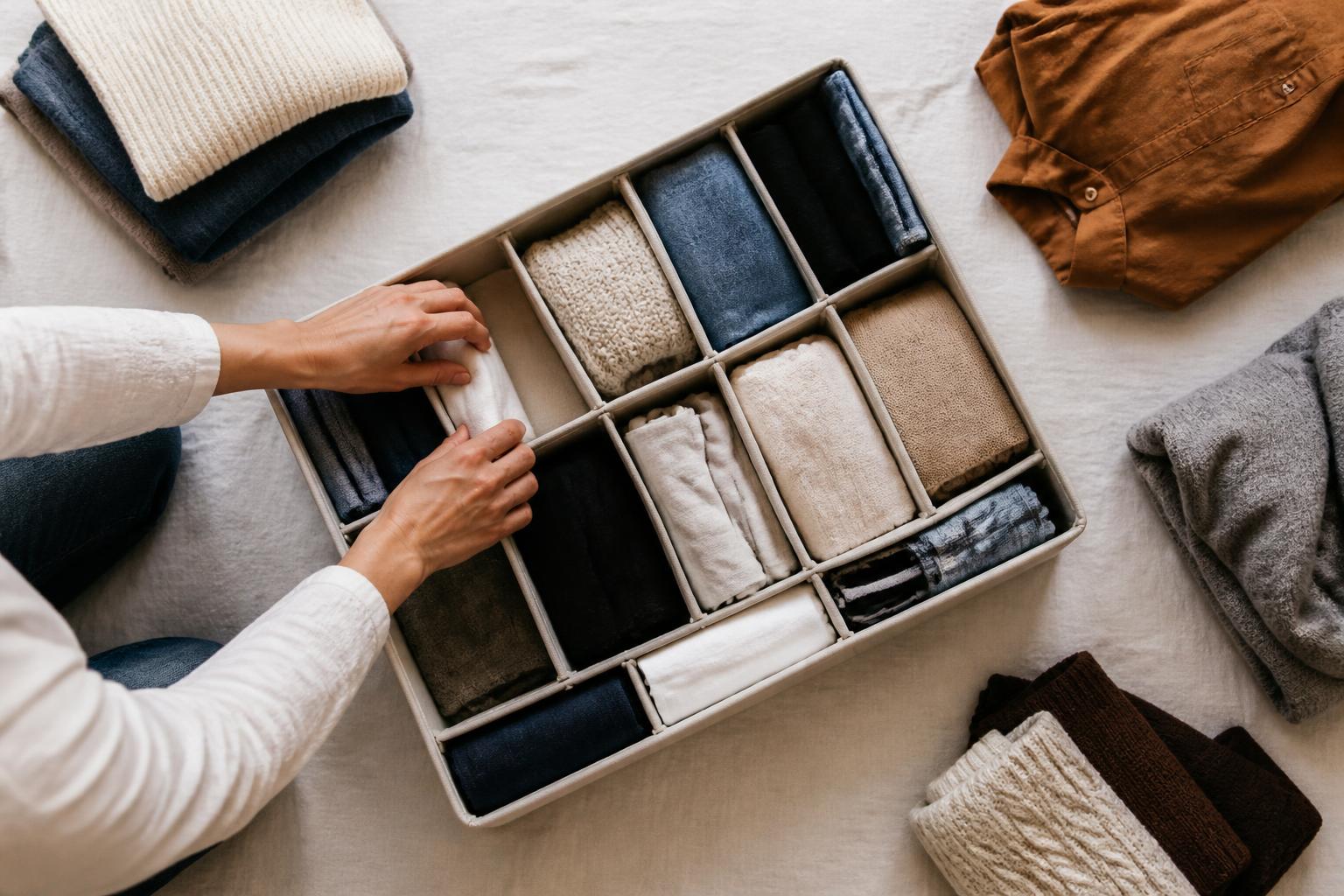
Underwear and socks belong in drawers or lidded boxes on shelves, divided into sections if possible. This does not need expensive inserts. Small fabric boxes, cardboard drawer dividers or adjustable sections all work if they stop items tangling together.
Accessories need restraint. Belts can roll into a small box or hang from a dedicated hook. Scarves can be folded in a drawer or draped over a multi-loop hanger if the wardrobe is not cramped. Bags are usually better on an upper shelf, stuffed lightly to hold shape and stored upright where possible.
If you are setting up a wardrobe from scratch, it helps to think in outfits as well as categories. Workwear, school-run clothes, weekend layers and occasion pieces do not need equal access. Our piece on building an office wardrobe that works all week is useful if a large share of your wardrobe needs to be ready for weekday use.
The small inside wardrobe storage ideas that make the biggest difference
The most useful additions are usually the least dramatic. A few well-chosen tools can make existing rails and shelves work harder without turning the wardrobe into a gadget shop.
Shelf dividers are one of the best fixes for open shelves. They stop stacks of knitwear or denim from spreading sideways and collapsing into each other. They are especially useful on wide fitted shelves. Their limit is shelf thickness and depth. Some clip-on dividers do not grip chunky shelves well, and in a very shallow wardrobe they can steal usable width.
Hanging shelf organisers can be helpful for lightweight folded items such as T-shirts, leggings or small bags. They are less useful for heavy jumpers or jeans, which make the whole organiser sag. In a narrow wardrobe, they can also block sightlines and catch on hanging clothes beside them.
Storage boxes are best for contained categories, not mystery piles. Use them for scarves, swimwear, repair items, or out-of-season accessories. If boxes go on a high shelf, label them clearly. Otherwise they become dead storage. Lidded boxes can help keep dust off rarely used pieces, but avoid sealing away anything slightly damp from wear or washing.
Hooks can solve awkward gaps. A hook on the inside wall of a wardrobe can hold tomorrow's outfit, a dressing gown, or a frequently worn belt. Overdoor hooks can work too, but check clearance carefully. If the door no longer shuts cleanly, the hook is not helping.
Drawer sections make a bigger difference than most people expect. Underwear, socks and hosiery last better when they are not mashed into one deep drawer. Being able to see what you have also reduces over-washing. If you can find the clean tights or vest top quickly, you are less likely to rewash something just because it was hidden.
Multi-tier trouser hangers and cascading hanger hooks can save space, but use them cautiously. They increase density, which can reduce airflow and make garments harder to remove. They are best for lightweight items in a wardrobe with enough depth and enough room to manoeuvre.
If your wardrobe is part of a wider bedroom storage problem, it is worth pairing internal fixes with a better room layout. We cover that in bedroom clothes storage that cuts creasing and clutter.
How to stop damage from crowding, damp and poor airflow
The main threats inside wardrobes in UK homes are not dramatic. They are slow, ordinary and easy to miss.
Crowding is the first. When clothes are packed tightly, fabric rubs against zips, buttons and rough seams. Delicate sleeves get crushed. Dark dyes can transfer onto lighter items, especially if garments are slightly damp from wear or have not been washed according to the care label. Crowding also means clothes cannot air between wears, which encourages stale smells.
Leave some space between hangers. You do not need gaps you can drive a bus through, but you should be able to slide items along the rail easily. Shelves should not be packed to the front edge if that means garments snag when you pull them out.
Damp and trapped moisture are common in UK wardrobes, especially fitted units against external walls. Condensation risk is often higher in winter, and it can be worse in rooms where windows stay shut and washing is dried indoors. Put away only clothes that are fully dry. That includes coats after rain and knitwear after careful hand washing. If a wardrobe smells musty, deal with the room conditions as well as the storage. Ventilation matters more than scented sachets.
Where a wardrobe backs onto a cold wall, leave a little breathing space between the wall and the clothes if you can. Avoid cramming shoes, bags and folded knitwear hard against the coldest surface. Moisture absorbers can help in some situations, but they are not a cure for a damp room. If you suspect mould, deal with the source promptly and keep affected textiles away until they are clean and fully dry.
Fabric distortion is the next risk. Hanging heavy garments for too long can pull them out of shape. Folding very delicate items on a rough shelf can leave pressure lines. Shoulder marks from poor hangers are common and avoidable. Matching garment type to storage method solves a lot of this.
Pest risk is lower than many people fear, but not imaginary. Moths are the usual concern for wardrobes in the UK, particularly with wool, cashmere, silk and items stored unwashed. The risk comes from dark, undisturbed areas and fibres carrying skin cells, food traces or body oils. Clean garments before long-term storage, vacuum wardrobe floors and corners, and inspect natural fibre pieces regularly. Cedar and lavender may smell pleasant, but they are not a substitute for cleaning and monitoring.
A simple reset routine that keeps wardrobe storage working
Even the best inside wardrobe storage fails if it is only tidy once, on a Sunday in January. What works is a small reset routine that fits normal life.
When you take clothes off, decide immediately whether they are ready for laundry, ready to air, or ready to go back. Do not put half-worn clothes straight into a dense pile on a chair, then back into the wardrobe the next day. If something can be worn again, give it a few hours to air first, especially knitwear, denim and jackets.
Once a week, do a ten-minute reset. Rehang what belongs on hangers. Refold any shelf stacks that have slumped. Pair stray socks. Put belts and scarves back into their sections. This is also the moment to spot a loose button, dropped hem, missing hook-and-eye or a stain that needs treating before it sets.
Once a month, scan for space pressure. Are hangers becoming hard to move? Are folded stacks too tall? Is one drawer refusing to shut? That is your sign to rotate out off-season items or recheck categories. You do not need a full declutter every time. Often the answer is simply moving bulky winter knits or holiday clothes elsewhere for a few months.
At the change of season, do a fuller reset. Wash or clean pieces before storing them away, following the care label. In the UK, that means paying attention to fibre content and drying conditions, not assuming that a quick freshen-up is enough before a garment goes into a box for months. Check for repairs before items are packed away, because a missing button is easier to fix now than when you need the coat in a rush next November.
The aim is not a showroom wardrobe. It is a working one. If the clothes you wear most are easy to reach, properly supported and kept in decent condition, your wardrobe is doing its job. Good storage inside a wardrobe should make getting dressed simpler, and help the clothes you already own stay wearable for longer.

Questions about this article or a correction to suggest? Get in touch. Read more about our editorial approach.