If you have ever asked what ethical fashion is, the short answer is this: it is clothing made and sold with proper attention to people, animals and honest business practice. It asks whether the people who made a garment were treated safely and fairly, whether animals were harmed or exploited, and whether the brand is telling the truth about how the item was produced.
For an everyday wardrobe, ethical fashion is not just about buying from a perfect brand, because that does not really exist. It is about making better decisions with the information you have, keeping good clothes in use for longer, and avoiding purchases that create avoidable harm. In practice, that often starts with fewer impulse buys, better care, more repairs and a sharper eye for vague claims.
What does ethical fashion actually cover?
Ethical fashion is mainly about the human side of clothing, though it often overlaps with environmental issues. In plain English, it means asking whether a garment was made under decent conditions and sold honestly.
That includes several separate questions.
First, working conditions. Were the people who cut, stitched, dyed, packed or finished the garment working in a safe factory or workshop? Safety covers basics that should not be optional, such as fire exits, ventilation, machine guarding, electrical safety and reasonable working hours. It also includes whether workers can raise concerns without intimidation.
Second, pay and employment terms. Ethical fashion is not only about whether wages met the legal minimum in the country of manufacture. Many readers mean something broader when they use the term. They mean whether workers are paid enough to live on, whether wages arrive on time, whether overtime is forced, and whether people are hired through insecure arrangements that strip away rights in practice.
Third, treatment and dignity at work. That includes freedom from harassment, discrimination and coercion. It also includes whether workers are free to organise, join a union or bargain collectively. In some supply chains, that can be one of the hardest things to verify from the outside.
Fourth, animal welfare. If a garment contains wool, leather, down, silk or other animal-derived materials, ethical questions do not stop at “natural fibre” or “traditional craft”. Readers often assume natural means better, but that tells us very little about how animals were kept or treated. Ethical fashion asks whether animal welfare standards were meaningful and whether avoidable suffering was reduced.
Fifth, honest claims. A brand can use warm language about conscious choices, artisan values or responsible sourcing, yet say very little that can actually be checked. Ethical fashion includes truthfulness in marketing. If a brand says a product is responsibly made, we should be able to see what that means. Which factory? Which standard? Which part of the supply chain? What evidence?
This matters because a garment can look simple on a rail and still involve a long chain of spinning, weaving, dyeing, cutting, sewing, trimming, packaging and shipping across several countries. A claim about one stage is not a claim about all of them.
For everyday wardrobes, ethical fashion also connects to use. Clothing that falls apart after a handful of wears is not a neutral purchase, even if the hangtag says the right things. If we buy something that cannot be washed sensibly, repaired neatly or worn often, the ethical case is weaker than the marketing may suggest. That is one reason we put so much emphasis on garment care, mending and buying with a realistic idea of how a piece will fit into actual life.
How is ethical fashion different from sustainable fashion?
People often use the terms as if they mean the same thing, but they are not interchangeable.
Ethical fashion usually focuses first on people and animals. It is about labour rights, pay, safety, welfare and honesty. Sustainable fashion usually focuses first on environmental impact. That includes water use, pollution, carbon emissions, chemical management, waste and how long a garment stays in use.
There is overlap, of course. A factory with poor chemical controls can be bad for workers and bad for local waterways. A very low-priced garment made to be worn a few times can raise both labour and waste concerns. But the overlap does not erase the difference.
A useful way to think about it is this. A garment can be better on environmental grounds and still raise ethical concerns. For example, a recycled fibre claim does not tell us whether the people sewing the item were paid fairly. Equally, a garment can come from a supplier with stronger labour standards and still have a heavy environmental footprint because of fibre choice, dyeing or transport.
This distinction matters because it changes the questions we ask. If we only ask whether something is sustainable, we may get answers about recycled content, lower-impact fibres or reduced packaging. Those points can be useful, but they do not answer whether workers were safe or free from exploitation. If we only ask whether something is ethical, we may miss the environmental cost of a garment that uses large amounts of water, sheds microfibres or cannot be recycled because of its fibre mix.
In the UK, this also matters when reading claims made by brands selling here. Marketing can blur the terms because “sustainable” sounds broad and positive. Under UK consumer protection rules, businesses should not mislead consumers through actions or omissions, and environmental claims are under growing scrutiny. The Competition and Markets Authority has issued guidance on green claims for the UK market. That does not mean every vague phrase is unlawful, but it does mean brands should be able to back up what they imply.
For us as shoppers, the practical takeaway is simple. Treat ethical and sustainable as related but separate checks. Ask who made it, under what conditions, and ask what the environmental cost is likely to be. Then ask a third question that often gets forgotten, will this actually work in your wardrobe long enough to justify buying it?
What can labels, certifications and brand claims really tell you?
Labels and certifications can help, but they are not magic shortcuts. One badge rarely tells the full story of a garment.
Some schemes focus on a particular fibre or raw material. Some focus on chemical processing. Some focus on social auditing in factories. Some combine a few areas, but still only within a defined scope. That scope matters.
For example, a certification may apply to the cotton in a T-shirt but not to the dyes, trims, thread, packaging or final sewing stage. A social audit may cover one factory that assembled the garment, but not the mills that produced the fabric or the subcontractors used during peak production. A wool standard may say something about animal welfare, but not much about wage practices in the cut and sew stage.
That does not make certifications useless. Far from it. Good schemes can give us a better basis than a brand simply saying “responsible” or “eco-friendly” with no evidence. They can show that at least one part of the supply chain has been checked against a published standard. They can also make it easier to compare products.
But they have limits.
First, not all schemes are equally rigorous. Some require independent auditing and clear chain-of-custody rules. Others are looser membership or self-declaration models.
Second, certification does not always cover the whole garment. A coat may contain certified wool, conventional polyester lining, a membrane with separate chemical concerns, and trims from several suppliers. One label on the hangtag can hide a lot of complexity.
Third, audits are snapshots. They can identify problems, but they do not guarantee that every day in every facility meets the standard claimed. This is especially relevant in sectors where subcontracting happens under time pressure.
Fourth, some claims are simply too broad to mean much. “Conscious”, “better”, “kind to the planet”, “responsibly sourced” and similar phrases can sound reassuring while saying almost nothing concrete. We should look for specifics. Better than what? Responsibly according to which standard? Sourced from where? Audited by whom?
A useful habit is to read the product page, not just the swing tag. Look for supplier information, factory lists, material percentages, care instructions and a clear explanation of what exactly is certified. If a brand says a garment is made ethically, we should be able to find more than a mood board and a promise.
We should also remember that labels do not tell us whether a garment suits our life. A certified blouse that needs specialist dry cleaning and will be worn twice a year may not be the most sensible choice for an affordable, hard-working wardrobe. Keeping clothes wearable matters too, which is why practical care matters as much as claims. If you are unsure what a care label really means, our guide on how to read clothes care symbols without ruining favourites can help you avoid buying something you will struggle to look after.
How can you make ethical fashion decisions without buying a whole new wardrobe?
The most useful answer is often not “buy better”, but “use better”. Ethical fashion does not require a dramatic clear-out and replacement cycle. In fact, that usually creates more waste and more spending.
Start with what you already own. The most ethical item in your wardrobe is often the one already there, provided it fits, functions and gets worn. Before replacing anything, ask whether the problem is wear, fit, styling, damage or care.
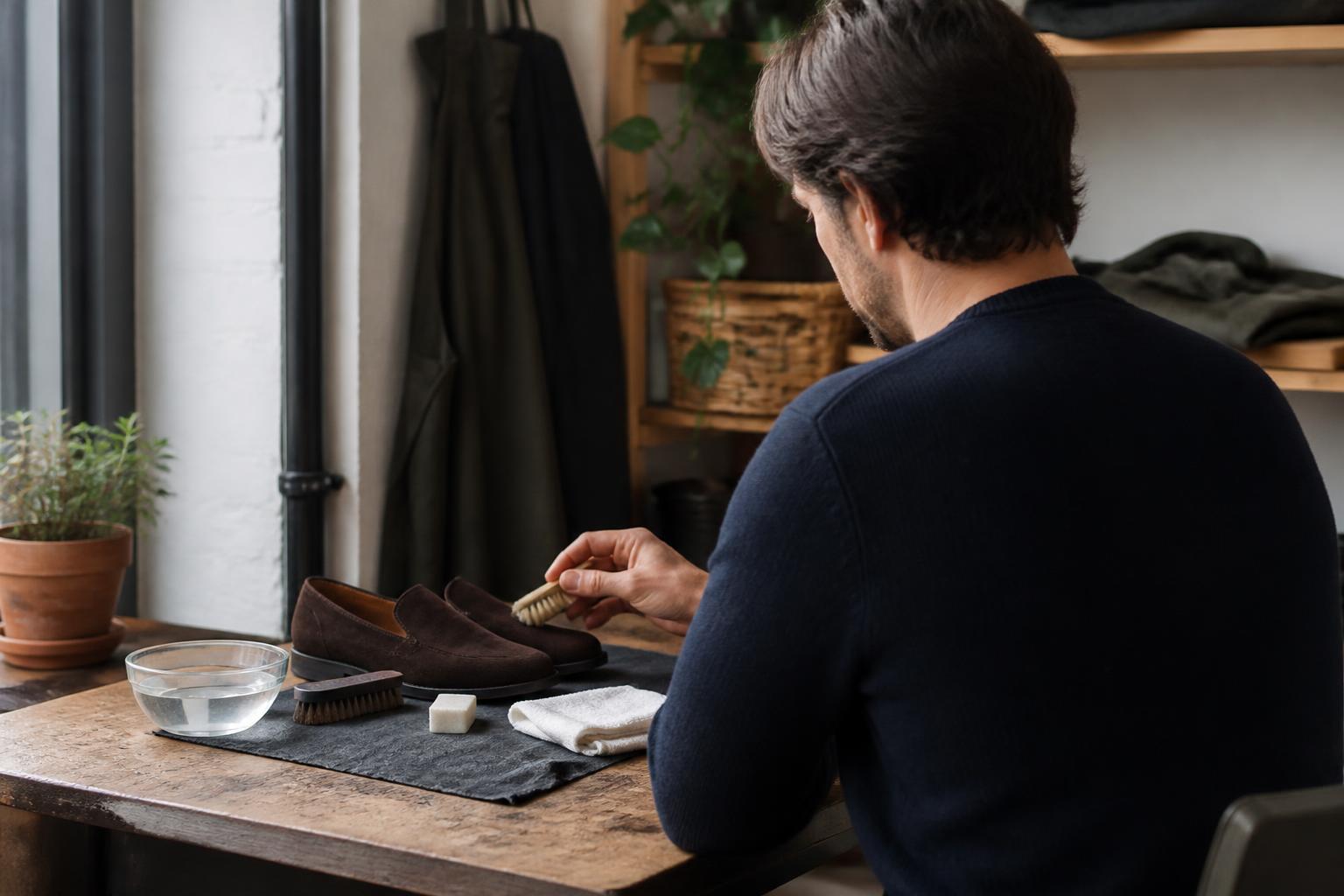
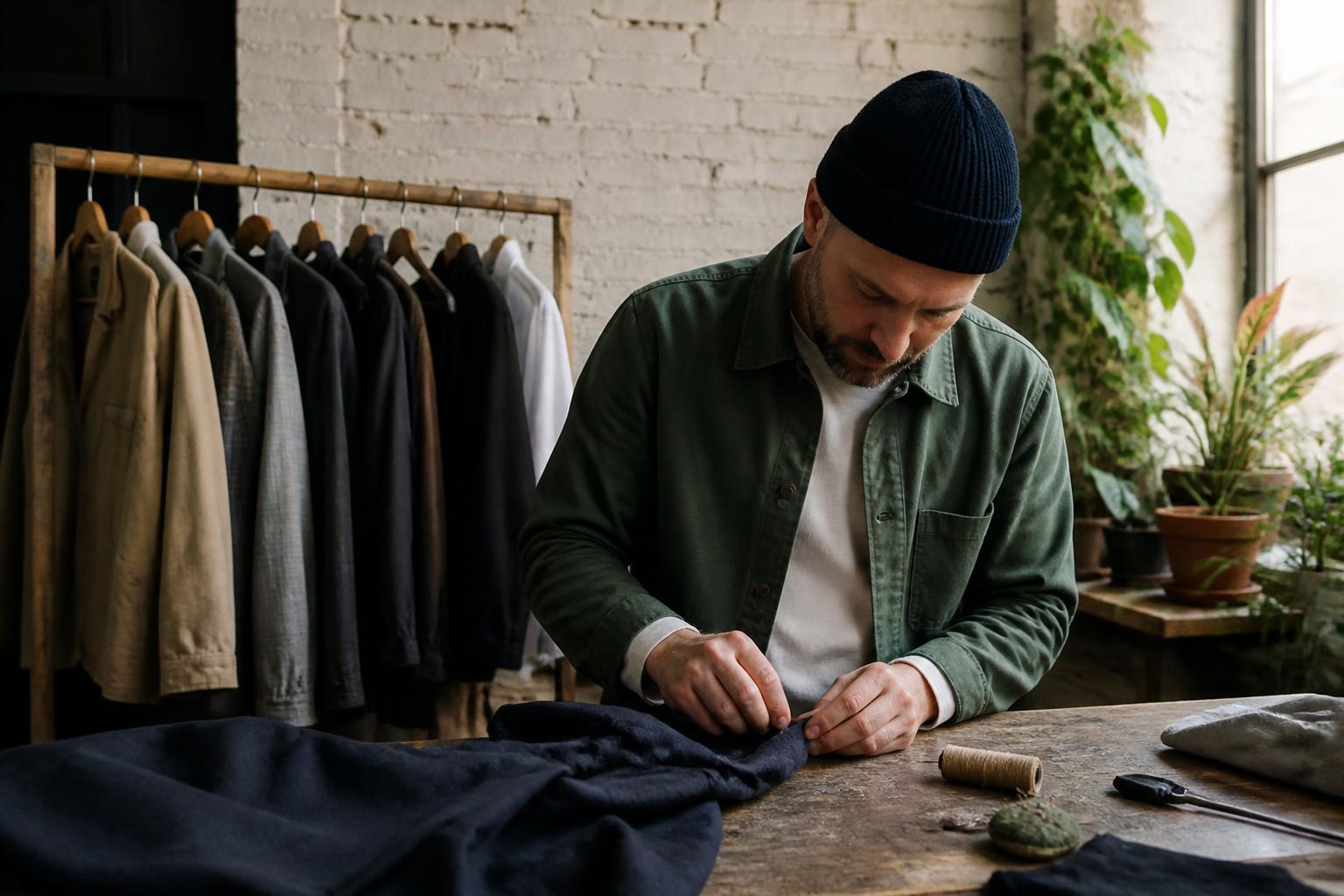
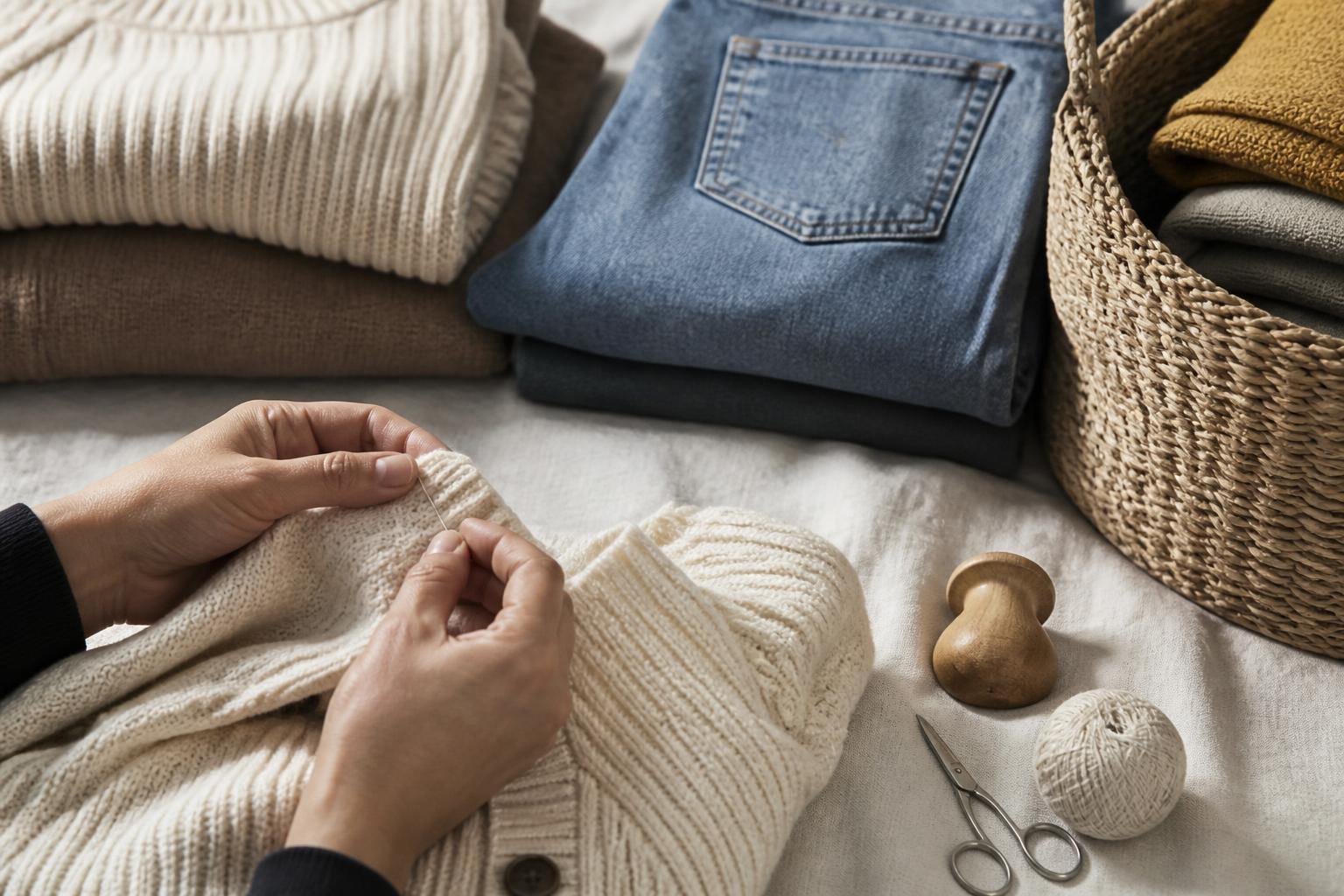
If something looks tired rather than ruined, a bit of maintenance may solve it. De-bobbling knitwear, re-sewing a button, replacing a zip pull, stitching a small seam split or adding a patch can put an item back into regular rotation. We have a practical guide to how to choose clothing repair patches that actually last if you are deciding what will work on knees, elbows or outerwear.
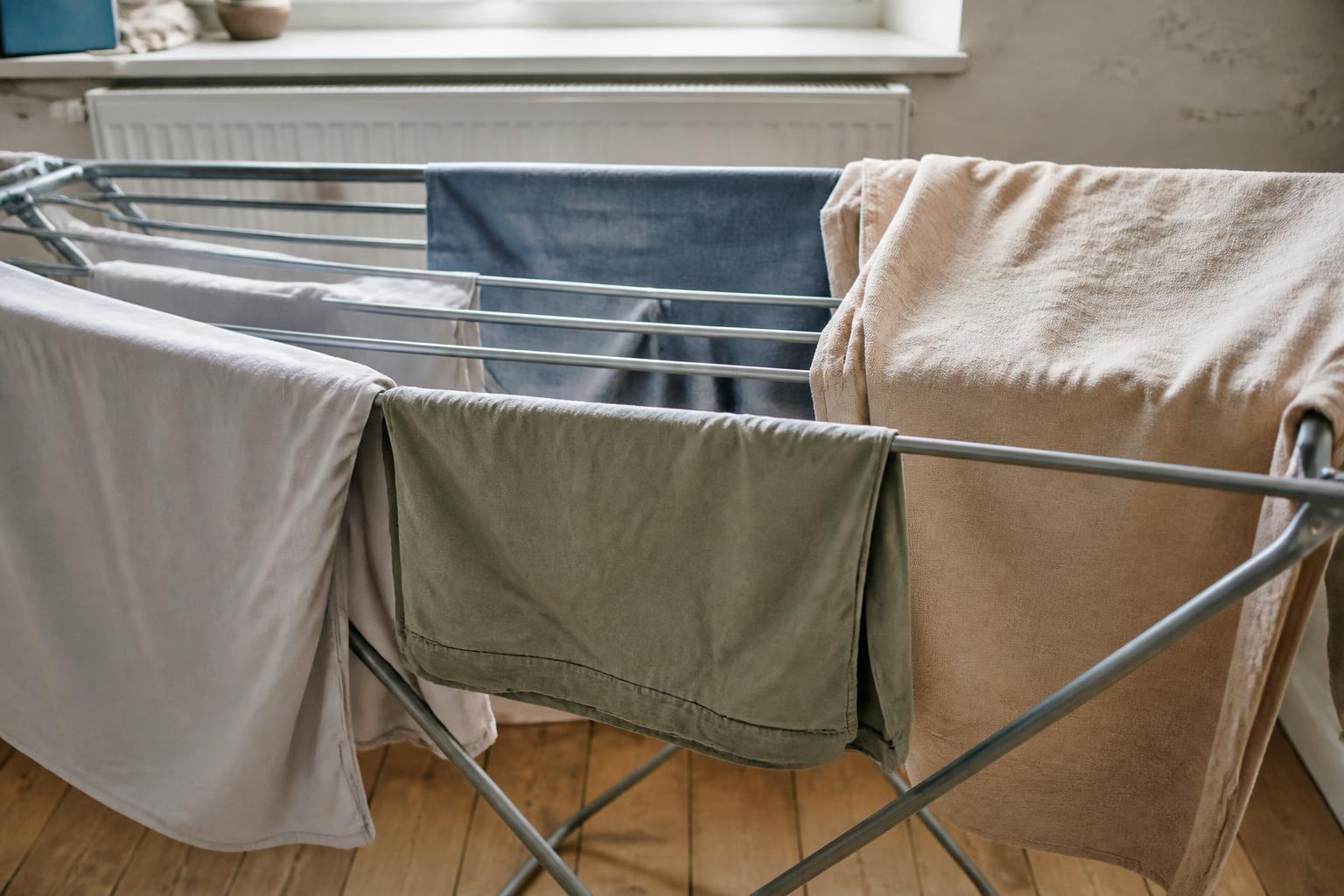
Washing habits matter as well. Over-washing shortens the life of many garments, especially knitwear, denim, bras, waterproofs and anything with stretch. Following the care label properly can make a real difference to longevity. If you tend to guess at symbols, it is worth brushing up with our guide to fabric care that keeps clothes wearable for longer.
Alterations are another underused option. A waist taken in, trouser hem shortened or sleeve adjusted can rescue an item that is good in every other way. For everyday pieces, small tailoring costs can be easier to justify than replacing the garment, especially if the fabric and construction are sound.
Borrowing and second-hand shopping also sit comfortably within an ethical approach. Occasionwear, maternity wear, children’s coats, walking kit for a one-off trip, and trend-led pieces are all strong candidates for borrowing, renting or buying used. In the UK, second-hand options are now broad enough that many basics and specialist items can be found with patience. The point is not to treat second-hand as automatically virtuous, but to use it where it genuinely replaces a new purchase you would otherwise make.
Storage matters too. Poor storage creates avoidable damage from moths, damp, stretching and crushing. If clothes are hard to see or reach, they are also less likely to be worn. A wardrobe that works better is usually a wardrobe that buys less. That is one reason practical systems matter more than aspirational shopping lists.
None of this requires moral perfection. It is simply a more grounded way of acting on the idea of ethical fashion. Wear what you own. Care for it properly. Repair what is worth repairing. Pass on what does not suit you. Replace things thoughtfully when replacement is genuinely needed.
What should you check before you buy?
When you do need to buy something, a short checklist helps keep the decision realistic.
First, do you need it? That sounds obvious, but it is the check that prevents the most regret. Are you replacing a worn-out staple, filling a genuine gap, or reacting to a discount, an event or a burst of inspiration? If you cannot picture at least a few outfits and occasions, pause.
Second, how often will you wear it? Cost per wear is not the whole story, but it is useful. A well-made item that earns frequent use is easier to justify than a bargain that sits untouched. If you want a more practical way to think this through, our piece on what your clothes really cost to wear breaks it down clearly.
Third, what does the care label demand? In the UK, many of us buy with the front of the garment in mind and only read the care label when something goes wrong. Check before buying. Is it hand wash only? Dry clean only? Reshape while damp? Wash separately? Cool iron only? These are not minor details if you are building an everyday wardrobe on a budget and limited time.
Fourth, can it be repaired? Look at seam allowance, spare buttons, zip quality and whether high-wear areas could be patched or re-stitched. A very flimsy fabric, bonded construction or awkward trim placement can make repairs harder than they need to be.
Fifth, what is the fibre mix? A fibre blend is not automatically bad, but it affects wear, washing, comfort and end-of-life options. A small amount of elastane can improve fit and movement, yet heavy fibre mixing can make recycling harder and may affect how a garment ages. Think about what the fibre content means in practice. Will it bobble? Shrink? Hold odour? Need special care? Shed microfibres?
Sixth, does it fit now, not after a hoped-for alteration or lifestyle change? Ethical buying is not helped by clothes that spend months waiting to become useful. If the shoulders are wrong, the rise uncomfortable or the fabric too clingy for how you actually dress, leave it.
Seventh, what are the returns terms? This matters particularly for online shopping. A high return culture has its own impacts, and some items are bought casually because returning feels easy. Before ordering multiple versions, check measurements, fabric details and reviews carefully. If you do order online, make the best first choice you can.
Eighth, what evidence sits behind the claim? If a brand says the item is ethical, sustainable or responsible, look for the proof. Is there a named certification? Supplier information? A published policy with specifics? Or just a lot of polished language? In the UK, we should expect claims to be clear enough that a shopper is not misled.
Finally, ask whether this purchase supports the wardrobe you are trying to build. A practical wardrobe is not made ethical by labels alone. It becomes more ethical when the clothes are worn often, cared for properly, repaired when sensible, and chosen with enough thought that they do not become clutter six weeks later.
That is the most useful answer to the question of what ethical fashion means in everyday life. It is not a search for flawless shopping. It is a habit of paying attention, to people, to materials, to claims, and to the real use a garment will get once it reaches your home.

Questions about this article or a correction to suggest? Get in touch. Read more about our editorial approach.