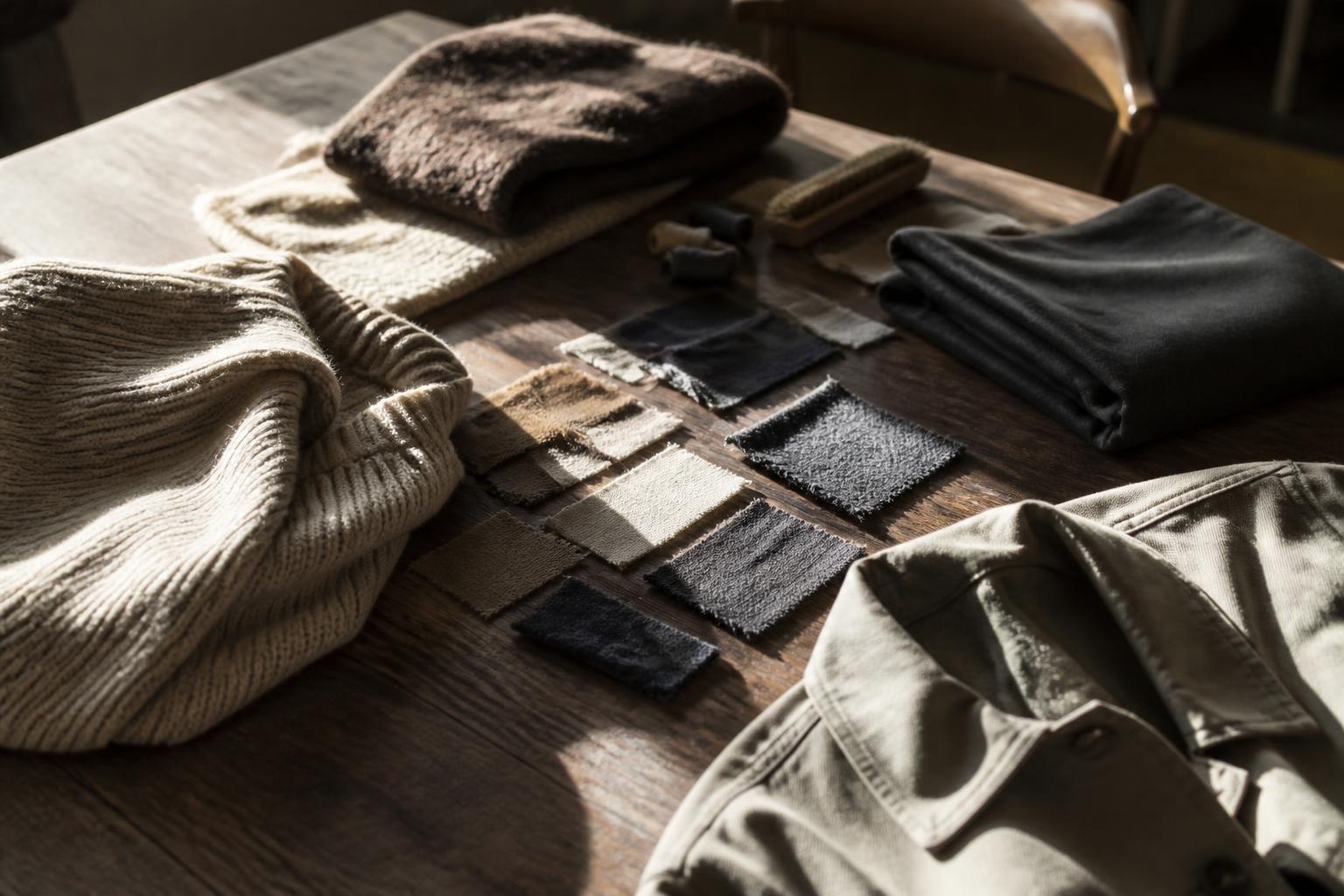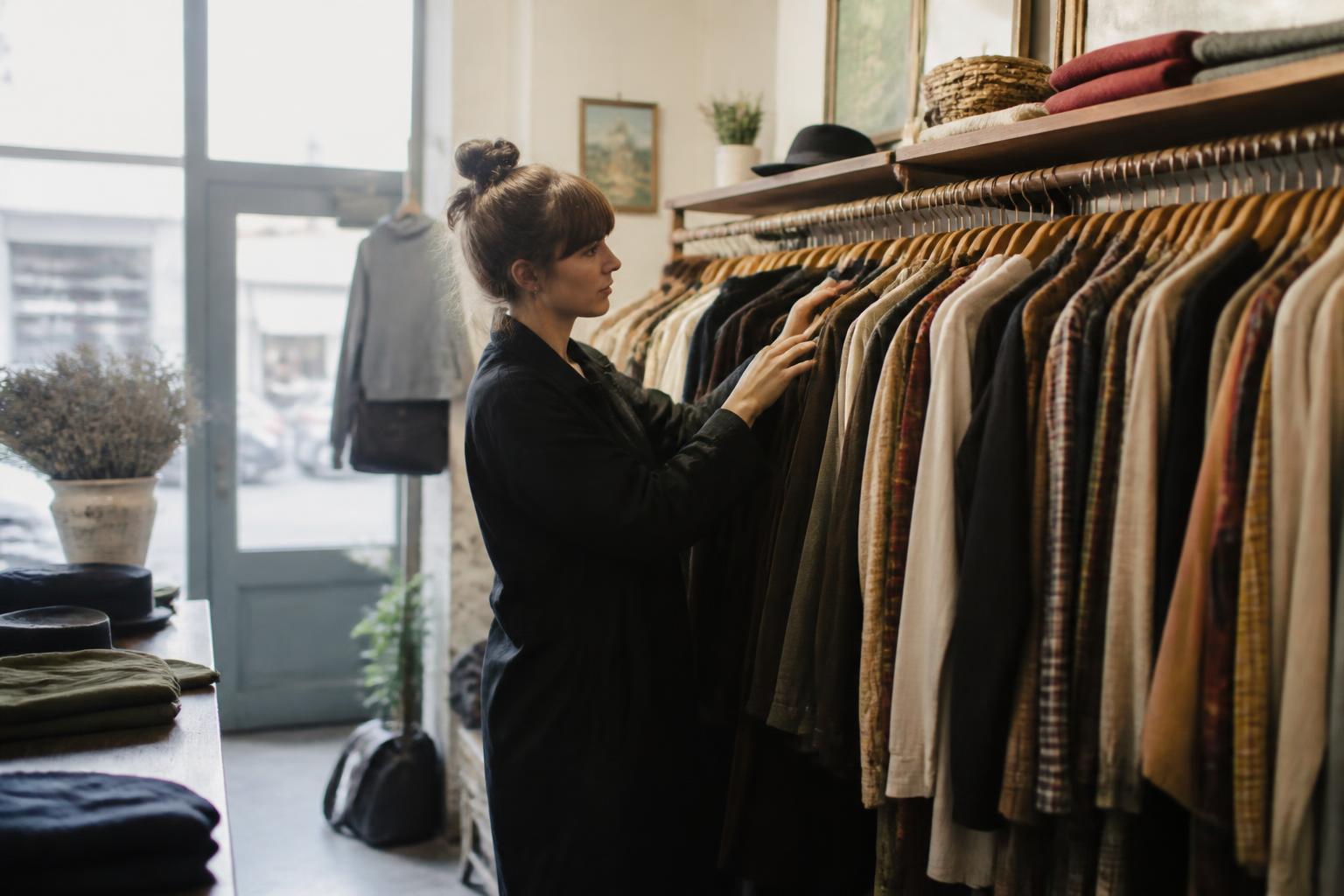
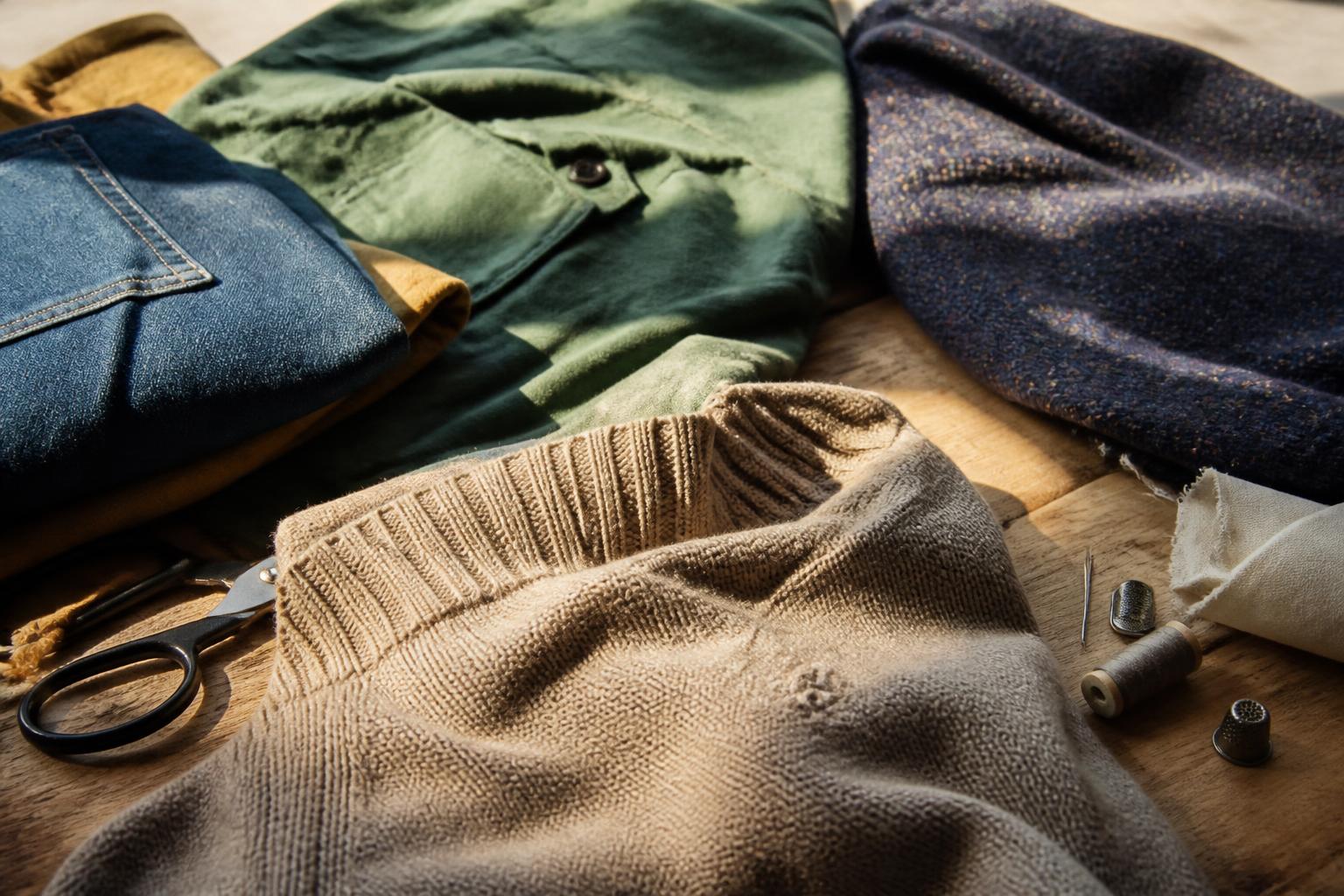
The fashion system shapes your wardrobe long before you decide what to buy. It affects what fabrics are available, how cheaply clothes are sold, how well they are made, what care they need, whether they can be repaired, and how easy they are to resell or recycle later. So when we talk about better wardrobe choices, we are not just talking about personal taste or willpower. We are talking about the systems behind the rail.
That is why the sustainable fashion industry matters to an everyday wardrobe. It is not a separate niche for people with large budgets or perfect habits. It is the part of fashion that asks whether clothes are designed to last, made with fewer harms, cared for properly, worn often, repaired when possible, and dealt with sensibly at the end of use. For most of us in the UK, that comes down to practical decisions, not purity.
What people mean by the sustainable fashion industry
In plain English, the sustainable fashion industry is the part of fashion trying to reduce environmental damage and improve social conditions across a garment's whole life. That includes the fibre, the mill, the dye house, the factory, the warehouse, the shop, the home laundry basket, the sewing kit, the second-hand platform, and eventually the bin, donation bag, or textile collection.
That wider definition matters because clothing impact is not solved by picking a single "good" fabric. A cotton shirt can still have a heavy footprint if it is dyed badly, shipped wastefully, worn twice, then binned. A polyester fleece may contain recycled content, but that does not automatically make it low impact if it sheds microfibres in washing and is replaced every winter. A wool jumper can last for years if cared for well, or shrink in one hot wash and become instant waste.
So when we assess fashion properly, we look at several linked stages.
First, design. Was the garment designed for repeat wear, repair, and decent fit, or for a quick trend cycle? Are seams accessible? Are spare buttons included? Is the fabric likely to bobble, snag, or distort?
Second, production. What fibre was used? How was it processed? Were chemicals managed properly? Was the garment made under conditions the brand can account for with some specificity?
Third, use. This is the stage most of us control directly. Washing too hot, tumble drying by default, over-cleaning, poor storage, and ignoring small repairs can shorten a garment's life dramatically.
Fourth, reuse and repair. Can the item be altered, resoled, re-dyed, patched, or resold? A wardrobe works better when garments have a second life, whether that is with us or someone else.
Fifth, disposal. In the UK, putting worn textiles in general waste means they are very likely to be incinerated or landfilled. Textile banks, council collections, charity sorting, and specialist take-back schemes all work differently, and not everything donated is actually reusable.
This is why we tend to talk less about miracle fibres and more about the whole system. If you want a wardrobe that works, the best question is usually not "Is this fabric sustainable?" but "Will this garment earn its place, survive normal life, and stay useful for long enough to justify the resources behind it?"
Where clothing impact happens before a garment reaches your wardrobe
Most of a garment's impact begins before it ever reaches your home. The main stages are fibre production, spinning and weaving or knitting, wet processing such as bleaching and dyeing, garment manufacture, packaging, transport, and retail handling.
Fibre production is where broad comparisons often start, but it is also where sweeping claims can mislead. Cotton, wool, polyester, linen, viscose, leather and recycled fibres all come with trade-offs. Cotton can involve high water use and pesticide concerns depending on where and how it is grown. Polyester is fossil-fuel based, but often durable and widely used in performance clothing. Wool is renewable and long-lasting, but livestock impacts matter. Viscose comes from wood pulp, yet the chemical process and forest sourcing are crucial. Linen is often praised, but the finished garment still depends on processing, dyeing and build quality.
That is why UK readers should treat simple rankings with caution. A headline saying one fibre is always better than another usually strips out the details that make the real difference.
After fibre comes processing. Spinning, weaving, knitting and finishing all use energy. Dyeing and wet processing are especially important because they can involve large volumes of water, chemical inputs and wastewater treatment. A pale undyed fabric and a heavily treated, intensely coloured fabric do not pass through the same process, even if they start from the same fibre.
Then there is garment manufacture. Cutting, sewing, pressing and trimming may sound straightforward, but this stage affects durability as much as ethics. Poor stitch density, weak seam allowances, fused areas that bubble, bad zip insertion, and cheap elastic all shorten useful life. A garment that falls apart in one season is rarely a good result, even if one material claim looks impressive on the label.
Transport matters too, but it needs proportion. For most clothes, fibre production and processing often outweigh the impact of shipping alone. That does not make freight irrelevant. Air freight is generally much more intensive than sea freight, and repeated small parcel deliveries and returns add up. In the UK, fast fashion habits can increase this part of the footprint because people order multiple sizes, keep one item, and send the rest back. Reverse logistics still use fuel, labour and packaging, even when returns feel frictionless to the shopper.
Packaging and retail presentation also play a role. Individual polybags, swing tags, tissue, magnetic boxes and extra branded wrapping all use materials that may be discarded immediately. None of this means a plain parcel is automatically "sustainable", but it does remind us that clothing systems are built from many small decisions, not one heroic choice.
The key limit on any comparison is this. Unless a brand gives real detail, we cannot know everything from the fibre name alone. "Organic cotton", "recycled polyester", and "European linen" each tell us something, but not everything about energy, dyes, construction, labour conditions, or expected lifespan.
Why the use phase matters for an everyday wardrobe
For an everyday wardrobe, the use phase is where small habits make a large practical difference. This is good news, because it is the part we can improve without replacing everything we own.
Start with washing. Clothes often need less washing than we assume. Knitwear, outerwear, jeans and many skirts can usually be aired and spot-cleaned between wears unless they are visibly dirty or hold odour. Over-washing causes colour loss, fibre wear, shrinkage, elastane fatigue and unnecessary energy use. But care labels still come first. If a garment says dry clean only, hand wash only, or wash separately, ignore that at your own risk.
The care label is not perfect law, but it is the safest starting point because it reflects the fabric blend, finish and construction. Viscose, wool, silk, tailored jackets, bonded fabrics and garments with interfacing can all react badly to guesswork. We have covered common care problems in pieces like how to avoid shrinkage when washing linen and how to iron viscose without shiny marks, because getting the care right is often the difference between keeping a garment and replacing it.
Drying matters just as much. Tumble drying is convenient, but repeated high heat can stress fibres, shrink natural materials, weaken elastic, and shorten the life of prints and trims. Air drying is often gentler, though even then you need to think about shape. Heavy knitwear should usually be dried flat. Shirts and dresses may dry best on a hanger. Sunlight can help freshen whites, but it can also fade colours if overdone.
Storage is one of the least glamorous parts of wardrobe sustainability, but it is where many clothes quietly deteriorate. Knitwear stretches on hangers. Leather can dry out if stored badly. Shoes lose shape without rotation. Damp wardrobes encourage mildew. Moths and carpet beetles do not care how expensive your jumper was. A functional wardrobe is easier to maintain because you can see what you own, rotate it properly, and catch damage early.
Mending is another major factor. A loose hem, missing button, dropped stitch or thinning inner thigh does not usually mean a garment is finished. Many repairs are cheaper than replacement, especially for coats, denim, knitwear and shoes. Some are easy at home. Others are worth taking to a local alterations shop, cobbler, dry cleaner with repairs service, or specialist reweaver. The economics are often better than people expect when the item already fits and gets worn regularly.
Frequency of wear may be the most important point of all. A garment worn fifty times gives you far more use from the resources behind it than one worn twice, even if the second garment had stronger marketing around materials. That is why wardrobe planning matters. We get better outcomes when we buy for the life we actually lead, not the one a campaign image suggests we ought to have.
How to judge claims without needing perfect knowledge
You do not need complete supply chain data to judge clothing claims sensibly. You just need a few useful questions.
If a brand makes a broad statement such as "eco", "conscious", "responsible" or "planet friendly", look for the specifics underneath. What exactly is being claimed? Is it about one fibre, one collection, one packaging change, or the whole business model? Vague language without detail should lower your confidence, not raise it.
If the claim is about materials, check the percentage. "Made with recycled materials" can mean almost anything. A coat with 20 per cent recycled polyester is not the same as one made entirely from recycled fibre, and even then recycled content only addresses one part of the picture. It does not tell you about durability, dye chemistry, factory standards or whether the item is likely to pill after three wears.
If a product mentions certification, read what is actually certified. Some schemes apply to fibres, some to chemical management, some to factories, some to finished products. A certification can be useful evidence, but no single logo proves that a garment is good in every respect. It is one piece of the puzzle.
If a brand talks about transparency, see whether it names factories, explains sourcing, and gives enough detail to be checked. Real transparency usually sounds concrete. It mentions tiers of suppliers, audit approach, material standards, or repair and take-back processes. Weak transparency tends to stay at slogan level.
Price is not proof either. Expensive clothing can still be poorly made or over-marketed. Cheap clothing can sometimes be serviceable, but often reaches a price point by cutting quality, traceability, or both. The better test is whether the garment shows signs of lasting construction and whether the brand communicates in a way that survives basic scrutiny. Our guide to judging fashion brands without relying on the marketing goes into this in more detail.
It also helps to separate ethical claims from environmental ones. A brand may improve wages in one part of its supply chain without having strong material standards. Another may use preferred fibres while saying little about labour conditions. Both areas matter, and neither should be assumed from the other. If you want a clearer everyday framework, our piece on what ethical fashion means in a real wardrobe is a useful companion.
For UK readers, one more practical note. Some brand language borrows heavily from EU expectations, but post-Brexit rules are not identical in every area. Product labelling, green claims enforcement and waste schemes can overlap in practice, but they are not always governed in exactly the same way. So if a brand leans on "European standards" as a shorthand for trustworthiness, that still does not replace specific evidence.
What practical choices make the biggest difference at wardrobe level
At wardrobe level, the biggest gains usually come from buying less reactively and using what we own more effectively.
The first step is slowing the purchase moment. If something only works with a fantasy version of your week, it is unlikely to earn repeat wear. We do better when we ask plain questions. Can we wear it with shoes we already own? Does it suit our actual laundry habits? Will it need specialist care we are unlikely to keep up with? Is the fabric comfortable enough for a full day, commute included?
The second step is choosing for repeat wear rather than novelty. That does not mean dressing blandly. It means backing clothes that can do their job often. A well-cut coat, sturdy trousers, washable knitwear, and shoes that can be resoled usually outperform more exciting purchases that sit unworn because they are itchy, flimsy, awkward or hard to care for. For men especially, we have written about building a practical wardrobe with more sustainable choices, but the principle applies widely.
Third, use second-hand deliberately. Buying second-hand is not automatically sustainable if it leads to clutter and duplicates, but it can work brilliantly when you know what you are looking for. Search by measurements, fabric content and specific brands whose sizing you already understand. Check photos for pilling, shine at stress points, underarm wear, hem damage, and warped knit ribs. Ask for pit-to-pit, rise, insole or shoulder measurements if they are missing. Factor in likely alteration cost before you buy. A £12 second-hand blazer that needs £35 of tailoring is still fine if it fills a real gap and gets worn, but not if it was a casual experiment.
Fourth, repair before replacing where the maths and effort make sense. A new zip, heel tip, button set, bra strap adjustment or small seam repair is often straightforward and affordable. We are not aiming for saintly self-denial here. Some items are genuinely beyond saving, and some low-value garments are not worth a costly specialist fix. But many replacements happen simply because the repair was never considered.
Finally, keep your wardrobe visible and usable. The less friction there is in getting dressed, the more often good pieces get worn. Put seasonal overflow away properly. Store occasionwear so it does not crowd daily clothes. Keep a small repair kit where you can reach it. Save the details of a local alterations service and cobbler. Learn the care symbols for your most difficult fabrics. These are not glamorous changes, but they are exactly how an everyday wardrobe becomes more resilient.
The sustainable fashion industry influences your choices at every stage, but it does not require perfect shopping or perfect ethics from one week to the next. What helps most is understanding that clothes are part of a system, then making steady, practical decisions within your own budget and routine. Buy with more intention, care for garments according to the label, wear them often, repair them early, and use second-hand with purpose. That is how a wardrobe becomes both more affordable and more sustainable in real life.

Questions about this article or a correction to suggest? Get in touch. Read more about our editorial approach.