Yes, you can iron viscose, but you need to treat it as a low heat, easily marked fabric. The short answer is that most viscose garments can be pressed safely if you keep the iron cool, work on the wrong side, and put a pressing cloth between the iron and the fabric. That is the best way to avoid the shiny patches people often mistake for permanent damage.
The risk with viscose is not just scorching. It can also flatten, stretch, watermark or lose its drape if it gets too hot or too damp. So if you are wondering whether you can iron viscose at home, the answer is usually yes, provided the care label allows it and you go slowly.
What the care label tells you before you start
Before you plug in the iron, check the care label properly. That sounds obvious, but it matters more with viscose than with sturdier fabrics because the answer changes quickly depending on the finish, blend and construction of the garment.
Start with the iron symbol. On UK care labels, one dot means cool iron, two dots means warm iron, and three dots means hot iron. If the iron symbol has a cross through it, do not iron it at all. If there is no iron symbol but there are washing and drying instructions, assume the garment still needs caution and test carefully before doing any full pressing.
With viscose, manufacturer instructions should always come first. General fabric advice is useful, but the label on the actual garment wins. A viscose blouse with interfacing, pleats, lining or a textured finish may need different treatment from a plain woven viscose shirt, even though both are technically viscose. Some brands also use finishes that react badly to direct heat, especially on printed fabrics or anything with a slightly peached or satin surface.
Blends change the answer as well. Viscose mixed with polyester is often easier to press and less likely to crease deeply, but it can also pick up shine if the iron is too hot. Viscose mixed with linen may tolerate a little more structure in pressing, but it can still mark. Viscose with elastane needs extra care because heat can affect stretch fibres and distort shape around cuffs, waistbands and necklines.
If the label says dry clean only, take that seriously. That does not always mean the item will disintegrate if you touch it with an iron, but it usually means the brand has identified some risk, such as shrinkage, colour movement, seam distortion or a finish that does not respond well to home care. The same goes for tailored pieces, lined dresses and garments with fused collars or lapels.
It also helps to read the full label rather than only the iron symbol. If the garment says reshape while damp, dry flat, or do not wring, those are clues that the fabric is prone to stretching and movement. That matters when ironing because pressure and steam can pull viscose out of line just as easily as washing can. If you are already unsure how the fabric behaves after laundering, our guide on whether viscose shrinks when washed is worth reading before you start pressing.
How to iron viscose safely at home
The safest home method is simple, but it does rely on patience. Low heat, light pressure, and a barrier cloth do most of the work.
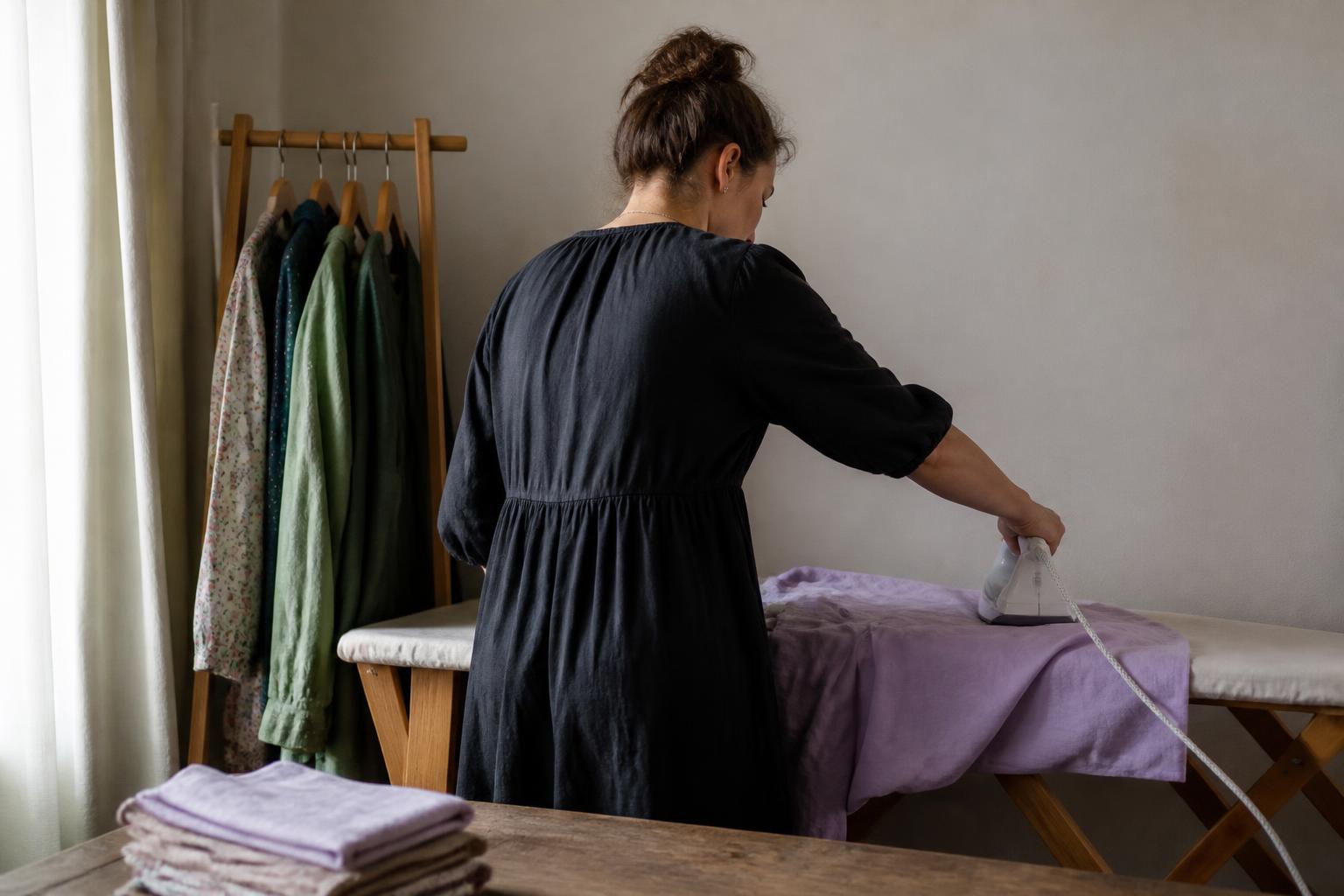
First, set up the board properly. Use a smooth ironing board cover with no crumbs, lint or old scorch marks underneath, because viscose can take impressions from the surface below. If the garment is dark, silky or finely woven, this matters even more.
Turn the garment inside out. This is one of the easiest ways to prevent shine, especially on darker colours and smoother weaves. If the item has obvious texture on the right side, such as a crepe, jacquard or subtle slub, ironing inside out helps preserve that finish instead of flattening it.
Set the iron to the lowest setting that matches the label. If the label gives one dot, stay there. If it gives two dots, we would still begin lower and increase only if needed. Let the iron come up to temperature fully before it touches the fabric, because some irons spit water or surge in heat while warming up.
Next, test a hidden area. Use an inside hem, inner placket or seam allowance if possible. Place a clean pressing cloth over the test area and press lightly for a few seconds. Then lift the iron, do not drag it, and check for shine, colour change, flattening or any sign that the fabric has gone limp. If the test area looks fine once it cools, carry on.
A pressing cloth is worth using every time with viscose. A clean cotton handkerchief, a piece of muslin, or a plain white tea towel works well as long as it is smooth and lint-free. Avoid anything with a textured weave that could imprint onto the garment.
Then work section by section:
- Lay one small area flat.
- Smooth it with your hands first.
- Put the pressing cloth on top.
- Press lightly for a few seconds.
- Lift the iron and move to the next spot.
Do not scrub the iron back and forth as if you are ironing school shirts in a hurry. That friction can stretch bias-cut areas, ripple seams and leave shiny tracks. Pressing is usually safer than ironing in the traditional sweeping sense.
Take extra care with seams, darts and hems. These areas can print through to the front if you press too hard. If you are doing trouser seams, sleeves or bust darts, use the narrow end of the board or a folded towel underneath to support the shape rather than crushing it flat.
If the garment is only lightly creased, stop as soon as it looks presentable. Viscose does not benefit from overhandling. Chasing every tiny crease often creates more problems than it solves.
For most households, the kit you need is inexpensive and already to hand, but if you want a simple setup that makes fabric care easier across the board, our guide to building a fabric care kit that actually gets clothes worn again covers the useful basics.
When steam helps and when it makes things worse
Steam can be helpful with viscose, but only in moderation. This is where many people run into trouble, because steam sounds gentler than direct heat, yet too much moisture can leave water marks, soften seams too far, and make the fabric stretch under its own weight.
If your iron has a steam setting, start dry unless the garment is badly creased. Dry pressing through a cloth is often enough for everyday wrinkles. If that does not shift them, add only a small amount of steam and keep the iron moving in short, careful presses.
A garment steamer can be a good option for relaxed viscose dresses, blouses and wide-leg trousers, especially if they are lightly creased rather than sharply rumpled. Steamers are less likely to create shine because there is no hot soleplate pressing directly onto the surface. Even so, support the fabric with one hand and do not tug downward while steaming. Viscose can lengthen when warm and damp, particularly on the bias or in looser weaves.
A damp pressing cloth is another useful middle ground. If dry pressing is not enough, lightly dampen the cloth, not the garment, and press through that. The cloth should feel barely moist, not wet. Too much water increases the chance of tide marks, especially on darker colours and satiny finishes.
Be careful with direct sprays from a water bottle. Viscose can show spotting if droplets land unevenly, and some finishes dry with darker patches. If you do use water, make it very light and even, and always test first.
Steam is most likely to make things worse when the garment has:
- limp or narrow seam allowances
- a bias cut
- decorative topstitching
- a soft drapey weave
- facings or fused areas that can bubble
- a tendency to stretch when damp
You will often notice this on dresses that look fine on the hanger but pull out of shape around the side seams or neckline after oversteaming. If that happens, stop and let the garment cool completely on a hanger or flat surface before deciding whether it needs more attention.
Bathroom steam can help with minor creases, but keep expectations realistic. Hanging viscose in the bathroom while you shower may relax light wrinkles, especially in a blouse or skirt, but it will not reliably remove set-in creases from folding or spin drying. It is a low-risk option for garments that do not need a crisp finish.
How to avoid shine, scorch marks and misshapen areas
Shiny marks on viscose usually come from too much direct heat, too much pressure, or ironing on the right side without protection. Once the surface has been flattened or polished, it can be difficult to reverse fully, so prevention matters.
The first rule is never to assume viscose behaves like cotton. Cotton often tolerates firm pressure and repeated passes. Viscose usually does not. Keep the iron cooler than your instincts tell you, and let time do the work.
The second rule is to avoid pressing directly onto the face of the fabric unless the label and a hidden test both suggest it is safe. Dark navy, black, jewel tones and smooth printed viscose are especially prone to shine.
Scorching is the obvious risk, but it is not the only one. A soleplate that is too hot can also leave faint glazing that looks like a greasy patch. That is often heat damage rather than residue. Using a pressing cloth and cleaning the soleplate regularly both help.
Misshapen areas are just as common. Seams can ripple if you drag the iron along them. Hems can go wavy if you stretch the cloth as you press. Necklines can grow if you iron them while they hang off the board. To prevent that, support each area fully on the board and let it cool in shape before moving it.
If the garment has gathers, pleats or drape, press around those features rather than flattening them out. For example:
- Press a gathered sleeve cap from the inside with minimal pressure.
- Refresh pleats by following their existing line, not by creating a new crease.
- On a cowl or draped front, use steam sparingly and let the fabric fall naturally.
Texture matters too. Crepe viscose, crinkled finishes and washed textures often look better with less intervention. Trying to iron them perfectly smooth can remove the finish that makes them look right in the first place.
This is also where second-hand shopping experience helps. If you buy a lot of pre-owned clothing, you quickly learn that some fabrics are better left slightly relaxed than over-pressed into something they are not. Our guide on how to choose fabric that lasts in a real wardrobe covers the kinds of finishes and fibre mixes that stay manageable at home.
What to do if your viscose still looks creased
Sometimes you do everything right and the garment still looks a bit rumpled. That does not always mean you need more heat.
First, rehang it properly. Put it on a shaped hanger, smooth the front, back and sleeves with your hands, and leave it somewhere with good airflow for a few hours. Viscose often drops a surprising number of creases once it is hanging freely after gentle pressing.
If the creases are soft rather than sharp, hand smoothing can be enough. Run your palms over the fabric, following the grain and supporting the cloth with your other hand. This works particularly well on dresses and blouses that only need to look neat rather than crisp.
Bathroom steam is worth trying for minor leftover wrinkling. Hang the garment away from direct splashes, let the room fill with steam, then smooth the fabric lightly by hand and leave it to dry fully before wearing. Do not put it on while still damp, because body heat and movement can stretch it out of shape.
If the garment came out of storage with deep fold lines, it may need a full wash and careful drying rather than more ironing. Some creases are set by the way the item dried after washing, not by a lack of pressing. If that sounds familiar, it is worth looking at your laundering routine as well as your ironing method.
And sometimes the best answer is to leave a little creasing alone. Viscose is a soft, drapey fibre. On many everyday garments, a few natural wrinkles are part of how the fabric looks. Chasing a completely crisp finish can make the garment look worse, not better, especially if you flatten the texture or create shine in the process.
So, can you iron viscose? Yes, in most cases you can, but gently. Check the label, keep the heat low, use a pressing cloth, test a hidden area first, and stop before the fabric looks stressed. With viscose, neat and wearable is the goal. Perfectly pressed is often unnecessary, and sometimes a bad bargain.

Questions about this article or a correction to suggest? Get in touch. Read more about our editorial approach.