Yes, linen can shrink in the wash, especially on the first one or two washes. The short version is that heat, agitation and over-drying are what usually cause the problem. If you keep the temperature low, use a gentle cycle, avoid cramming the drum and dry it with care, most linen will settle down after a small amount of initial shrinkage rather than continuing to get smaller every time.
That matters because linen is one of the easiest summer fabrics to live with when you treat it properly. It breathes well, wears in nicely and often looks better slightly rumpled. The trick is knowing which pieces can cope with a home wash, which need a more cautious approach, and when the care label is telling you not to experiment.
Why linen shrinks in the first place
Linen is made from flax fibres. Those fibres are strong, but they respond to moisture and heat in ways that can tighten the weave and draw the fabric in. That is why the first wash is usually the one that makes the biggest difference.
There are a few reasons this happens.
First, many linen garments are cut and sewn with a little residual tension left in the cloth from manufacturing. Washing relaxes that tension. When the fibres relax, the fabric can contract to a more natural size.
Second, heat speeds up shrinkage. Warm or hot water, a hot tumble dryer, or even drying something hard on a radiator can all encourage the fibres to pull in more than you wanted.
Third, agitation matters. A long, rough wash cycle can twist and stress the fabric while it is wet, and wet fibres are more vulnerable to shape change. That is why a gentle cycle is usually safer than a standard cottons wash.
The first washes matter most because that is when the fabric is adjusting. If a linen shirt or dress has not been pre-washed or garment-washed by the manufacturer, the first proper wash at home is often when you see the most noticeable change. After that, shrinkage tends to be smaller, assuming you wash and dry it consistently.
Construction matters too. A loose, simple linen shirt will usually cope better than a tailored jacket, lined dress, structured trousers or anything with interfacing, pleats or a shaped waistband. In those pieces, even minor shrinkage can pull the garment out of balance.
How much shrinkage is normal?
A small amount of shrinkage is normal with pure linen, particularly at the beginning. You may notice a garment feels slightly shorter, a bit narrower across the body, or less relaxed after the first wash. Often, once it is worn and pressed again, some of that apparent shrinkage softens because the fibres loosen back up in use.
What counts as normal depends on the fabric and the garment.
Pure linen is more likely to change a little in the first wash than a synthetic-heavy blend. Linen-cotton blends can still shrink, because both fibres can react to washing, but the result varies by weave and finish. Linen blended with viscose may behave differently again, and if you are comparing fabrics it is worth reading our guide to whether viscose shrinks when washed, because the care approach is not always the same.
Rather than expecting an exact percentage for every item, it is better to think in practical terms:
- A relaxed shirt or pyjama set may lose a little ease at first, then stabilise.
- Trousers may become slightly shorter if they are dried too warm.
- Fitted dresses and tailored pieces show shrinkage more obviously because there is less spare room in the cut.
- Loosely woven linen can seem to change more because it responds quickly to washing and pressing.
If a garment becomes dramatically smaller after one careful wash, that is not typical wear-and-care shrinkage. More often, that points to one of three things: the item was washed hotter than the label allowed, it was tumble dried too aggressively, or the fabric had not been properly pre-shrunk before sale.
What the care label tells you before you wash
Before deciding how to wash linen, start with the care label. In the UK, brands generally use the standard symbol system you will see across Europe, but the useful point is not where the symbols come from, it is how to read them properly.
Look for three things first: the wash tub, the drying symbol and the iron.
A wash tub with a temperature, such as 30 or 40, tells you the maximum wash temperature. If there is a line underneath the tub, use a gentler cycle. Two lines mean very gentle. A hand in the tub means hand wash only. If the tub is crossed out, do not wash it at home.
A square with a circle inside is the tumble dryer symbol. Dots inside show the heat setting. If it is crossed out, do not tumble dry. For linen, this symbol matters as much as the wash symbol, because a careful wash followed by hot tumble drying can still shrink the garment.
The iron symbol tells you how much heat the fabric can take when pressing. Linen often benefits from ironing while slightly damp, but always check the dots. More dots mean higher heat is allowed. If there is a crossed-out steam symbol on some labels, avoid steam even if ironing itself is permitted.
If the label says dry clean only, take that seriously on structured linen. A simple unlined top may sometimes survive careful hand washing despite a cautious label, but lined garments, jackets, waistcoats, tailored dresses and anything with shoulder shape or fused sections are different. Once those pieces shrink or distort, pressing alone may not put them right.
Also check the fibre composition. If the label says 100% linen, your main concern is heat and agitation. If it is a blend, the other fibre may change the washing risk. Elastane, viscose, cotton and polyester all affect how the garment behaves.
How to wash linen with less risk of shrinkage
If the care label allows home washing, the safest method is simple and repeatable.
Start by separating linen from heavy items like jeans, hoodies and towels. Linen does better when it is not being battered around the drum by dense fabrics. Turn garments inside out, fasten buttons if needed, and empty pockets.
Use a cool or lukewarm wash. In most cases, 30C is the safest default unless the label clearly allows more and there is a good reason for it. A gentle or delicate cycle is usually better than a standard cotton cycle, especially for shirts, dresses and lightweight trousers.
Use a mild detergent. You do not need anything harsh, and too much detergent can leave the fabric feeling stiff or attract extra rinsing and agitation. Avoid chlorine bleach. If you are trying to keep pale linen fresh, oxygen-based products are generally gentler, but still check the label first.
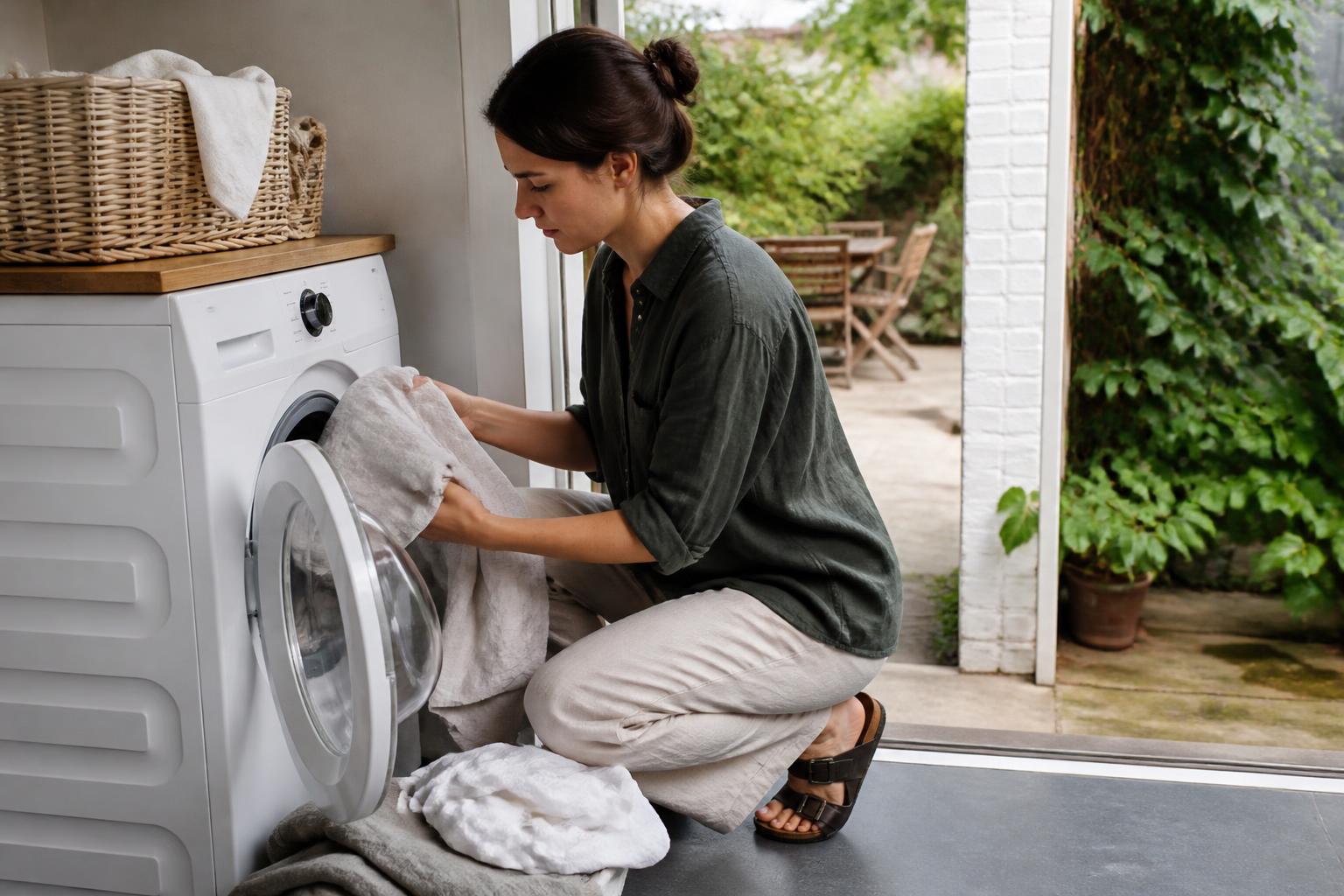
Do not overfill the machine. Linen needs room to move without being tightly compressed. A crowded drum increases creasing and friction, and can leave the fabric twisted when wet. If you are washing a few linen pieces together, a half-full load is often about right.
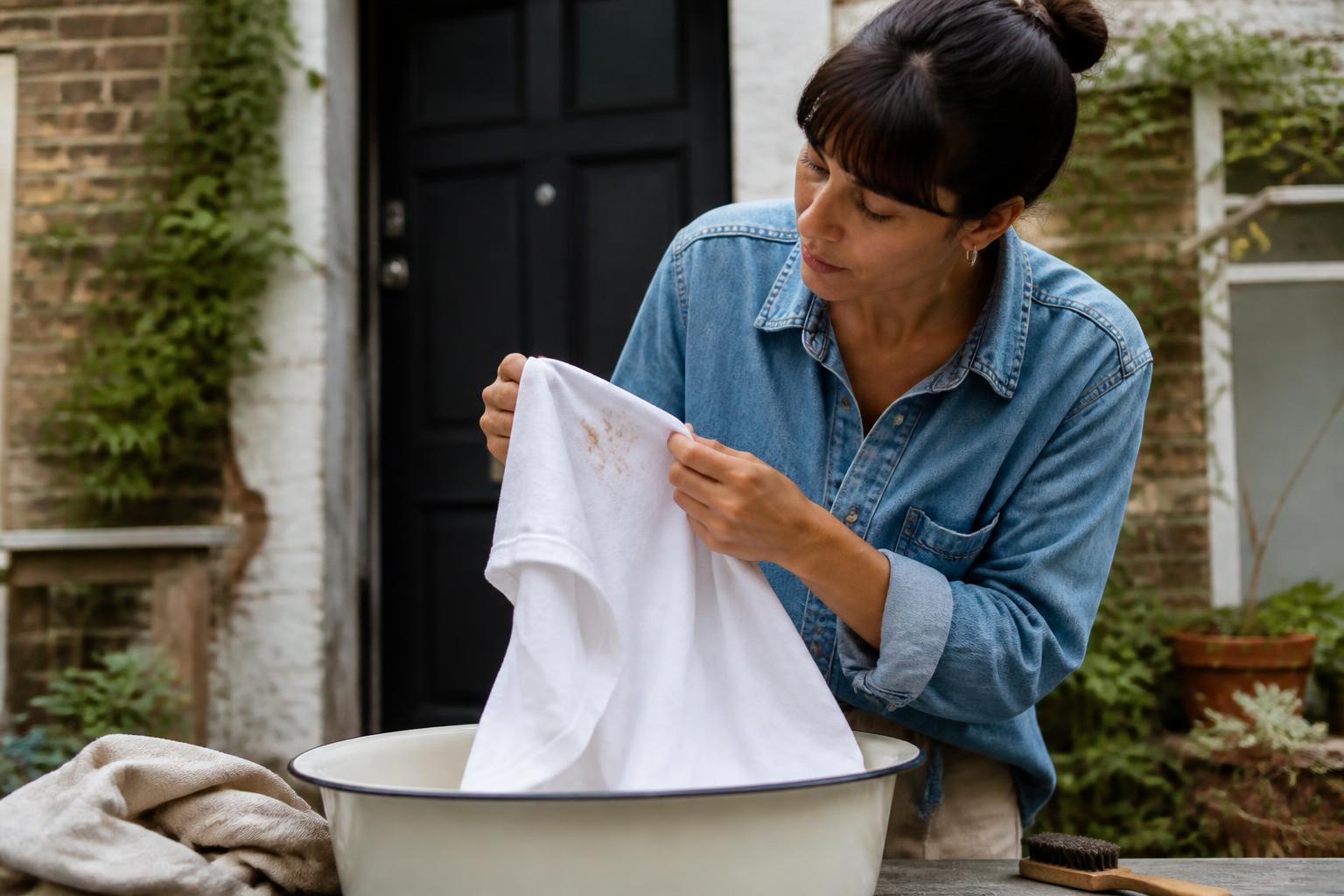
If hand washing, use cool to lukewarm water and swish gently rather than rubbing or wringing. Rinse thoroughly, then press out water carefully. Do not twist the fabric.
Once the wash finishes, take linen out promptly. Leaving it screwed up in the drum increases creasing and can leave it smelling stale if forgotten. If that is an ongoing problem in your laundry routine, our guides on how to stop washing coming out with a damp smell and why clothes smell after washing and how to fix it will help.
When linen is wet, support it. This is the stage where people often stretch necklines, pull hems out of shape or create hanger marks. Smooth the seams with your hands, reshape collars, plackets and cuffs, and line up side seams before drying.
A good step-by-step routine looks like this:
- Read the care label in full.
- Wash at 30C unless the label clearly supports another temperature.
- Choose delicate or gentle.
- Use a modest amount of mild detergent.
- Keep the load light.
- Remove promptly when the cycle ends.
- Reshape while damp.
- Air dry flat or on a hanger if the garment’s weight and structure allow it.
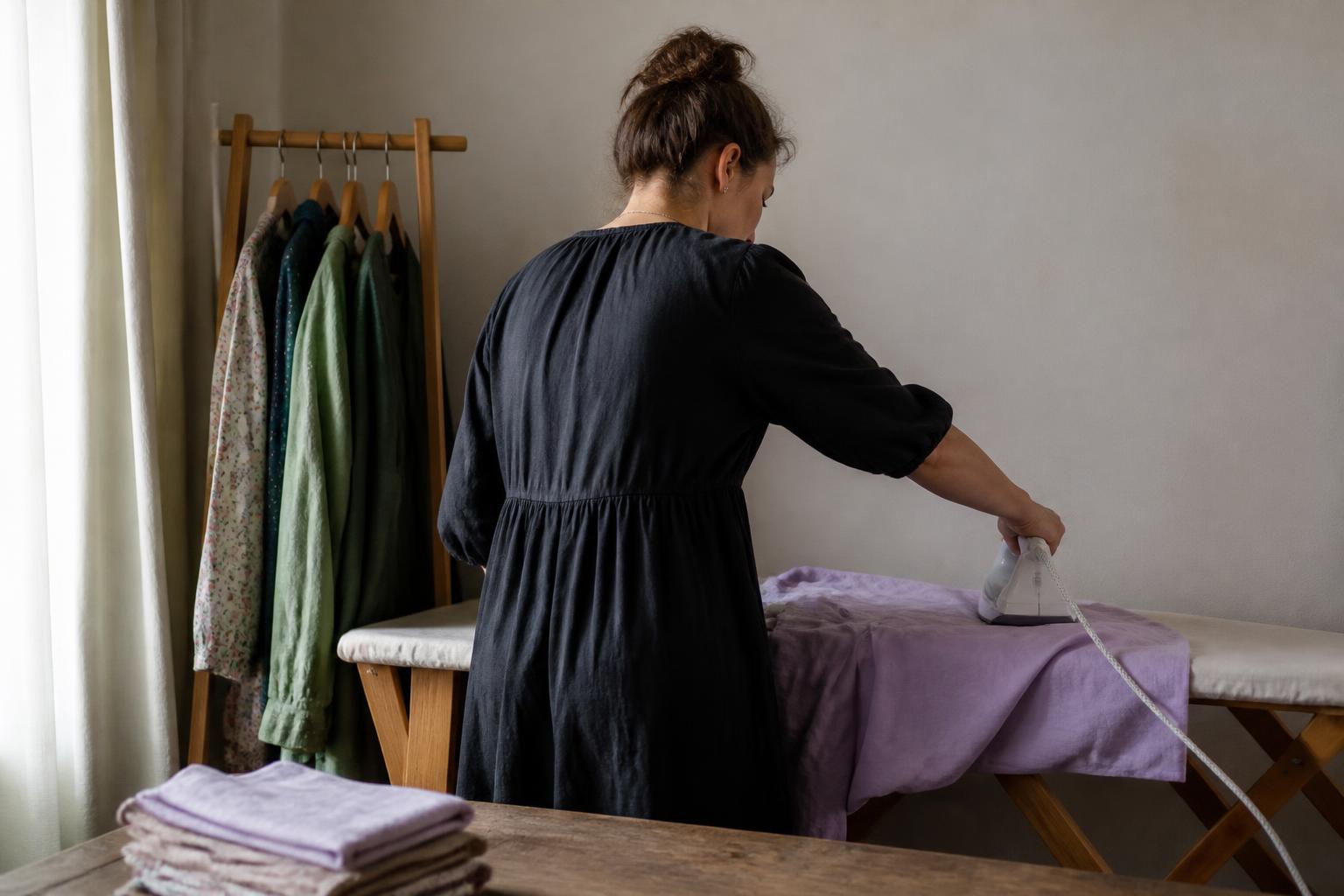
- Iron while still slightly damp, if needed.
That routine will not remove every possibility of shrinkage, but it does reduce the usual causes.
Can you fix linen that has already shrunk?
Sometimes, partly.
If linen has shrunk a little, gentle reshaping while it is damp can help. Rewash or dampen the garment in cool water, then lay it flat on a towel or drying rack and ease it back towards its original measurements. Work gradually, paying attention to length, side seams, sleeves and collars. This is more successful when the shrinkage is mild and the garment is a simple shape.
You can also press the garment while it is still slightly damp. Steam and careful ironing can relax the fibres enough to recover some ease, especially in shirts and table linen. Pressing does not reverse severe shrinkage, but it can improve the fit if the change is small.
There are limits, though.
If the linen has been significantly over-heated in a tumble dryer, the fibres may have set into their shrunken state. If the garment is lined, tailored or fused, trying to stretch only the outer fabric can make it buckle against the inner structure. If a waistband, placket or facing has shrunk unevenly, you may get distortion rather than a proper recovery.
Avoid aggressive stretching. Pulling hard on wet linen can weaken seams, skew the grain or leave one area longer than another. That is particularly risky with dresses, trousers and shirts where fit depends on balance, not just overall size.
If the item is valuable and the shrinkage is more than slight, a good cleaner or pressing service may be able to improve it with professional finishing. We would not count on full restoration, but they may get it looking and fitting better than home handling can.
When to air dry, tumble dry or use a cleaner
For most linen, air drying is the safest option. It gives you more control, reduces heat exposure and makes it easier to reshape the garment as it dries.
Air dry when:
- the label allows line or flat drying
- the garment is lightweight or midweight
- you want to minimise shrinkage risk
- the item is a shirt, loose dress, simple skirt or casual trousers
Hang shirts and dresses on a shaped hanger if the fabric is not too heavy. Lay knit-linen blends or heavier items flat if hanging would drag them out of shape. Keep white and coloured linen out of harsh direct sun for long periods, particularly if fading is a concern.
Use a tumble dryer only if the care label permits it. Even then, low heat is the sensible choice. The safest method is often to tumble briefly on low until the garment is just damp, then remove it, reshape it and finish air drying. That softens the fabric and reduces stiffness without exposing it to prolonged heat.
Tumble drying may suit:
- bed linen and tea towels, if the label allows
- casual, robust linen garments
- items you plan to iron immediately afterwards
It is less suitable for:
- fitted clothing
- lightweight woven tops prone to drawing in
- lined garments
- anything already close in size
Use a cleaner when the label says dry clean only, or when the garment has structure that home washing could ruin. That includes blazers, tailored trousers, lined dresses, pleated pieces, garments with shoulder pads, and items with mixed materials that may react differently in water.
In the UK, cleaners vary a lot in how they handle natural fibres, so it is worth asking whether they process linen regularly and whether they press garments by hand or on standard finishing equipment. A good local cleaner can be particularly useful for occasionwear, vintage linen and second-hand finds where the previous washing history is unknown.
If you buy linen second-hand, be extra cautious on the first wash. You may not know whether it has already shrunk, whether stains have been spot treated, or whether a previous owner ignored the care label. Start with the gentlest suitable method and see how the fabric responds.
So, does linen shrink in the wash? Yes, it can, especially the first time, but it is usually manageable rather than disastrous. The biggest difference comes from three habits: checking the care label, washing cool on a gentle cycle, and drying without too much heat. Do that, and linen is far more straightforward to own than its reputation suggests.

Questions about this article or a correction to suggest? Get in touch. Read more about our editorial approach.