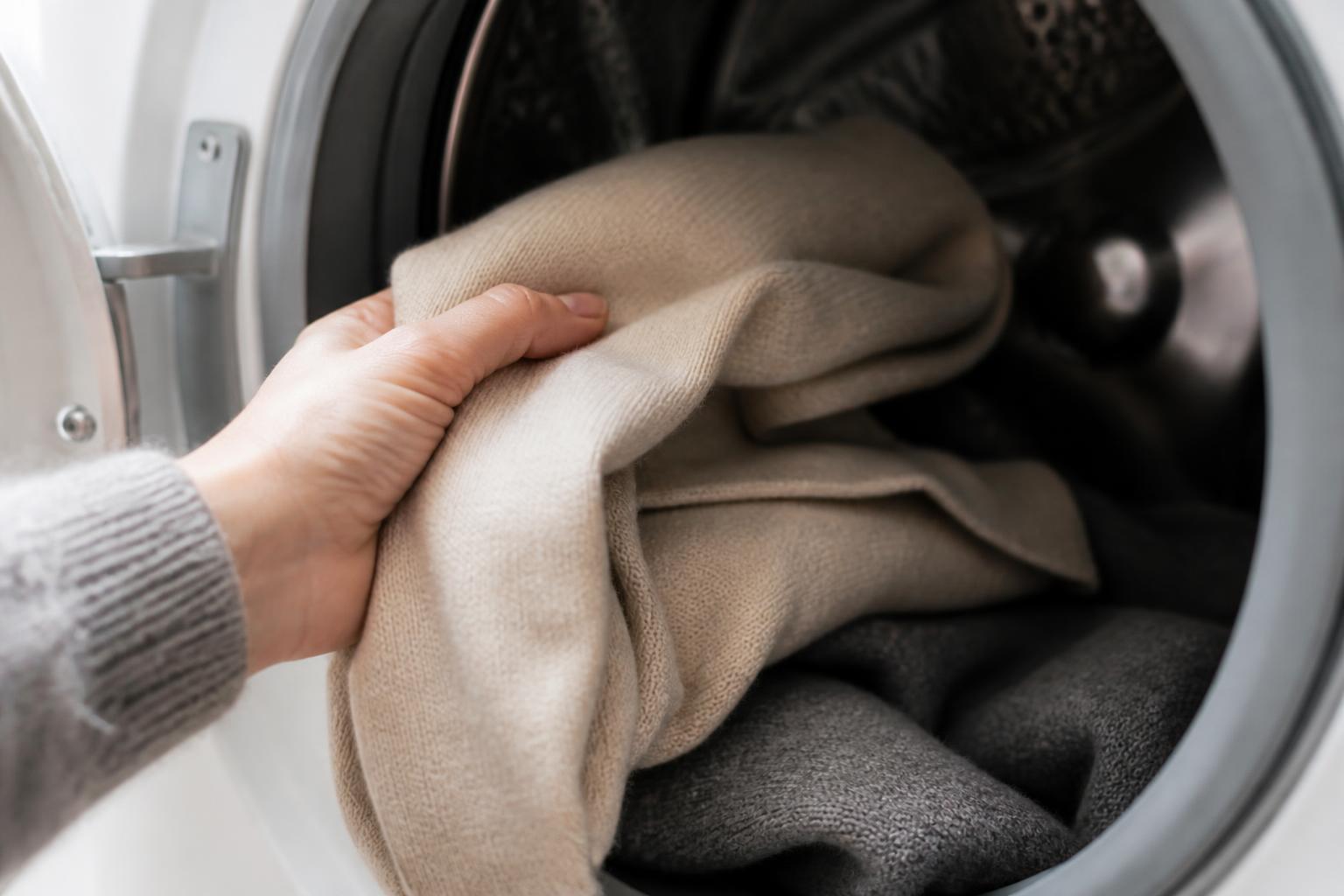
Yes, often you can. Merino wool can go in the washing machine safely if the care label allows it, the cycle is genuinely gentle, and you keep heat, friction and harsh detergent out of the process. A lot of modern merino knitwear, base layers and socks are labelled machine washable, and many pieces come out perfectly well if they are washed with a bit of care.
The problems start when we assume all wool behaves the same way, or when we treat merino like cotton. If you are wondering whether you can machine wash merino wool, the short answer is that some pieces are designed for it and some are not. The label matters first, then the construction of the garment, then the way you wash and dry it.
When machine washing merino wool is actually fine
The care label is the first decision point. If it says machine wash, wool cycle, delicate cycle, or gives a temperature such as 30°C with no hand wash or dry clean warning, a machine wash is usually suitable. If the label shows a wash tub with a hand, that means hand wash only. If it shows a crossed-out wash tub, do not put it in the machine at all.
If you are rusty on symbols, our guide to reading washing symbols without ruining clothes makes it much easier to tell a wool cycle from a do-not-wash warning.
Machine washing is generally fine for straightforward merino items such as:
- Fine knit jumpers with a clear machine wash label
- Merino base layers and T-shirts
- Merino socks
- Simple cardigans without structured shoulders or heavy trims
- School or work knitwear made from washable wool blends
It is also worth checking whether the garment is pure merino or a blend. Merino blended with nylon, polyester or elastane is often a bit more resilient in the wash, especially in activewear and socks. That does not mean it can take any old cycle, but it usually means the maker expected regular laundering.
In the UK, there is no special legal washing rule for wool that differs from the rest of Europe in day-to-day use, but labels sold here should still give care instructions that are clear enough for normal maintenance. If a second-hand merino piece has no label at all, treat that as a reason to be more cautious, not less. Start with hand washing unless you know the brand and can confirm the original care advice.
A machine wash is most likely to be safe when all of these are true:
- The care label allows machine washing
- The item is lightly soiled rather than stained
- The knit is not especially loose, fluffy or delicate
- There are no leather trims, shoulder pads, bonded interlinings or decorative finishes
- Your machine has a proper wool or delicate cycle with low agitation
That last point matters more than many people realise. A modern wool cycle is not just a colder wash. It should move the garment less, spin more gently, and reduce the kind of rubbing that makes wool felt.
Why merino shrinks, felts or loses shape
Merino is softer and finer than many other wools, but it is still wool. The fibre has a scaly outer layer. Under heat, moisture and agitation, those scales can start to lock together. That is felting. Once felting happens, the fabric becomes denser, stiffer and smaller, and you cannot simply stretch it back.
Shrinkage usually comes from one or more of four things.
First, heat. Hot water can encourage the fibres to contract and felt. Tumble drying is even riskier because it combines heat with movement. A jumper that looked fine coming out of the machine can still shrink badly in the dryer.
Second, friction. Wool does not enjoy being rubbed about. A long, rough wash cycle, an overfilled drum where clothes grind together, or a mixed load with heavy items like jeans or towels can all rough up the fibres. That is why merino should not go in with everyday washing just because the temperature happens to match.
Third, spin speed. A very high spin does not usually felt wool in the same way a hot wash does, but it can pull a wet knit out of shape. Sleeves twist, necklines stretch, and panels can dry skewed. Fine merino does not need to come out bone dry from the machine. It needs to come out intact.
Fourth, detergent choice. Biological detergents, heavy-duty powders and products with enzymes, bleach or optical brighteners are often too aggressive for wool. Wool is a protein fibre, and detergents made for sturdy cottons are not designed with that in mind. They can strip softness, leave the fabric rougher, and shorten the life of the garment over time.
Fabric conditioner is not especially helpful either. It can leave residue and is not a substitute for a wool-safe detergent.
Loss of shape is not always shrinkage. Sometimes the garment has stretched because wet wool is heavy. If you pick up a soaked jumper by the shoulders or hang it dripping on a hanger, it can lengthen through the body and sleeves. That is why the washing stage and the drying stage need to work together.
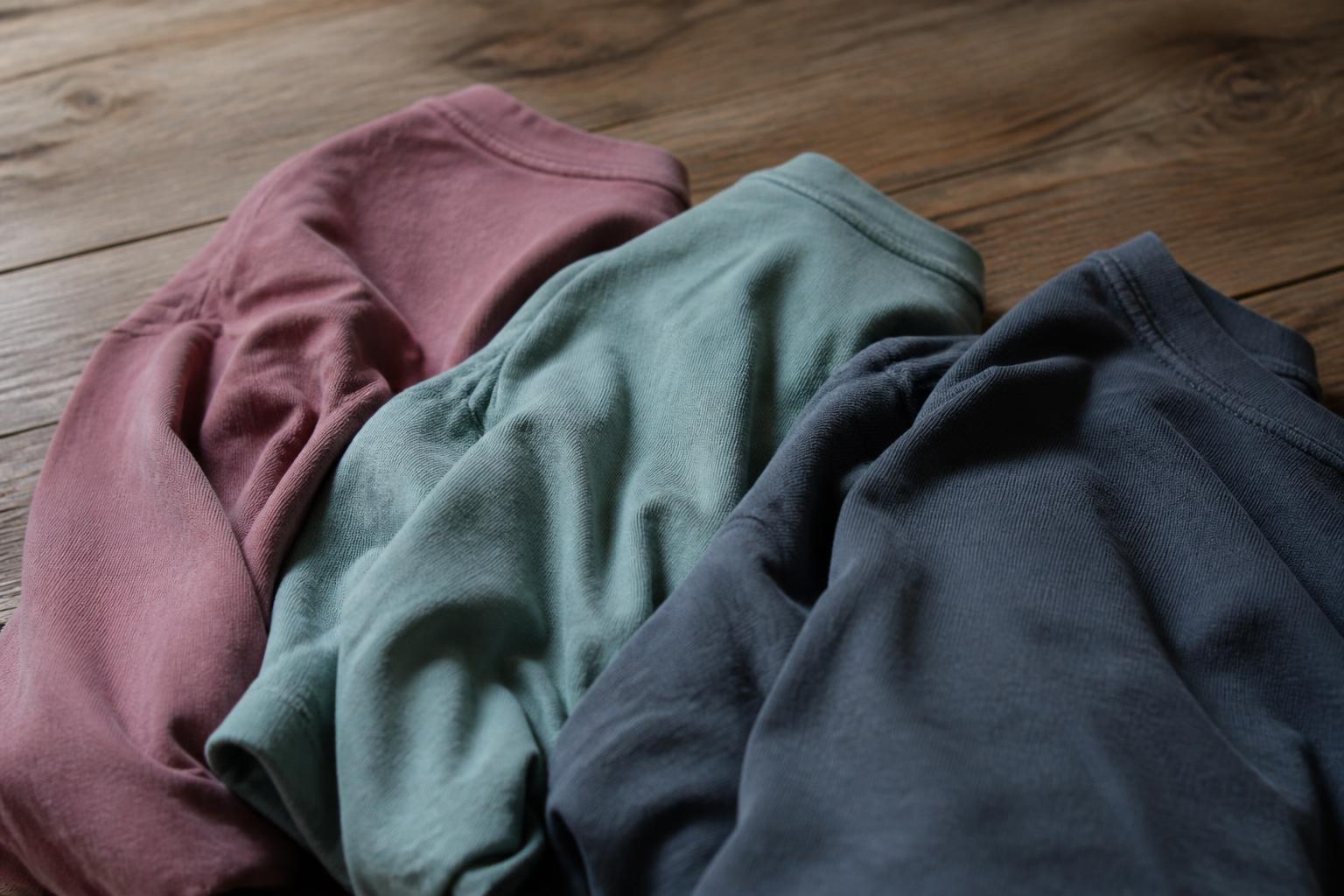
If the item is garment dyed, colour care matters too. Some merino pieces, especially fashion knits and darker shades, can lose a bit of colour in the first washes. Our piece on what garment-dyed clothes mean for care and colour is useful if the finish looks slightly uneven or washed-in from new.
How to machine wash merino wool step by step
If the label allows a machine wash, this is the safest routine.
Start by checking for stains, deodorant build-up, or muddy marks. If there is a specific stain, deal with that first rather than hoping a gentle wool cycle will shift it. Dab, do not scrub. Use a small amount of wool-safe detergent or stain treatment that states it is suitable for wool. Test an inside seam first if you are unsure.
Turn the garment inside out. This reduces surface rubbing and helps preserve the outer finish. Fasten buttons or zips if there are any, and empty pockets.
Use a mesh laundry bag if the item is very fine, if it has a tendency to snag, or if you are washing it with other lightweight woollens. It is not essential for every merino piece, but it does add a layer of protection.
Keep the load small. This is one of the easiest ways to avoid damage. Wash merino with other soft, lightweight items only. Good companions are other woollens, delicate synthetics, or soft jersey pieces. Bad companions are denim, towels, sweatshirts with zips, or anything bulky and abrasive.
Choose the right cycle. Ideally use:
- Wool cycle, if your machine has one
- Delicate cycle, if it does not
- 20°C or 30°C, following the care label
- Low spin, often around 400 to 800 rpm if your machine lets you choose
If your machine has an automatic temperature setting on wool, that is usually safer than overriding it. Avoid quick washes unless they are also gentle. A short cycle is not always a soft cycle.
Add a small amount of wool detergent. More detergent does not mean cleaner knitwear. It usually means more residue to rinse out. Liquid wool detergent is generally easier than powder because it dissolves more reliably at low temperatures.
Then wash.
When the cycle ends, take the garment out promptly. Do not leave wet merino sitting in the drum for hours, where creasing sets in and colours may transfer if you have washed more than one item.
Press out excess water gently if needed. Do not wring or twist. If the item still feels quite wet, lay it flat on a clean towel, roll the towel up with the garment inside, and press. This removes moisture without stretching the knit.
At this point, shape matters. Smooth the item back into its usual outline while it is damp. Straighten the side seams, ease the sleeves into place, flatten the collar or cuffs, and check the hem is not curled under. This small step makes a visible difference once dry.
A few extra points help in real life:
- If the item is not dirty, wash it less often. Merino is naturally odour resistant and often benefits from airing between wears.
- If it is a base layer worn next to skin, wash sooner, but still gently.
- If you are dealing with one expensive or sentimental piece, there is no harm in hand washing even if the label says machine washable.
Good care is often less about buying specialist products and more about avoiding avoidable damage. We cover the same principle across fabric care that keeps clothes wearable for longer.
When you should not put merino in the machine
Some merino garments are better kept out of the machine, even if you are tempted to risk it on a delicate cycle.
Do not machine wash if the label says:
- Hand wash only
- Dry clean only
- Do not wash
That sounds obvious, but it is where most expensive mistakes begin.
Beyond the label, we would avoid the machine for:
Structured knitwear. If a cardigan or jacket-style knit has shoulder pads, interfacing, lining, or a tailored shape, water can distort the construction even if the wool itself survives.
Very loose or open knits. These can stretch badly when wet and are prone to snagging in the drum.
Heavily embellished pieces. Sequins, beads, contrast trims, embroidery, metallic yarns and decorative buttons all add risk.
Vintage or second-hand merino with unknown history. Fibres weaken over time, previous shrinkage may have changed the tension, and old repairs can fail in the wash.
Items with set-in stains. Grease, red wine, makeup, fake tan and ink often need careful spot treatment first. If you machine wash before treating them properly, you may set the stain or spread it.
Merino mixed with non-washable trims. Leather elbow patches, suede details and some bonded plackets or labels do not belong in a machine wash.
Blankets, coats and very heavy knits. Even if they technically fit in the drum, their wet weight can pull them out of shape. A bath, basin or professional cleaner may be the better option.
Dry cleaning is not automatically better for every wool item, but it can be the right choice for tailored merino, occasionwear, or anything with complex construction. If you do use a cleaner in the UK, be specific about the fibre and point out any stains or trims when you hand the garment over.
If you are ever balancing the cost of replacing the item against the effort of gentler care, it helps to think practically. A basic merino base layer is one thing. A beautifully fitting jumper you wear twice a week all winter is another.
How to dry, reshape and store merino after washing
Drying is where many good washes go wrong. Never tumble dry merino unless the care label explicitly says you can, and that is uncommon. Heat and tumbling are exactly what encourage shrinkage and felting.
Instead, dry the garment flat. Lay it on a clean dry towel, a drying rack with a flat mesh surface, or another flat breathable surface. Keep it away from direct heat such as radiators, heated airers on high, or strong sun through a window. Gentle room temperature drying is slower, but it is much safer.
Reshape while damp, not when fully dry. Check:
- The shoulders are sitting evenly
- Sleeves are the same length
- The neckline is smooth
- Side seams are straight
- Hem and cuffs are not stretched or curled
If a merino piece has stretched slightly rather than shrunk, careful reshaping while damp can often improve it. You are not forcing it smaller. You are guiding it back to its intended dimensions. Work gently and evenly.
Avoid hanging wet or damp merino on a hanger. That is one of the quickest ways to create long, drooping shoulders and a distorted body. Once fully dry, some finer pieces can be stored folded or, if they are very light and stable, briefly hung for wear. For long-term storage, folded is usually better.
Before putting merino away for the season, make sure it is properly clean. Moths are attracted to soiled natural fibres, especially traces of sweat and food. In UK homes, moth prevention is mostly about cleanliness, airflow and sealed storage rather than scented sachets alone.
A sensible storage routine looks like this:
- Wash or air and spot clean before storing
- Make sure the garment is fully dry
- Fold rather than hang for long periods
- Use a lidded plastic box, zipped fabric storage bag, or well-sealed drawer if moths are a known issue
- Check stored knitwear occasionally rather than forgetting it for months
If you are short on space, our guide to seasonal wardrobe storage that works in a small home covers practical ways to store knitwear without crushing everything into one overstuffed box.
If pilling appears after washing, that is not necessarily a sign you washed the item wrongly. Merino, especially fine grades, can pill with wear at friction points like under the arms or at the sides. A fabric comb or de-piller used gently can tidy the surface, but go lightly. Over-shaving weakens the knit.
The useful thing to remember is that merino does not need fussy, perfect treatment. It needs consistent, calm handling. Follow the label, keep the wash cool and gentle, dry flat, and store it clean. Done that way, machine washing can be a perfectly safe part of caring for merino wool, and it is often the most practical option for everyday wardrobe pieces.

Questions about this article or a correction to suggest? Get in touch. Read more about our editorial approach.