If you are wondering what recycled polyester feels like, the short answer is that it can feel almost exactly like many other familiar synthetic fabrics. It might be smooth and silky in a blouse, crisp and light in a windbreaker, stretchy in gym wear, or soft and fleecy in a sweatshirt lining. “Recycled” tells you where the fibre came from, not how it will feel on your skin.
That is the part worth remembering before you buy. The feel of a garment depends much more on how the fibre is spun, woven or knitted, brushed, blended and finished than on whether the polyester started life as virgin fibre or recycled material. So the useful question is not just what recycled polyester feels like, but what this particular recycled polyester garment feels like.
What recycled polyester usually feels like on the body
On the body, recycled polyester usually feels light, smooth and fairly dry to the touch. It does not usually have the airy, absorbent feel of cotton, and it does not naturally have the springy warmth of wool. Instead, it tends to sit somewhere in the broad synthetic range, from sleek to slightly crisp.
At the smoother end, recycled polyester can feel silky, cool and fluid. You will often find this in blouses, slip skirts, linings and some dresses. These fabrics skim rather than cling if they are cut well, and they often have a clean surface that feels polished in the hand.
In sportswear and stretchy basics, it can feel slick, slightly springy and close fitting. Some people like that because it feels light and easy to move in. Others find it less breathable than natural fibres, especially in warm weather or if the fabric is dense.
At the crisper end, recycled polyester can feel papery, shell-like or lightly structured. That is common in shirts, pleated skirts, lightweight outerwear and packable jackets. This kind of fabric may not feel especially soft in the hand, but it can still be comfortable once on, especially if the garment is cut with enough room and the inside seams are tidy.
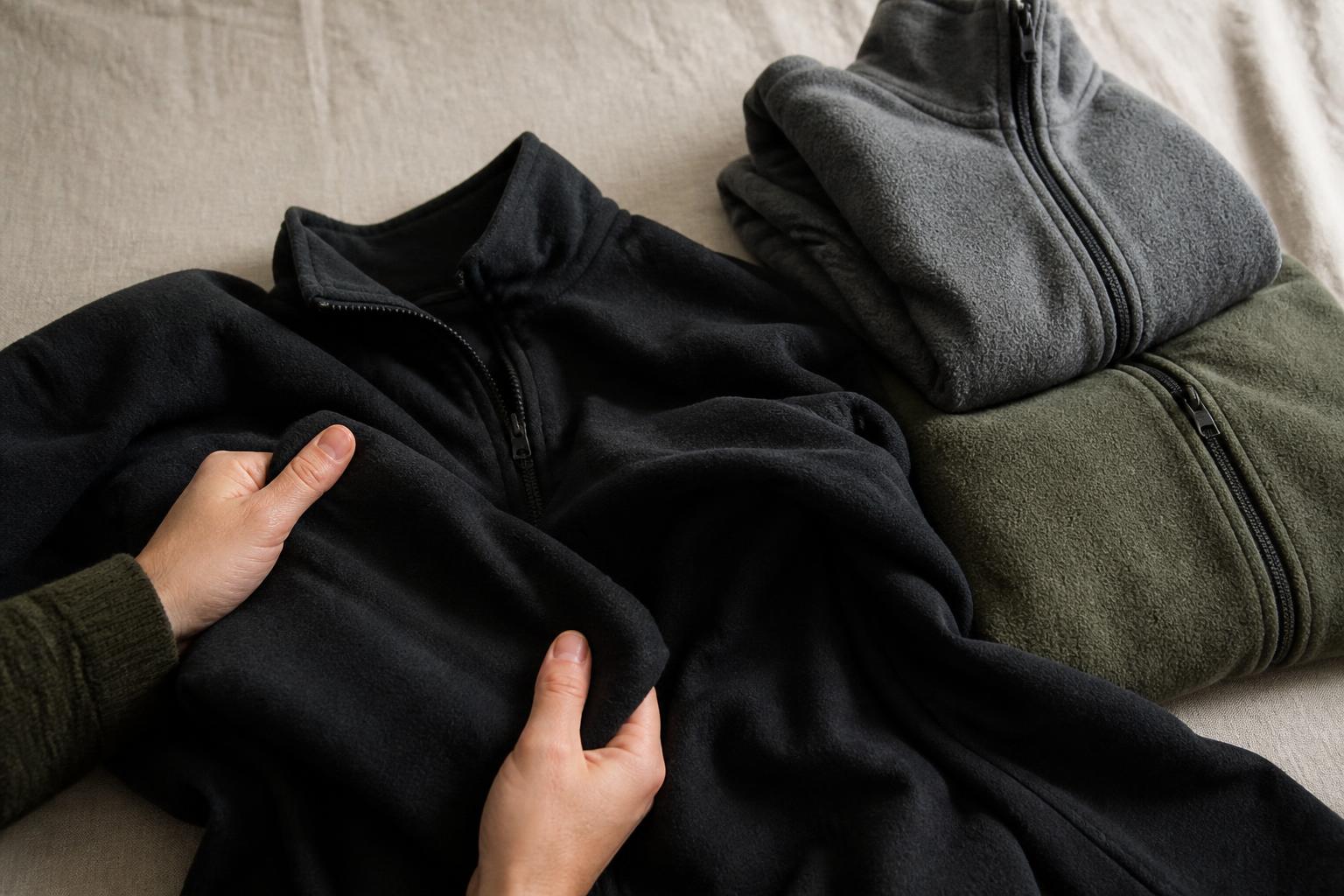
Then there is brushed or fleecy recycled polyester, often used in sweatshirts, fleece jackets, dressing gowns and thermal layers. Here the surface can feel soft, fluffy and warm, sometimes almost velvety. The outside might be smooth while the inside is brushed for comfort.
So when people ask what recycled polyester feels like, there is no single honest answer beyond this, it usually feels synthetic, but that synthetic feel covers a wide range. A silky recycled satin and a brushed recycled fleece may share the same fibre family while feeling nothing alike.
Why two recycled polyester garments can feel completely different
The biggest reason is construction. Fibre content on a label tells you only part of the story. A top marked 100% recycled polyester and a dress marked 100% recycled polyester may feel completely different because the yarn, fabric structure and finishing are different.
Knit versus weave matters first. Knitted recycled polyester, used in T-shirts, jersey dresses and activewear, often feels softer and stretchier. It moves with the body and can feel more relaxed. Woven recycled polyester, used in shirts, trousers, blouses and many skirts, often feels smoother or crisper and usually has less give unless elastane is added.
Yarn thickness changes the hand feel as well. Fine yarns can create fabrics that feel silky, light and drapey. Thicker yarns can feel sturdier, more textured or more insulating. A fine recycled polyester crepe blouse and a chunky recycled polyester fleece are a good example of how far apart the feel can be.
Brushing is another major factor. When the fabric surface is brushed, tiny fibres are lifted to create softness. That can make the inside of leggings feel peachy, or the inside of a sweatshirt feel warm and cosy. The trade-off is that brushed surfaces can be more prone to pilling or to looking worn more quickly, especially at high-friction points.
Blends matter too. Recycled polyester mixed with cotton often feels less slick and more familiar if you prefer natural fibres. Mixed with elastane, it gains stretch and recovery, which is useful in fitted clothes. Mixed with viscose or modal, it may drape more softly. Mixed with wool, it may feel warmer or less smooth, depending on the proportion and finish. If you are comparing fabrics for daily wear, our guide to modal or cotton for everyday clothes can help you place those differences in context.
Lining can change comfort more than many shoppers expect. A recycled polyester dress with a soft lining may feel far nicer on the body than an unlined one with exposed seam allowances. Equally, a jacket with a slippery lining may be easier to layer over knitwear, while an unlined shell may feel clammy against bare arms.
Finishing treatments also play a part. Some fabrics are made deliberately matte and soft. Others are made to hold pleats, resist creasing or repel water. Those choices affect softness, drape and warmth. A water-resistant recycled polyester mac will not feel like a recycled polyester satin camisole, even if the fibre source is similar.
This is why we always suggest reading beyond the headline claim. “Made with recycled polyester” tells you something useful, but not enough to judge comfort on its own.
Does it feel different from virgin polyester, cotton or wool?
Compared with virgin polyester, recycled polyester often does not feel obviously different in everyday wear. In many garments, most people would not be able to tell which is which by touch alone. The finish, fabric weight and garment quality are usually more noticeable than the source of the polyester itself.
That said, quality varies. A cheap recycled polyester fabric may feel rough, shiny or stuffy, but so can a cheap virgin polyester one. A well-made recycled polyester fabric may feel smooth, substantial and comfortable. It is safer to judge the garment in front of you than to assume all recycled polyester has one standard feel.
Compared with cotton, recycled polyester usually feels less absorbent and often less matte. Cotton tends to feel softer in a dry, breathable, familiar way, especially in jersey, brushed flannel or good-quality poplin. Recycled polyester is more likely to feel slicker or cooler at first touch. In wear, cotton often handles day-to-day temperature changes differently, while polyester can feel warmer if the fabric is dense or if moisture sits on the skin rather than soaking in.
Compared with wool, recycled polyester usually feels less naturally insulating and less springy, unless it has been brushed into a fleece. Wool often has loft and temperature regulation that polyester imitates in some constructions but does not copy exactly. Wool can also feel prickly or soft depending on the type, while polyester is more often smooth or uniform. If you are weighing up knitwear options, it helps to know the care side too, especially with machine-washable wool and blends. We cover that in how often to wash wool jumpers.
The main practical point is this. If you dislike the feel of “polyester”, you may still get on perfectly well with some recycled polyester garments, especially softer knits, brushed linings or well-finished blends. If you love the feel of one recycled polyester item you own, that does not guarantee the next one will feel the same.
How to judge comfort before you buy
When you cannot touch the garment yet, you need clues. Online, in shops and second-hand, the best approach is to build a quick checklist rather than relying on fibre content alone.
Start with the fabric description. Words like satin, crepe, jersey, fleece, brushed, ribbed, mesh, twill and shell are more useful for feel than “recycled” on its own. Satin suggests smoothness. Crepe suggests a slightly grainy or textured hand. Jersey suggests softness and stretch. Twill often suggests a bit more structure.
Check the fibre percentages carefully. A label that says 92% recycled polyester, 8% elastane will probably feel different from 100% recycled polyester. A cotton blend may feel drier and softer. An elastane blend may feel more fitted and springy. In the UK, online sellers should give fibre composition for textile products, though the detail and clarity can vary.
Look at close-up photos. Good product images can tell you a lot. Ask yourself whether the fabric surface looks matte or shiny, flat or textured, thin or substantial. Can you see drape in the model shots, or does the fabric hold its shape? Does the inside appear brushed? Are there signs of lining at the neckline, hem or sleeve?
Construction details matter. A lined skirt generally feels different from an unlined one. Bound seams, covered waistbands and soft facings can make a synthetic garment much more comfortable. Exposed overlocking, stiff seam tape or scratchy zip guards can make it less comfortable even if the fabric itself seems fine.
Read care instructions before buying if they are provided. A garment marked cool wash, no tumble dry, cool iron may be lightweight or heat-sensitive. One marked do not iron might be heavily pleated, coated or prone to shine under heat. These are not direct comfort ratings, but they hint at fabric behaviour.
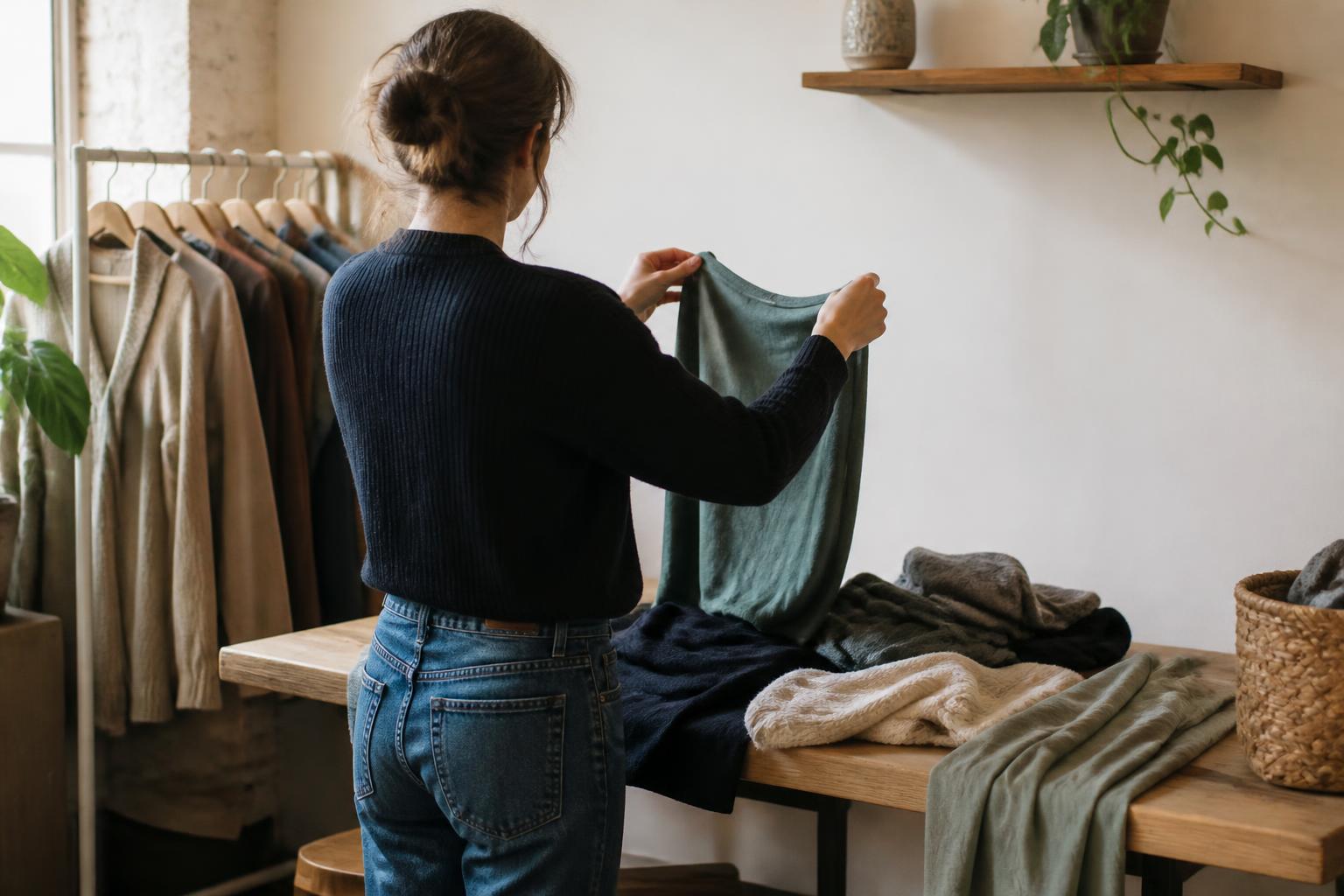
In store, use your hands properly. Rub the fabric lightly between your fingers. Hold it up and let it drop to see drape. Scrunch a section in your fist and release it to see whether it springs back or stays creased. Put the inside against your wrist or neck if you are sensitive to texture. Those areas often tell you more than your fingertips alone.
For second-hand shopping, ask for extra photos if needed. Request a close-up of the care label, the fabric surface and any pilling or wear at the underarms, inner thighs, cuffs or seat. If a seller describes something only as “polyester”, ask whether it feels silky, stretchy, brushed, crisp or lined. That usually gets a more useful answer.
Second-hand is also where value becomes clearer. A recycled polyester coat that still looks good after years of wear may be a better buy than a flimsy new one. We often come back to cost per wear when deciding whether a fabric is worth the compromise, and our guide to working out what your clothes really cost to wear is useful here.
What the care label can tell you about feel over time
A care label will not tell you everything about first-touch softness, but it tells you a great deal about how the fabric is likely to behave after repeated wear and washing.
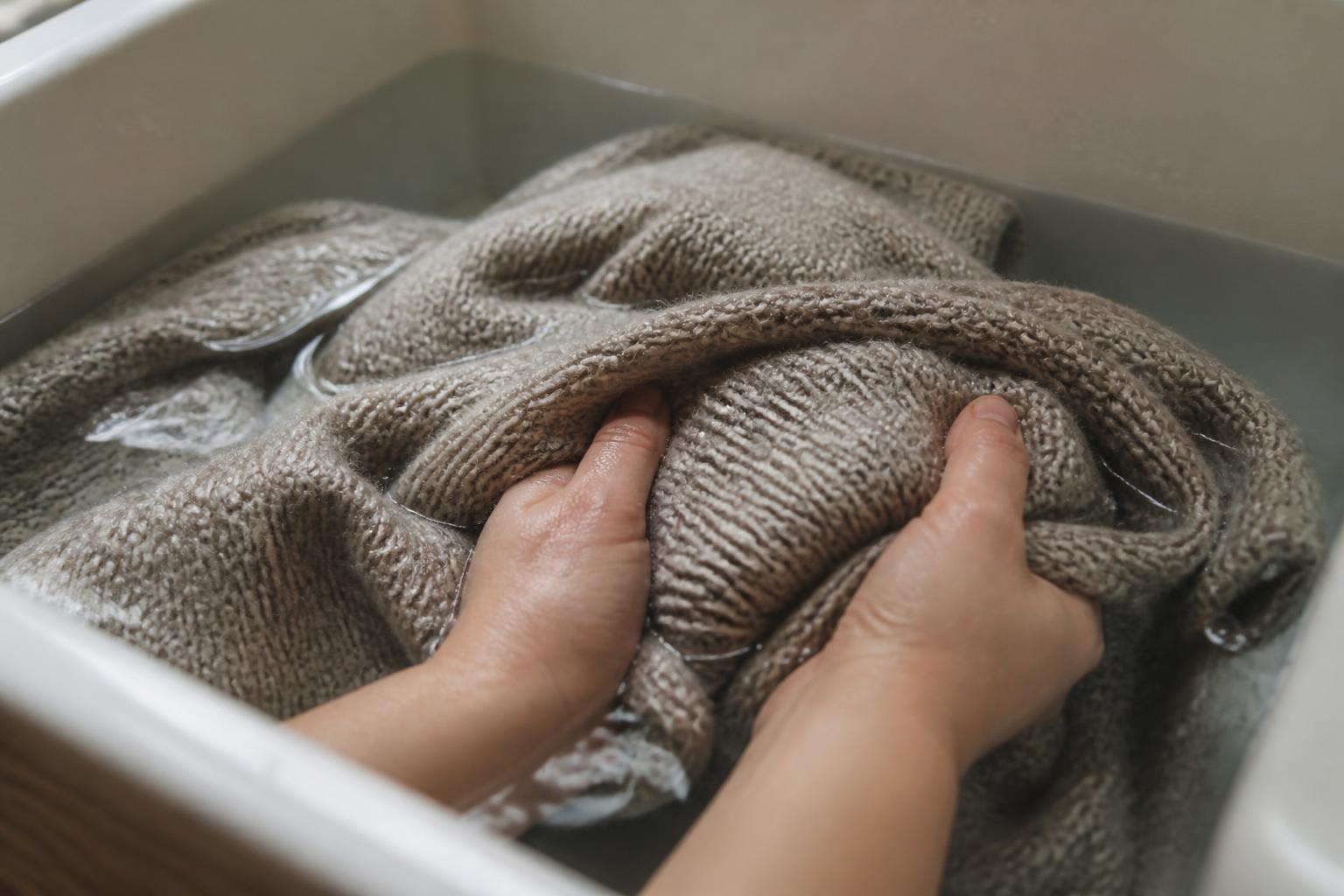
Start with the wash symbol. Recycled polyester garments commonly show 30°C or 40°C machine wash, often on a synthetic or gentle cycle. Lower temperatures usually help the fabric keep its finish for longer. Hotter washing can make some finishes rougher, increase creasing, or shorten the life of elastane if it is in the blend.
Look at tumble drying instructions. If the label says do not tumble dry, take that seriously. High heat can change the texture of synthetic fabrics, flatten brushed finishes, increase static, or make some items feel harsher. It can also affect bonded trims, prints and elastic. If tumble drying is allowed on low, it is still often worth limiting it to reduce wear.
Ironing symbols matter more than many people realise. A cool iron symbol usually means the fabric can take only low heat. Too much heat can leave shine marks, flatten texture, damage pleats or even melt fibres. If the label says do not iron, that often tells you the surface finish is part of the garment’s look and could be spoiled easily.
Static is another long-term comfort issue. Recycled polyester can build static, especially in dry indoor air, when layered over tights, or when over-dried. The care label will not mention static directly, but washing gently, avoiding excessive tumble drying and storing garments sensibly can help. So can letting clothes air dry and not over-washing them. Our practical guide to wardrobe care that helps clothes last longer covers the habits that make a visible difference.
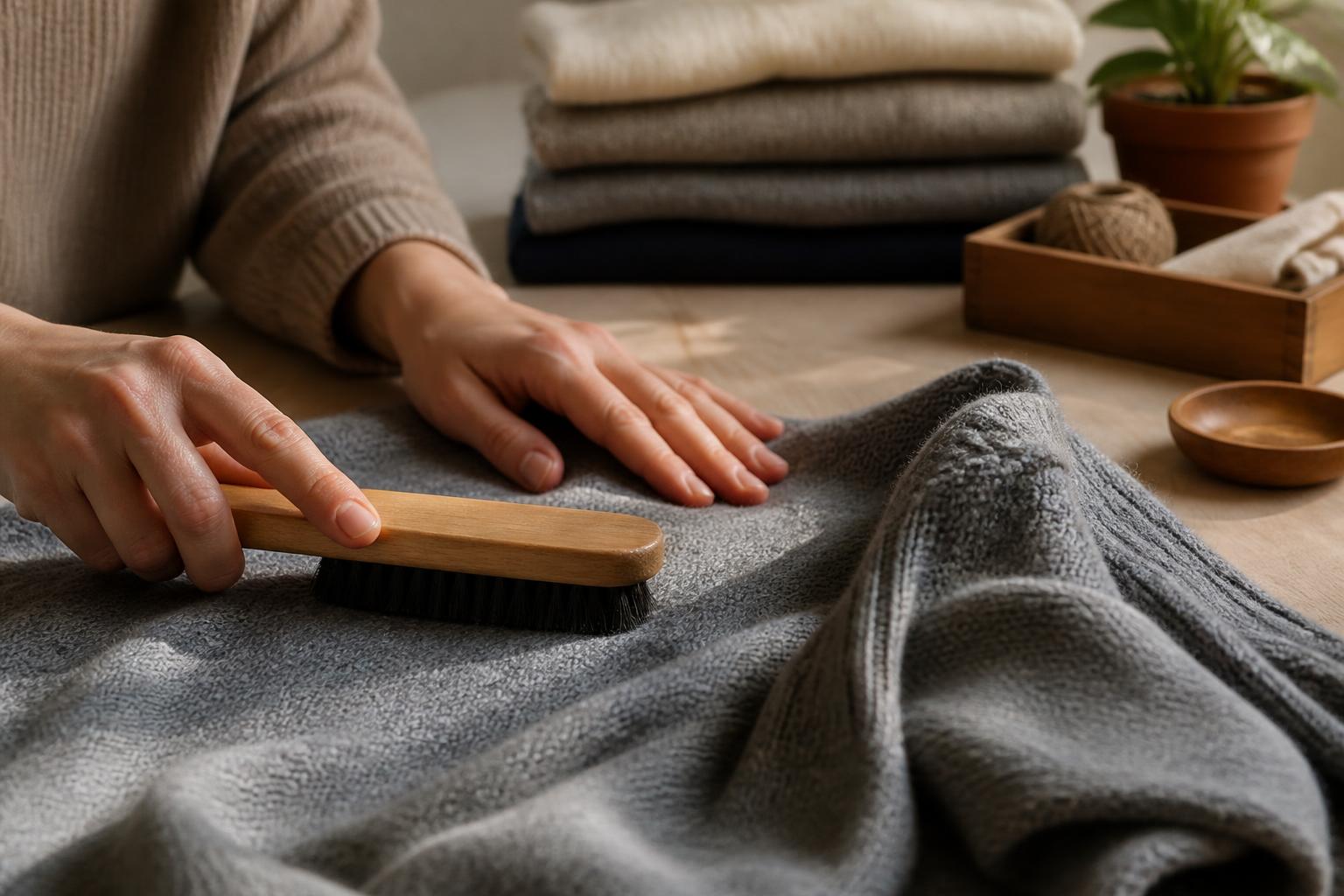
Pilling is worth watching too. Brushed recycled polyester, fleece and some knitted blends are more likely to pill with friction. The care label may recommend washing inside out or on a gentle cycle, and that is usually good advice. Pilling does not always mean poor quality, but it does change how a garment feels and looks over time.
The label can also hint at whether the fabric relies on a finish to feel good. If a garment needs specialist cleaning, very low heat, or careful reshaping, it may be because the texture, coating or drape is easy to disturb. That does not make it a bad buy, but it does mean you should factor maintenance into the decision.
In the UK, care labels generally follow recognised textile care symbols, but brands vary in how much extra wording they add. If there is a conflict between a swing tag claim and the sewn-in care label, trust the sewn-in label. That is the instruction set meant to stay with the garment.
So, what does recycled polyester feel like in real life? It can feel smooth, crisp, stretchy, fleecy, silky or structured. The fibre source alone does not decide comfort. The better way to shop is to read the fabric description, inspect construction, check the care label and judge each garment on its own merits. That is what helps an everyday wardrobe work, especially when you want clothes that feel right now and still feel right after a season of actual wear.

Questions about this article or a correction to suggest? Get in touch. Read more about our editorial approach.