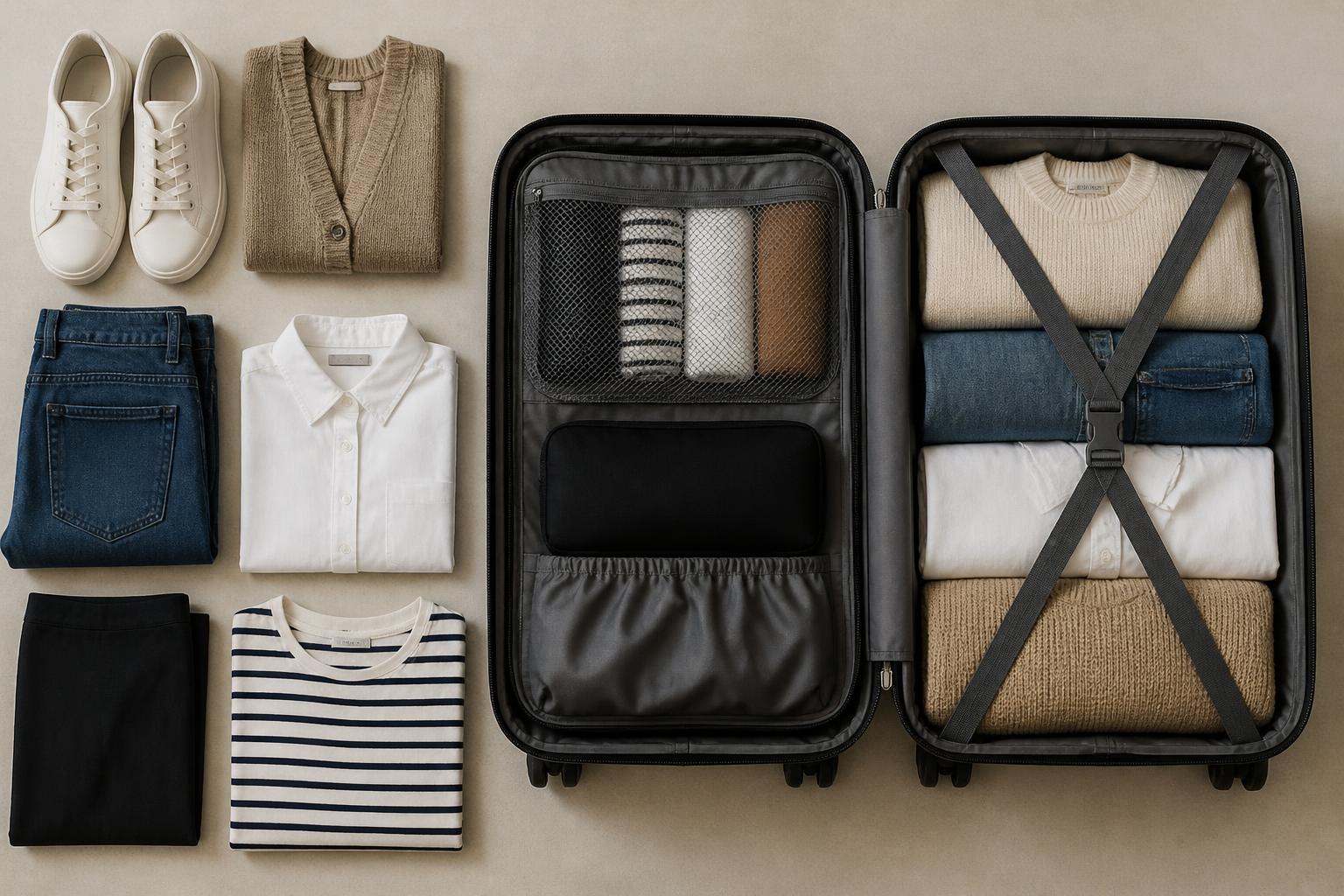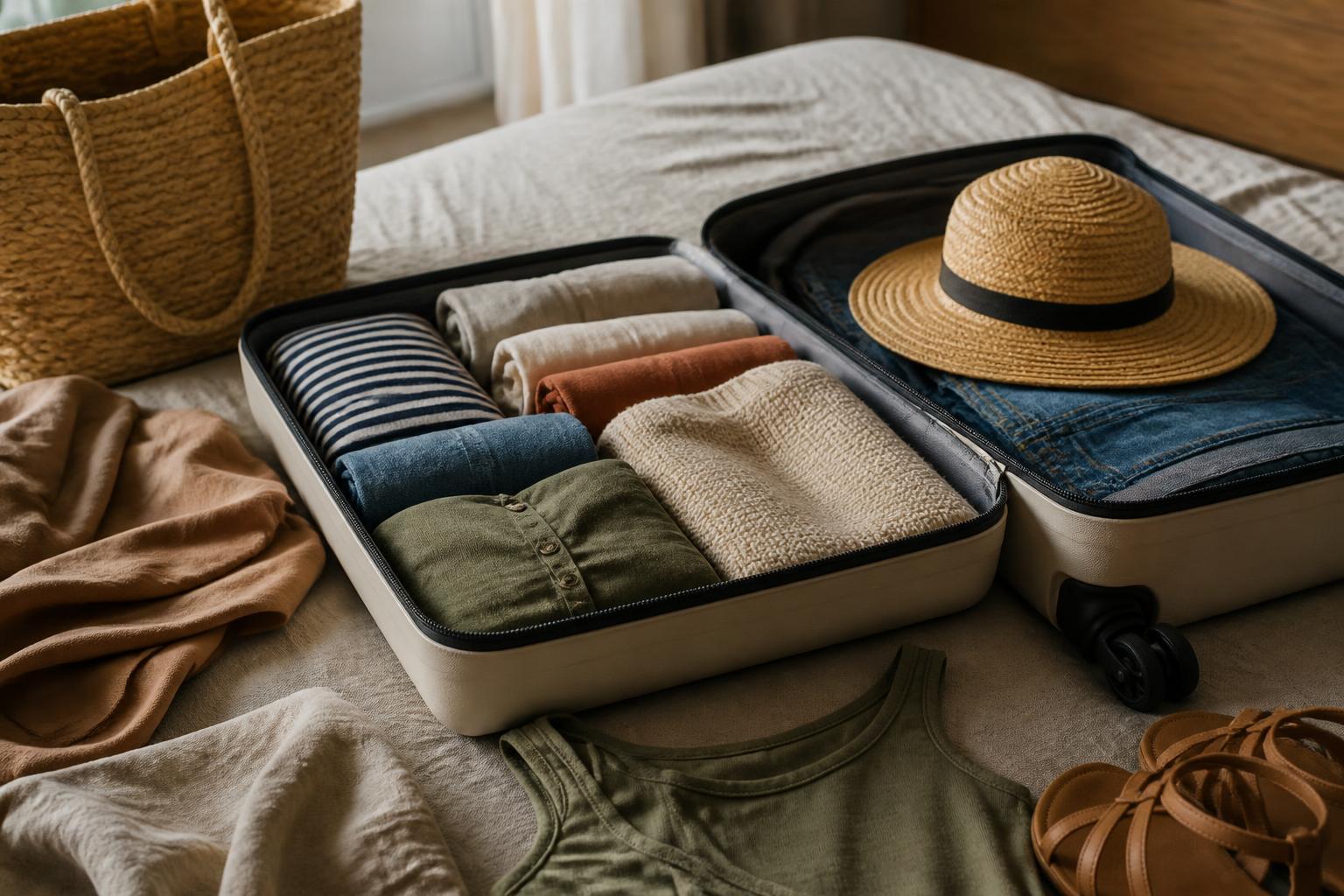
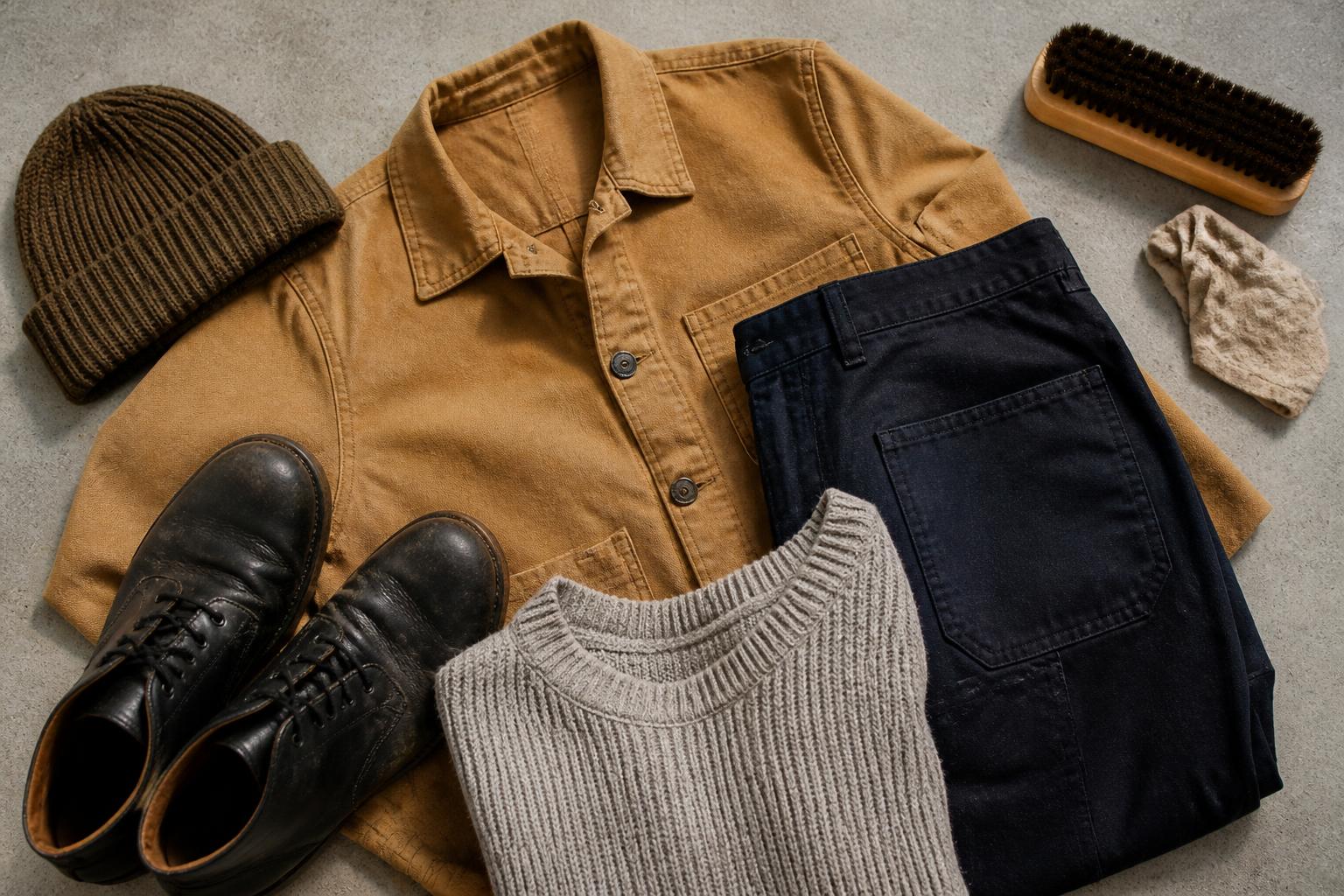
A useful workwear capsule wardrobe is not a minimalist challenge and it is not a shopping list copied from somebody else’s office. It is a small, workable set of clothes that gets you through your actual week, your commute, your weather, your laundry habits and your tolerance for ironing, dry cleaning or changing shoes halfway through the day.
If it is doing its job properly, you should be able to get dressed quickly, repeat outfits without feeling stuck, and replace worn items one at a time instead of panicking and buying five wrong things at once. The goal is not fewer clothes at any cost. It is a wardrobe that earns space, money and maintenance because it gets worn.
What a workwear capsule wardrobe actually needs to do
Before counting items, define the job the wardrobe has to do.
Start with your working pattern. A capsule for five office days, two days at home and one client visit is different from one for retail, healthcare admin, teaching or hybrid meetings split across sites. Write down the practical points first.
Consider:
- how many days a week you need work clothes
- whether your workplace is formal, smart casual, uniform-adjacent or largely unstructured
- whether you commute on foot, by bike, by train or by car
- whether your office runs hot, cold or both in one day
- whether you need pockets, stretch, flat shoes or machine-washable fabrics
- how often you realistically do laundry
- whether you are willing to steam, iron, hand wash or visit a dry cleaner
That last point matters more than people admit. A beautiful blouse that needs careful pressing after every wash is not a hard-working piece if it sits in the laundry basket all week. Equally, if your job involves carrying equipment, sitting for long periods, climbing stairs or moving between indoors and outdoors, comfort is not a bonus feature. It is part of the dress code, even if nobody says so out loud.
A workwear capsule wardrobe should also reflect repetition. Most of us do not need seven entirely different looks for five working days. We need clothes that can be reworn in different combinations and still feel presentable. Trousers might be worn several times before washing. Tops worn next to the skin may need more frequent laundering. Knitwear may only need airing between wears if the care label allows and the garment is not stained.
This is also where honesty helps. If you regularly spill coffee, choose darker colours, prints or washable fabrics. If your commute means standing on a windy platform in winter, your capsule needs outerwear that works with your office clothes, not just around them. If your workplace expects polish but your budget is tight, put your money into the garments everyone notices repeatedly, usually shoes, trousers, coats and knitwear in good condition.
For a broader starting point, our guide to building a basic capsule wardrobe without buying loads can help you sort what you already own before spending anything.
How many pieces do you need for a working week?
There is no universal formula, and most fixed capsule numbers fall apart as soon as real life gets involved. A person who cycles to work in Manchester, works in a chilly office and does one wash at the weekend will need a different setup from someone who works from home three days a week and can wash midweek.
Instead of aiming for a magic number, estimate by wear rate.
Tops usually need the highest turnover. Shirts, blouses, T-shirts and lightweight knits worn next to the skin are more likely to need washing after one wear, though not always. If you wear a vest under a shirt, or if your office is cool and you do not perspire much, some tops may get another outing after airing. For many people, enough tops for one working week, plus one spare, is a sensible place to start.
Bottoms usually need fewer pieces. Trousers, skirts and more robust dresses can often be worn multiple times before washing, provided they are clean and the care label does not require otherwise. Two or three bottoms that all work with most of your tops can cover a standard week better than six single-purpose pairs.
Layers do a lot of heavy lifting. Cardigans, blazers, overshirts and fine knit jumpers change the look of repeated tops and help with fluctuating temperatures. If your workplace is informal, two or three layers may be enough. If you rely on tailoring to make simpler clothes look work-ready, you may want more.
Shoes depend on your commute and the weather as much as your dress code. If you wear the same pair every day, they wear out faster and may not dry fully between uses, especially in wet weather. Two work-appropriate pairs in rotation is often more practical than one “perfect” pair. If your journey is rough on footwear, you may need commute shoes and office shoes, but only if you will genuinely change them.
Outerwear counts if it affects what you can wear underneath. A coat that only fits over a thin jumper is not much use in January. A trench that creases badly every time you sit down on the train may not be the right answer for daily use, however classic it looks.
A simple way to test your numbers is to map out two working weeks on paper. Use only clothes you actually own or plan to buy. If you cannot get through those ten days without urgent washing, awkward repeats or weather problems, the issue is not discipline. It is capacity.
If your dress code is office-based, our piece on building an office wardrobe that works all week goes further into planning combinations around a real schedule.
Which garments earn a place in the capsule?
A garment earns its place by being easy to repeat, easy enough to care for, useful across more than one type of weather, and repairable when something small goes wrong.
Repeatability comes first. Ask whether the item works with at least three other things you already wear for work. A pair of navy trousers that goes with five tops is usually more useful than a statement pair that only suits one blouse and one pair of shoes. The same applies to dresses. A work dress that can be worn alone, with tights, under knitwear or with a blazer will earn far more wear than one that only works in one season.
Fabric matters because care demands become wardrobe bottlenecks. For many people, machine-washable cotton, wool blends that recover well, decent viscose blends, and sturdy ponte or twill fabrics are easier to keep in use than delicate synthetics that cling, snag or hold odour. That does not mean natural fibres are automatically best in every case. It means checking what the fabric actually feels like, how it behaves after washing and whether it suits your life.
Look at the care label before you buy. In the UK, clothing sold to consumers must carry fibre composition labelling, and care information is commonly provided, though the exact format can vary. Fibre content tells you what the garment is made from. The care symbols tell you the maximum treatment the manufacturer says the item can withstand. They are not suggestions, but they are also not a guarantee that a difficult-care item will fit your routine.
Weather range is another filter. A good work shirt can sit under knitwear in winter and work alone in spring. A lightweight merino jumper can act as a top layer indoors and a mid-layer under a coat. Trousers with enough weight to hang properly in cooler months may still work in summer with a lighter top. If a piece only has a narrow weather window, it needs to justify that with very frequent wear during that period.
Repair potential is often overlooked. Check seams, hems, spare buttons and fabric surface. A missing button, loose hem or open seam is usually straightforward to fix. Heavy pilling, thinning at the inner thighs, peeling faux leather and cracked coatings are harder to solve well. When choosing between two similar items, the one with a better seam allowance, sturdier zip and replaceable button is usually the better investment.
This is also why second-hand workwear can be excellent if you inspect it properly. Better-made older trousers, skirts, blazers and knitwear often have more life left in them than a flimsy new equivalent. We look for underarm wear, seat shine, cuff fraying, moth damage, zip strain, altered hems and any sign that the fabric has twisted or shrunk.
For more on fibres and how they behave in ordinary use, see our guide to choosing clothing fabrics that last in real wardrobes.
How to shop for workwear without creating expensive mistakes?
The safest way to shop is to identify the gap first, then buy for that gap only.
Say you have enough tops but only one pair of smart trousers that fits properly. The problem is not “I need a wardrobe refresh”. The problem is “I need one, possibly two, pairs of trousers that work with my existing tops and shoes.” That level of specificity stops impulse buys that look useful on a hanger and then never leave the house.
Take measurements before shopping. For trousers, that means waist, high hip, full hip, rise, inside leg and hem width if you care about how they sit over shoes. For shirts and jackets, check shoulder width, bust, length and sleeve length. Brand sizing is inconsistent, and second-hand listings are often more reliable when they give garment measurements rather than a size label alone.
Read care labels and product descriptions before checkout. If a garment says dry clean only, ask whether you are genuinely willing to maintain it that way. In the UK, dry cleaning costs vary widely, so rather than pretending it is always worthwhile, treat it as a recurring cost attached to the garment. If that cost would put you off wearing it, leave it.
Second-hand shopping needs a checklist. Ask for close photos of cuffs, hems, underarms, seat, inner thigh and care labels. Check whether the seller mentions alterations. “Taken in at the waist” can be fine. “Let down hem” may reveal a visible fold line. “No size label” is not a deal-breaker if measurements are clear. If the item is lined, ask about the lining condition too. A good outer fabric with torn or disintegrating lining may still be salvageable, but only if the price reflects the repair.
Know the limits of alteration. Trousers can often be shortened, hems repaired and waists adjusted a little. Sleeves can sometimes be shortened depending on cuff construction. Shoulders are usually expensive and not worth altering on ordinary workwear. If a blazer strains across the back or a shirt pulls at the bust, do not buy it hoping a tailor will perform miracles.
Cost per wear is useful as a rough sense check, not a maths trick to justify overspending. A hypothetical example is enough. A £25 pair of trousers worn twice and abandoned is expensive. A £70 pair worn twice a week for most of the year, repaired once and kept in rotation is likely better value. But the calculation only works if the garment is comfortable enough to wear and easy enough to maintain.
A final check before buying, ask whether the new piece creates outfits or creates more shopping. If a skirt needs special shoes, a different coat and a top you do not own, it is not filling a gap. It is opening three more.
How do you keep a workwear capsule in use for longer?
Longevity starts with using clothes slightly less harshly, not with never wearing them.
Wash by need, not by habit, while still following hygiene and the care label. Tops worn next to the skin generally need more frequent washing than outer layers. Knitwear, blazers and trousers may only need airing between wears if they are clean. Airing is not a substitute for washing forever, but it does reduce unnecessary laundering, which is often what makes clothes fade, shrink, lose shape or wear thin early.
Treat stains quickly. Blot rather than rub. Use cold or lukewarm water first unless the care label or stain type clearly calls for something else. Heat can set some stains, especially protein stains. If you are using a stain remover, test an inconspicuous area first where sensible, particularly on darker dyes or delicate fibres.
Store workwear so it can recover. Hang tailored pieces and shirts if the fabric creases easily. Fold heavier knitwear to avoid shoulder bumps and stretching. Let shoes dry before putting them away, and use shoe trees if you already own them, especially in leather pairs. Do not cram everything tightly. Friction and pressure are hard on fabrics.
Rotation matters. If you wear the same jumper, shoes or trousers every Monday to Friday because they are your favourites, they will age faster than the rest of the wardrobe. Even a small rotation helps fabrics rest and recover, and gives shoes time to dry fully between wears.
Simple repairs are worth learning or booking promptly. Sew on buttons before they disappear. Catch a loose hem before it frays. Deal with a small seam opening before strain makes it larger. Remove pilling carefully with the right tool for the fabric. Do not shave aggressively at delicate knits. A ten-minute repair often saves a garment from becoming a “deal with later” item that never returns to use.
Always separate general guidance from the care label. General good practice says wash less, use cooler temperatures where appropriate, and avoid tumble drying when a garment is prone to shrinkage or elastane damage. But the manufacturer’s care instructions still matter. If the label says do not wash, do not assume internet confidence outranks the garment in front of you. If the label says hand wash, decide whether that item deserves a place in your routine before you buy another like it.
A good workwear capsule wardrobe gets better through use because you learn where the gaps are, which fabrics cope, which shoes recover overnight and which garments are quietly doing the most work. That is when wardrobe planning becomes cheaper and easier. You stop shopping for fantasy versions of your week and start backing the clothes that already earn their keep.

Questions about this article or a correction to suggest? Get in touch. Read more about our editorial approach.