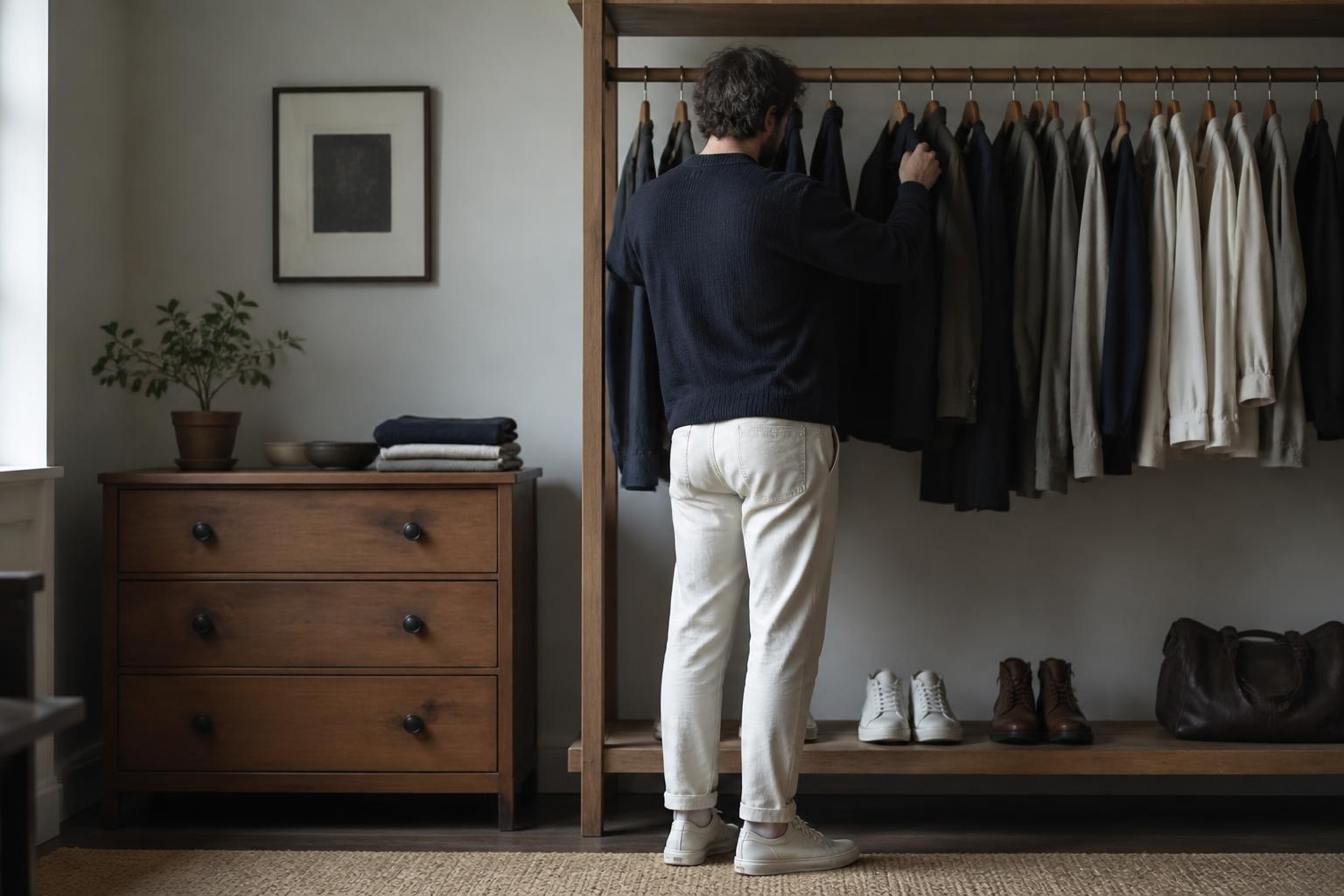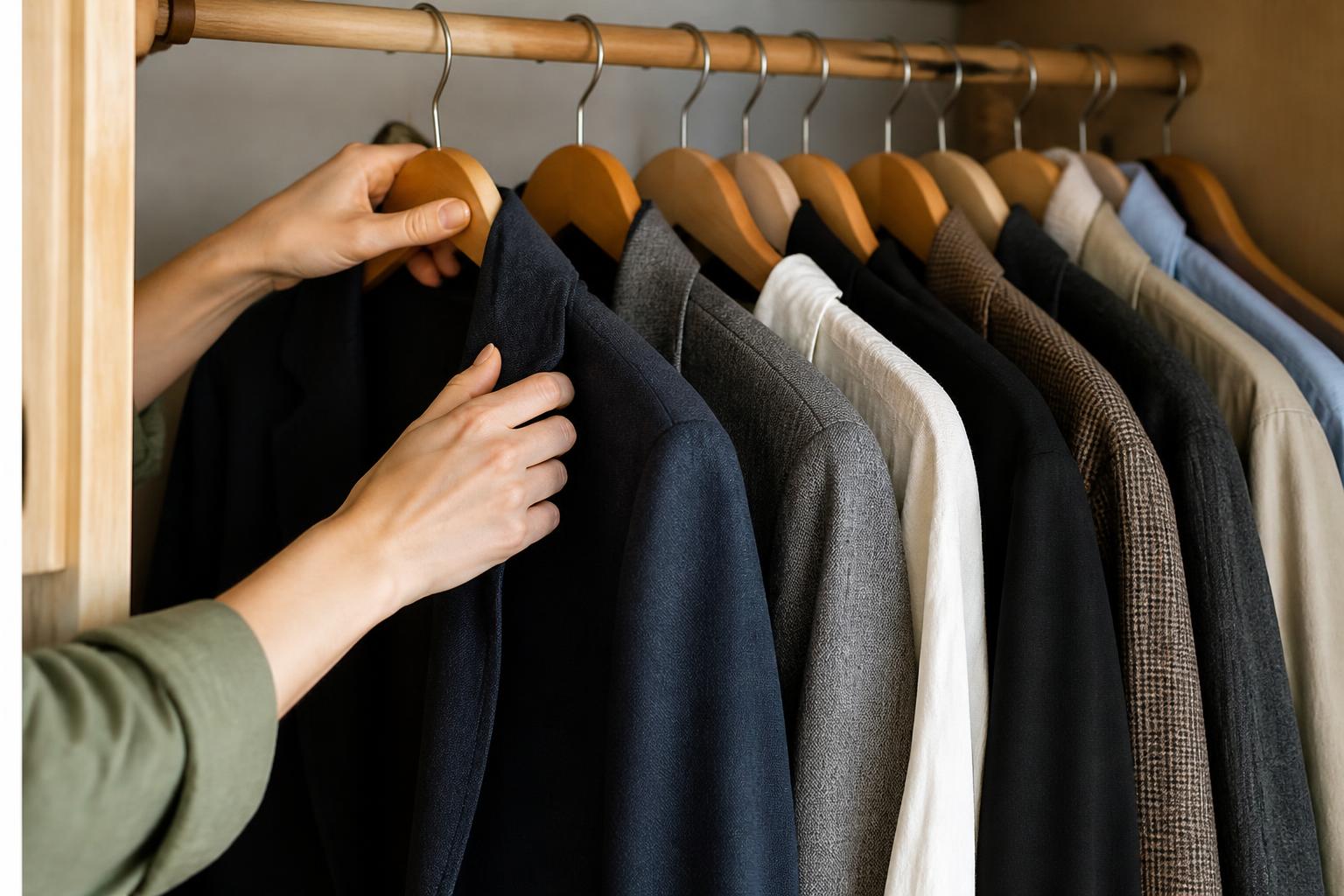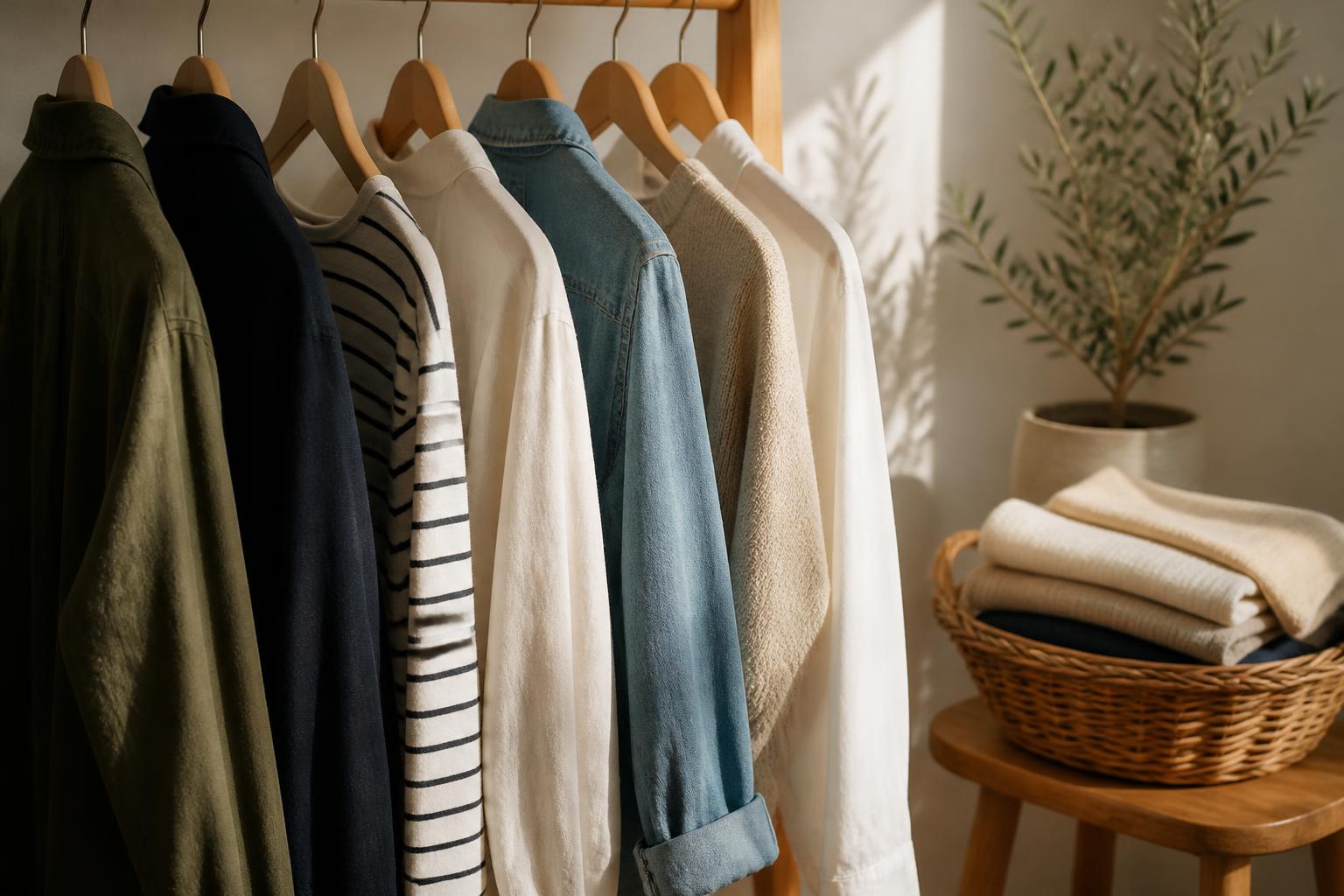
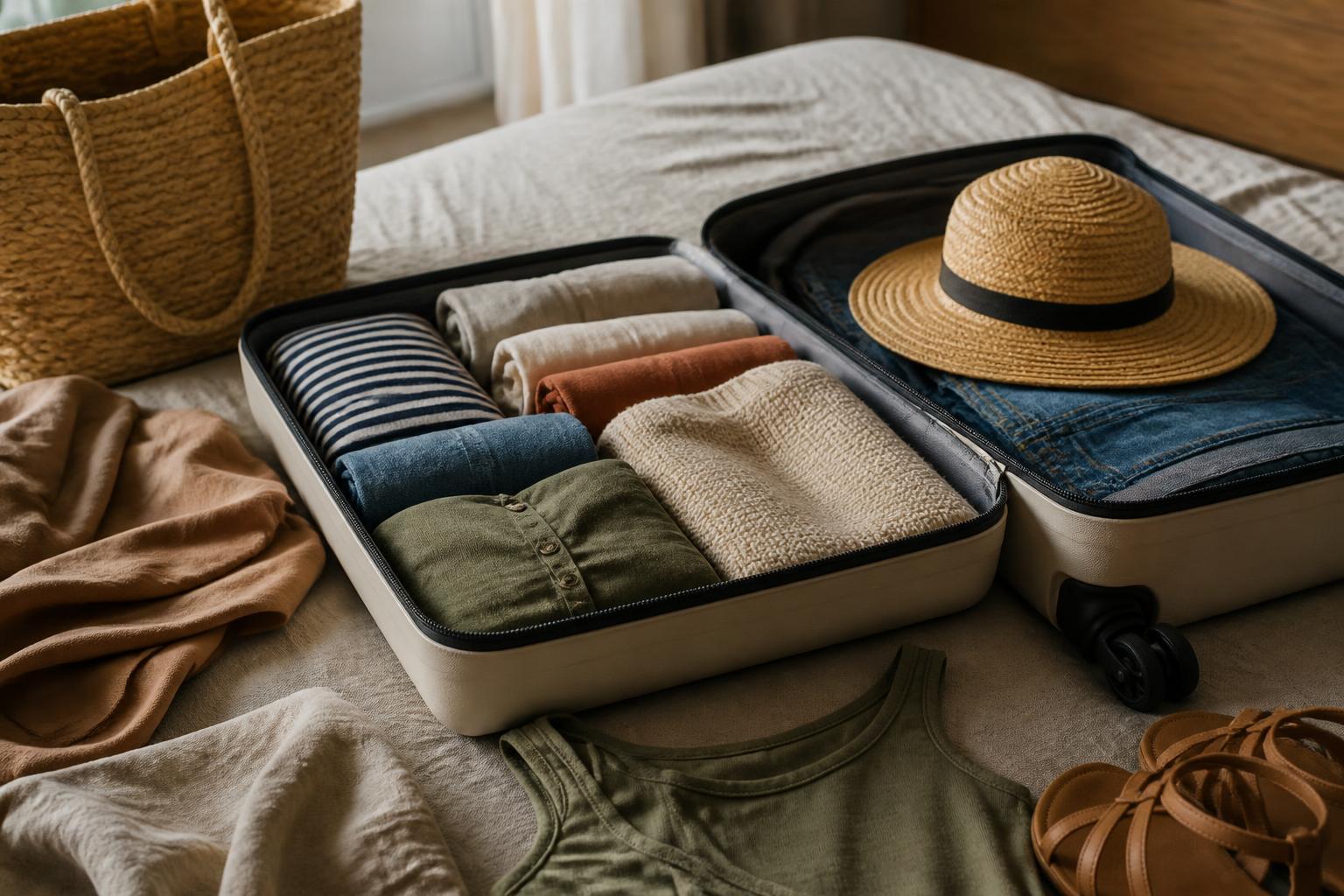
A holiday wardrobe that fits in a carry-on is not about squeezing your style into an arbitrary number of items. It is about packing clothes that can cope with the trip you are actually taking, rewear well, wash and dry without drama, and give you enough combinations that you do not feel stuck in the same outfit every day.
A good capsule holiday wardrobe usually ends up smaller than people expect, but it is not built by chasing a magic formula. We get better results by planning around weather, activities, dress codes and laundry, then choosing pieces we already know how to wear and look after. That cuts overpacking far more reliably than buying a set of “holiday essentials” at the last minute.
What a capsule holiday wardrobe actually needs to do
In practical terms, a capsule holiday wardrobe is a small group of clothes that work together across the whole trip. The aim is not to own less for the sake of it. The aim is to carry less while still being dressed for the things you will genuinely do.
That means your holiday wardrobe needs to do five jobs.
First, it needs to cover the full range of weather you are likely to get, not just the best-case version you have in your head. A seaside week in July can still involve a windy evening, a cool train journey or a day of rain. If you pack only for hot sunshine, you often end up buying something overpriced on arrival.
Second, it needs to work for your actual plans. Poolside clothes are not enough if you also have city walking, a nicer dinner, a museum with strong air conditioning, or a religious site with a modest dress code.
Third, it needs to allow repeat wears. Most of us do not need a fresh outfit every day of a trip. What we need are clothes that still feel presentable after several wears, or can be washed in a sink and dried overnight.
Fourth, it needs to fit your bag without needing special packing tricks that leave clothes crushed or hard to find. A carry-on wardrobe should be easy to use, not a puzzle you have to repack every morning.
Fifth, it needs to come home and rejoin your normal wardrobe. The best holiday clothes are not one-trip novelties. If an item only works for seven days abroad and then sits untouched for the next three years, it was probably not the most useful choice.
This is why we do not set a perfect item count. One person’s three-day city break with hotel laundry is not the same as another person’s ten-day family trip with beach gear and no washing machine. A useful capsule holiday wardrobe is the smallest one that still works, not the smallest one anyone can boast about.
Plan from the trip, not from the clothes
The easiest way to overpack is to stand in front of the wardrobe and ask, “What might I want to wear?” The better question is, “What will this trip ask my clothes to do?”
Start with the destination and the forecast, but check both properly. Look at day and night temperatures, wind, humidity and rain chance. In the UK, we are used to dressing for changeable weather, but it is still easy to forget how cold evenings can feel by the sea, or how hot a city can be when you are walking all day with little shade.
Then list your activities in plain terms. Not “holiday”. Write “travel day”, “walking around town”, “beach”, “one nice dinner”, “hiking”, “visiting churches”, “long coach transfer”, “children’s activities”, or whatever applies. This quickly shows which garments need to earn a place.
Dress codes matter too. Some restaurants still expect smarter shoes and covered shoulders. Some religious sites require knees and shoulders to be covered. If you are travelling for work and leisure together, your packing list may need one sharper outfit that can handle both. We use the same thinking when planning a week of office dressing, and the logic translates well to travel, as it does in building an office wardrobe that works all week.
Next, work out your washing access. This changes everything. If you have a washing machine in a flat, you can pack far less. If you are moving between places every two nights, hand-wash only fabrics are less appealing. If your hotel bathroom has no heated rail, no balcony and poor ventilation, thick cotton may stay damp for too long.
Also think about your tolerance for outfit repetition. Some people are perfectly happy rotating two or three favourite looks. Others feel better with a bit more variation in tops or accessories. Neither is wrong. The useful point is to be honest before you pack.
Finally, decide what you will wear in transit. The bulkiest shoes, your main layer, and any jeans or heavier trousers are often best worn rather than packed. This is not a trick to beat baggage rules. It simply frees space and makes the bag easier to manage.
If you are trying to make more use of what you already own, our guide on building a basic capsule wardrobe without buying loads is a good companion to holiday planning too.
How many pieces do you really need?
There is no universal checklist, but there is a sensible framework. Think in categories, then test them against repeat wears.
For a week-long trip with access to some washing, many people can manage with something like this:
3 to 5 tops
2 to 3 bottoms
1 to 2 layers
2 pairs of shoes
1 set of swimwear, or 2 if one may not dry in time
Underwear and socks based on washing access and comfort
1 sleepwear set if you do not use an old T-shirt
That is not a rule. It is a starting point.
The arithmetic helps. If you pack 4 tops and 3 bottoms, that is 12 possible combinations before you even change shoes, add a layer or swap accessories. In reality, you will not wear all 12. But seeing the combinations on paper often stops the “just in case” extras creeping in.
Tops usually do the hard work in a holiday wardrobe because they show wear and odour sooner than bottoms. If you are short on space, add variation there first. Bottoms can often be reworn more times, especially looser trousers, skirts and shorts in forgiving fabrics.
For bottoms, ask whether each one earns its place. Do you need both denim shorts and chino shorts if they fill the same role? Do you need jeans if the forecast is hot and you hate wearing them in heat? Could one pair of lightweight trousers cover travel, evenings and modest dress requirements better than three more specific items?
Layers are where many carry-on wardrobes fail. People either pack none and get cold, or pack three “just in case” options. Usually one useful knit or overshirt, plus a weather-proof outer layer if needed, is enough. Choose layers that work with every top, not just one outfit.
Shoes take up the most space, so be strict. Most trips need one practical walking pair and one second pair for beach, evening or showers. If a shoe is uncomfortable after twenty minutes at home, it will not improve abroad. A holiday is not the place to break in sandals.
Swimwear depends on drying time. One swimsuit or pair of trunks is enough if it dries overnight. If the fabric stays damp, or you swim more than once a day, a second set is often more practical than another daytime outfit.
A shorter trip does not always mean dramatically fewer clothes. Four days without laundry can need almost as many tops as seven days with a quick wash midweek. This is why the trip plan matters more than the calendar length.
Choose fabrics and garments you can actually look after
Fabric choice matters more on holiday because your clothes are under more pressure. They are worn longer, washed less predictably, dried in odd places and exposed to sun, sweat, sunscreen and friction from bags.
Start with the care label. If something says dry clean only, ask whether you are genuinely willing to risk that on a trip. One special item for an event may be fine. A whole carry-on wardrobe full of delicate garments is usually not worth the hassle.
Look at drying time. Thick cotton jersey, heavy denim and some linen blends can take longer to dry than people expect, especially in humid weather. Lightweight cotton, merino, some viscose blends and many technical travel fabrics dry faster, but each comes with trade-offs.
Creasing matters too. Linen is lovely in heat, but not everyone enjoys how crushed it looks after being folded in a suitcase. Some people are happy with that relaxed look. Others would rather pack a cotton-linen blend or a softer fabric that wrinkles less obviously.
Odour retention is another practical issue. Synthetics often dry fast, but some hold onto sweat smells more than natural fibres. Merino can be excellent for repeat wears, though it costs more and needs gentler washing. Cotton is easy to wash but slower to dry. There is no perfect fabric, only the best compromise for your trip and your habits.
Repairability deserves a place in the decision too. If a button comes off, can you sew it back on in five minutes? If a seam splits, is the fabric stable enough for a simple repair? Very flimsy holiday pieces often fail at the worst time and are not worth rescuing. Better-made basics usually are.
When we choose holiday clothes, we prefer garments we already know in real life. We know how they wash, whether they twist, whether they need ironing, and whether they stretch out by lunchtime. That knowledge is more useful than any product claim on a swing tag.
If you want a clearer sense of which fibres and blends stand up well in ordinary wardrobes, our guide to clothing fabrics that last in real wardrobes goes into the trade-offs in more detail.
One UK-specific note on care products and travel sizes, because readers often ask. If you are flying from a UK airport with hand luggage only, liquids in your cabin bag still need to follow current airport security rules. Those rules are changing gradually at some airports with new scanners, but not everywhere, so check your departure airport rather than assuming the same position across the UK or the EU.
How to build outfits that repeat without feeling repetitive
Repeating clothes is the whole point of a holiday capsule. The trick is making those repeats feel intentional rather than stale.
Start with a small colour palette. This does not need to be beige and white unless that is how you already dress. It simply means your main pieces should all work together. For example, navy, olive, cream and rust. Or black, stone, blue and one brighter accent. A palette makes packing easier because almost every top can work with almost every bottom.
Then vary the role of each item. The same vest can sit under an overshirt for travel, pair with shorts in the day, and tuck into a skirt or smarter trousers for dinner. A shirt can work open over swimwear, buttoned with trousers, or tied over a dress. Clothes that shift jobs are more useful than clothes with one very fixed look.
Accessories help, but keep them practical. A scarf can add warmth on a flight, cover shoulders, and change the look of a simple outfit. Jewellery takes little room if you wear it. A belt can make one pair of trousers feel different. Bags matter too, especially if you need one that works for walking and evenings, and our piece on choosing bags that work harder in your wardrobe may help if this is a weak point in your packing.
What usually does not help is buying a set of highly specific “holiday” pieces that only work with each other. A crochet co-ord, a dress that needs special underwear, or sandals that only suit one outfit may look appealing in a rush before departure, but they rarely earn their keep. If you would not choose the item for a hot day at home, think twice.
It also helps to separate visual repetition from practical repetition. Most people notice repeated statement pieces more than repeated basics. If you want the wardrobe to feel less repetitive, keep the louder prints to one item and let the rest be easier mixers.
Photographing outfits before you go can be surprisingly useful. Not because you need a rigid schedule, but because it shows gaps and overlaps. If you can only make one outfit with a skirt, leave the skirt at home unless you really love wearing it.
Pack, wear, wash and store it after the trip
Once you have chosen the clothes, packing should be simple. If it still feels difficult, the wardrobe is probably doing too much.
Fold or roll by fabric and shape, not by internet myth. Soft jerseys and knitwear often roll well. Structured shirts and linen may crease less when folded neatly. Packing cubes can help with organisation, especially if you are sharing a case or moving between stops, but they are not magic space-makers.
Keep one easy outfit accessible for arrival. If your bag is searched, delayed at the hotel desk, or unpacked after a long journey, you do not want to dig through everything for clean underwear and a T-shirt.
During the trip, air clothes before deciding they need washing. A top worn for dinner may be fine again after airing overnight. Spot-clean marks early. Rinse swimwear after use if you can, especially after chlorine or salt. If you hand-wash items, use a small amount of detergent or soap only if the care label allows it, rinse thoroughly, and squeeze in a towel rather than wringing aggressively.
For simple repairs, a tiny kit goes a long way. We pack a couple of safety pins, a needle, a short length of thread in a neutral colour, and a spare button if a garment needs one. That is enough for a loose hem, a missing button or a small seam split.
At the end of the trip, do not shove everything back into the wardrobe and deal with it later. Unpack with care in mind. Wash what needs washing according to the care label. Air items that were barely worn. Check for sunscreen marks, sand in hems, stretched straps or loose stitching. Small repairs are easier now than six months later.
Then review what worked. Which pieces were worn most? Which never left the bag? Which took too long to dry, creased badly or felt wrong for the climate? That short note on your phone is often the most useful packing aid for the next trip.
A capsule holiday wardrobe gets easier each time because it is built from experience, not aspiration. The goal is not to look as though you packed nothing. It is to travel with a carry-on and still have clothes that are comfortable, presentable, easy to care for and worth wearing again once you are home.

Questions about this article or a correction to suggest? Get in touch. Read more about our editorial approach.