Choosing bags that work harder in your wardrobe comes down to a simple test. Will this bag earn its place through regular use, hold up under the way you actually live, and still be repairable or easy to care for a year or two from now? If the answer is yes, it is a better choice than a more exciting bag that only works for a narrow set of outfits or occasions.
That is the practical heart of sustainable bags and fashion. It is not just about whether a brand uses a preferred material or says the right things online. Lower impact choices usually come from buying fewer bags, choosing the right one for the job, caring for it properly, and looking for evidence that it was made to last. If you build your bag wardrobe around real life rather than impulse, you waste less money and end up with pieces you actually carry.
What sustainable bags and fashion should mean in practice
For UK readers, sustainable bags and fashion should mean more than a broad promise on a swing tag. In practice, we want four things.
First, the bag needs to be useful enough to get regular wear. A bag that sits in the wardrobe because it is too small, too heavy, awkward in the rain, or impossible to style is not a strong choice, even if the material sounds impressive.
Second, it needs a decent working life. That means seams that do not strain too quickly, straps that can cope with daily weight, closures that still function after repeated use, and a surface that can be cleaned without damage. Longevity matters because replacing a failed bag every few months is rarely a lower impact route.
Third, it needs realistic care and repair options. If a lining split, zip failure, worn edge paint, or loose rivet means the whole bag is finished, that is a problem. We look for bags with replaceable parts, accessible stitching, and materials that can be cleaned and conditioned rather than treated as disposable.
Fourth, we need evidence. Terms such as eco, conscious, responsible, vegan, recycled, and sustainable are not very useful on their own. We need enough information to understand what the bag is made from, how it should be cared for, and whether the brand gives clear detail rather than mood-board language. If you want a broader framework for spotting weak claims, our guide on judging brands without greenwash is a good companion piece.
It also helps to be careful with legal language. In the UK, product claims fall under consumer protection rules and advertising standards, but there is no single official definition that automatically makes a bag sustainable. If a brand sells in both the UK and EU, you may see slightly different wording across markets. The practical point for shoppers is the same. Trust specifics over slogans.
Start with the job your bag needs to do
The fastest way to buy the wrong bag is to start with appearance alone. Start with use instead.
Think about your most common week, not your idealised one. Are you commuting by train with a laptop, lunch and charger? Walking the school run in all weather? Going into the office twice a week but otherwise working locally? Carrying gym kit after work? Your answers should shape the bag type.
For everyday use, ask these questions before you buy.
What needs to fit inside? List the non-negotiables. Phone, keys, purse, glasses, medication, water bottle, notebook, lunch, umbrella, laptop. A bag that only fits the slimmed down version of your life will soon annoy you.
How much weight will you carry? A beautiful shoulder bag can become miserable if it cuts into your coat through a heavy load. If you carry more than the basics every day, crossbody styles, backpacks, or totes with wide straps usually distribute weight better. Narrow straps and decorative chains often look smarter than they feel.
How secure does it need to be? For crowded public transport, travel, or city errands, a zip top or flap with a proper fastening is usually more practical than an open tote. Magnetic closures are quick but not especially secure when the bag tips over. Drawstrings can be useful, but check whether contents are likely to spill if the bag is overfilled.
What weather does it need to handle? UK weather is not kind to delicate finishes. If you walk a lot or commute on foot, smooth leather, coated canvas, tightly woven nylon, or washable heavy cotton can be easier to manage than suede, untreated canvas, or pale fabrics that mark quickly. If the bag will often be set down on damp floors, check the base and feet, if any.
How often will you carry it for long periods? A bag for ten minutes of use is different from a bag worn for two hours across town. Look at strap drop, adjustability, whether the strap slips off your shoulder, and whether the bag bounces awkwardly when worn crossbody. If possible, load it in person before deciding.
What do you need to reach quickly? Internal organisation matters if you are regularly fishing for travel cards, keys or lip balm. One secure internal pocket can be more useful than six tiny compartments. Too much built in organisation can also add weight before you have put anything inside.
This is also where many wardrobe gaps become obvious. If you already own an evening bag and a summer basket, but what you really need is a weatherproof medium crossbody for daily errands, buying another occasional bag will not make your wardrobe feel easier.
How to assess materials without falling for vague claims
Materials matter, but they are not a shortcut. A lower impact material used badly, or in a bag that fails quickly, is not much help. We compare materials by asking four things. How durable is it, how easy is it to clean, can it be repaired, and what evidence backs up the claim?
Leather can last very well when it is thick enough for the job, properly stitched, and cared for. It can often be conditioned, recoloured, restitched and relined. That repair potential is one reason many people keep a leather bag in use for years. But not all leather performs equally. Very thin fashion leather, heavily corrected surfaces, bonded leather, or bags with lots of edge paint can age poorly. Look for clear care advice and details about finish rather than assuming all leather is hard wearing.
Suede and nubuck are usually softer and can look excellent, but they need more careful weather management. Marks, colour transfer and water spotting are more likely. They can still be good choices for lower frequency use, but they are rarely the easiest daily option in a wet UK climate.
Canvas and cotton are common, often light, and usually easy to live with. They can work especially well for totes, shopping, beach use and casual everyday bags. But plain cotton marks easily, can absorb odours, and may sag under heavy loads. A lined or structured canvas bag will usually hold shape better. If a brand makes a recycled cotton claim, look for actual fibre content or certification rather than just a headline.
Nylon and polyester can be practical workhorses. They are often lightweight, wipeable and useful in wet weather. Recycled versions may reduce reliance on virgin material, but recycled content alone does not tell you whether the bag will last. Check fabric density, stitching, zip quality and whether stress points are reinforced. A flimsy recycled backpack is still flimsy.
Polyurethane and other synthetic leather alternatives vary wildly. Some look smart at first and are easy to wipe clean, but lower quality versions can crack, peel or go sticky with age, especially on handles and edges. Repair is often more limited than with leather. If you are considering one, inspect fold points, corners and strap attachments closely, because those are often the first areas to fail.
Plant-based alternatives need the same caution. Mushroom, apple, cactus and similar materials are often discussed as if they are automatically better. In reality, many are composites with synthetic binders or coatings, and their long term wear can vary. We would want to know the composition, where the alternative material is actually used, and how the bag should be maintained.
Hardware and finishes matter as much as the main fabric. A strong zip from a known supplier, solid rivets, neatly finished seams, and a robust lining can make the difference between a bag that ages well and one that frustrates you within months. Water resistant coatings can be useful, but ask whether they affect future repair or cleaning.
Evidence worth looking for includes fibre composition, country of manufacture if given, repair guidance, spare parts availability, and clear care instructions. If a brand talks at length about values but says little about construction, that is a warning sign. We take the same view across clothing more broadly in our piece on what ethical fashion means for an everyday wardrobe.
When second-hand makes sense and what to check first
Second-hand can be an excellent route for bags. You may get better materials and construction for the same budget, and you keep an existing item in use. But pre-owned only makes sense if the bag is structurally sound enough to justify the price and any repair work.
Start with smell. Musty odour, smoke, strong perfume, mildew, and pet smells can be stubborn. A light storage smell may air out. Deep odour in the lining, padding or leather often lingers. If you are buying online, ask directly whether there are any smells and whether the bag has been stored in a loft, cellar or garage.
Then inspect the lining. Turn pockets inside out if you can. Look for pen marks, makeup spills, sticky residues, fraying seams, torn pocket corners and thinning fabric at the base. Lining repairs are possible, but they add cost and hassle.
Check all hardware in motion, not just in photos. Run the zip fully open and closed. Test magnetic closures, buckles, clasps and strap adjusters. Look for verdigris, rust, plating loss and sharp edges. A bag with beautiful leather and failed hardware may still be worth repairing, but only if the purchase price leaves room for that.
Examine stress points carefully. Strap attachments, top corners, base corners, and the area around zip ends usually show first wear. On leather, look for cracking rather than simple creasing. On canvas or synthetics, look for thinning, abrasion and seam strain.
Ask whether the care label or brand information is still present. This matters more than people think. Without any care guidance, you may have to be much more cautious about cleaning. If the seller does not know the material, do not assume.
For online second-hand purchases, ask for extra photos in natural light, especially of corners, handles, base, interior and hardware. If measurements are missing, request them. Many returns on bags happen because the scale was misunderstood. A "large tote" can be surprisingly small once a laptop sleeve and lunch go in.
If you are buying through a platform, read how disputes and returns work before paying. Private sales can be final. That does not mean avoid them, just factor the risk into the price you are willing to pay.
Care, storage and simple repairs that keep bags in use
Most bags last longer with boring, regular care rather than occasional rescue attempts.
Empty your bag out weekly. Shake out grit, receipts and crumbs. Small debris wears linings and corners more quickly than people realise. Wipe interiors with a dry or slightly damp cloth if the care information allows it.
For routine exterior cleaning, always start gently. A dry microfibre cloth or soft brush is often enough for dust and light dirt. For smooth leather, use a cleaner or conditioner suited to that finish, sparingly, and patch test first. For canvas and many synthetics, a damp cloth with mild soap can work, but only if the care label or maker guidance supports it. Do not soak a structured bag unless you are certain it is washable.
If a bag gets wet, dry it slowly at room temperature. Do not put it on a radiator, use a hairdryer, or leave it in strong sun. Heat can warp coatings, dry out leather and affect glues. Blot moisture, reshape the bag, and stuff it lightly with clean paper or a soft cloth so it dries in form.
Storage matters. Do not hang heavy bags by their straps for long periods. This can stretch handles, distort the body and strain attachment points. Store them upright where possible, lightly stuffed, with straps tucked in. Dust bags are useful if they are breathable. Plastic tubs or sealed bags can trap moisture.
Check hardware every so often. Loose screws, wobbly feet, and stiff zips are easier to deal with early. A zip that catches may only need careful cleaning and a little suitable lubricant, but stop if you feel resistance. Forcing it usually makes the repair bigger.
Simple repairs are often worth doing quickly. Loose threads can be secured before a seam opens further. Edge wear can sometimes be touched up professionally before it cracks. A cobbler or leather repair specialist can often replace rivets, shorten straps, restitch handles, or fit a new zip pull. For fabric bags, a local alterations service may be able to mend seams or linings.
Always follow care labels where they exist. If the label says specialist cleaning only, believe it. If there is no label, be conservative. This is the same principle we use across the wardrobe, whether we are dealing with bags or working out how to avoid wash damage on natural fibres.
How to build a smaller bag wardrobe that still covers real life
A useful bag wardrobe does not need to be large. It needs to cover your actual routines.
For many people, three or four bags are enough. One daily practical bag. One smarter option for evenings, events or meetings. One high-capacity tote or backpack for travel, shopping or laptop days. Possibly one seasonal or specialist bag, if you genuinely use it, such as a small waterproof crossbody for dog walks or a compact occasion bag.
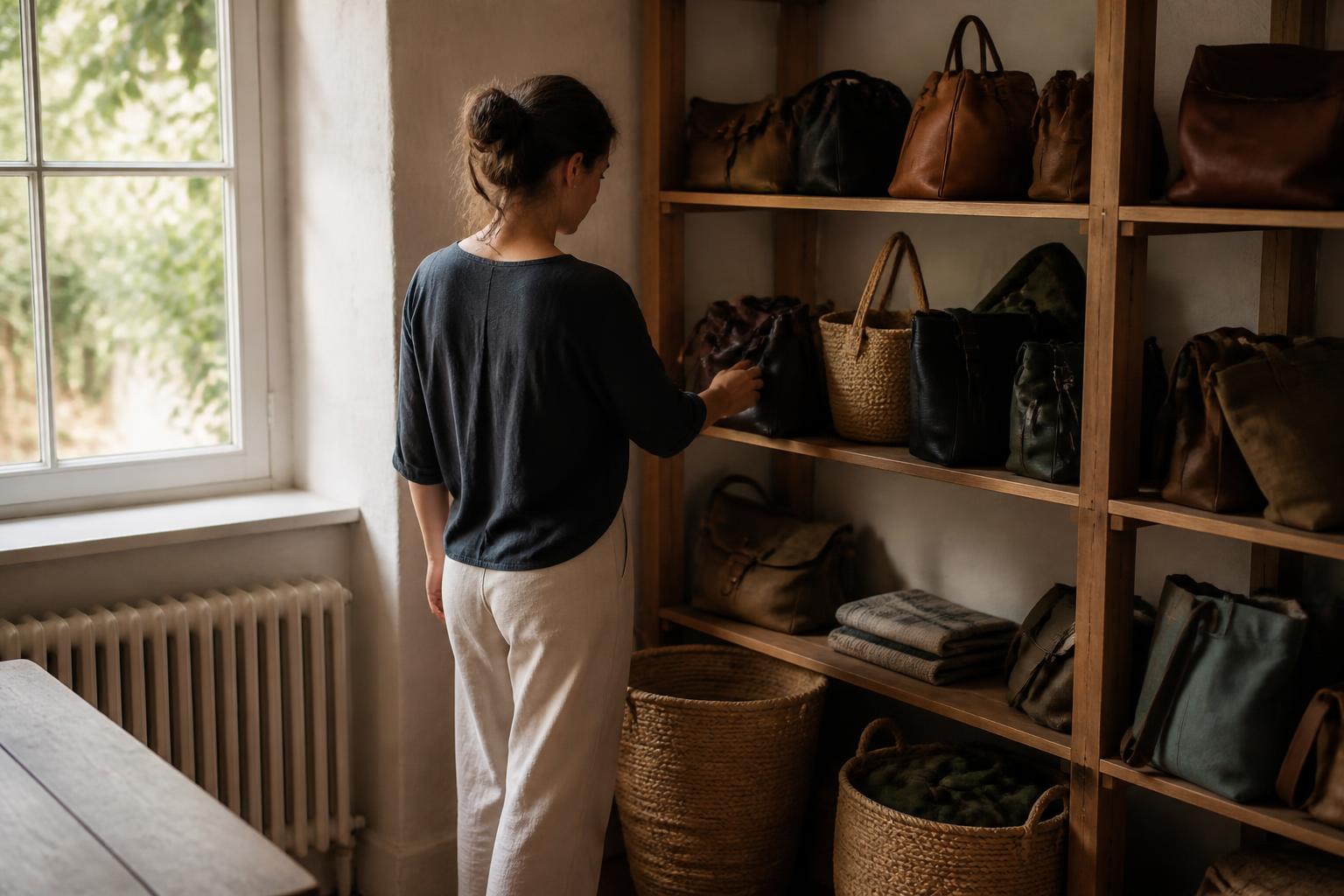
Before buying anything new, audit what you already own. Put every bag in one place and sort them by function, not by colour. You will often spot duplication immediately. Three black shoulder bags that all fit the same items are not three different needs.
Then note the gaps. Maybe none of your bags zip shut. Maybe your only work bag is too heavy before it is filled. Maybe your nicest evening bag is impossible to fit a phone in. These are practical problems worth solving.
Set a budget that includes maintenance. It is often better to buy one bag and pay for a strap repair, protective treatment or key organiser than to buy two cheaper bags that both annoy you. Cost per wear is not a magic formula, but it does help you think beyond the checkout moment.
Try to keep colour and finish versatile unless the bag has a very clear specialist role. Mid tones, dark neutrals and finishes that can cope with ordinary scuffs often earn more use than very pale or highly embellished bags. That does not mean everything must be black. It means being honest about what works with your coats, shoes and daily clothing.
Finally, let yourself leave trends alone. The point is not to build a morally perfect collection. It is to have bags that support your life, last well, and do not create more clutter, waste or decision fatigue than they solve. If a bag works hard, wears well, and stays in use, it is doing its job.

Questions about this article or a correction to suggest? Get in touch. Read more about our editorial approach.