If your tights keep sliding down, the answer is usually not “buy a new pair immediately”. In many cases, you can keep them up by working out whether the problem is size, rise, fabric fatigue, dressing order, or the way they are sitting under the rest of your clothes. Small adjustments often make a bigger difference than people expect.
The most useful place to start is not with hacks, but with diagnosis. Tights that fall down all day are often either too short in the body, too large through the waist, stretched out from washing and wear, or simply the wrong shape for your proportions. Once you know which of those is happening, it is much easier to decide what to adjust, what to repair, and when a pair has had its day.
Why tights fall down in the first place
When we are trying to work out how to stop tights falling down, there are usually three main causes, fit, fabric, and wear.
The first is fit. If the body section is too short, the waistband cannot sit properly at your natural waist or wherever the pair is designed to sit. It gets tugged down every time you walk, sit, or bend. That often feels like the tights are “slipping”, but the real issue is that they are being pulled from below because there is not enough length from gusset to waistband.
The opposite problem also happens. If the waistband is too loose for your waist and high hip, the tights may seem fine when you first put them on, then gradually work their way down because there is nothing holding them in place. This is especially common with multipack tights sold in broad size bands, where one size is meant to cover a wide range of heights and shapes.
The second cause is fabric composition and recovery. Tights rely on stretch fibres, usually elastane, to spring back after being worn. When that recovery weakens, the waistband and upper leg lose grip. A pair can look intact, with no ladder and no obvious hole, and still keep slipping because the stretch has gone tired. This is common in older opaque tights, shaping tights, and any pair that has been tumble dried against the care label.
The third cause is wear in specific areas. If the gusset has shifted, the seams have twisted, or the waistband elastic has started to roll or ripple, the whole pair sits badly. Once the top section is no longer balanced, the fabric below starts dragging it down.
Clothing worn over the top can also contribute. A smooth lining, a slinky slip skirt, or synthetic knickers can create just enough movement for tights to inch downward through the day. Equally, a very fitted dress can pull them out of position if you have to keep adjusting the outer layer.
So before trying every trick going, ask a few plain questions. Do they feel too short in the body? Do they sag at the ankles or knees as well as the waist? Does the waistband gape? Has the elastic gone wavy? Are they only slipping under one particular skirt or dress? The answers usually point to the fix.
Start with size, rise and body measurements
Before deciding a pair is useless, check the size chart for that brand, not just the size on the packet. Tights sizing is notoriously inconsistent. A medium in one brand can be taller, shorter, slimmer, or roomier than a medium in another.
In the UK, most brands size tights using a combination of height and dress size, sometimes with a weight range as well. That gives a rough guide, but it does not tell you much about rise depth, torso length, or the difference between your waist and hips. Two people with the same dress size can need completely different tights.
Start by looking at three things.
First, your height versus the chart. If you are near the top of a height bracket, the body may simply not be long enough, even if the leg length seems fine at first. If you are between sizes and your tights often slide down from the waist while also feeling tight through the body, going up a size can help.
Second, your waist and high hip. If you are near the lower end of the size range, especially in the waist, the waistband may not have enough tension to stay put. In that case, sizing down can work better, provided the rise is still long enough and the fabric is not overstretched.
Third, the rise. This is the part many people miss. Some tights are designed with a lower rise and are never meant to sit at the natural waist. If you keep hoiking a low rise pair higher than it is built to go, it will slide back down because that is where the cut wants to sit. On the other hand, if you prefer a high waist and the pair barely reaches comfortably over the hips, they are too short in the body for you.
A quick home check helps. Put the tights on carefully, making sure the gusset is fully in place before you pull up the waistband. If the gusset sits low or feels as though it is being tugged downward as soon as you stand up straight, the body length is not enough. If the gusset sits properly but the waistband folds, gapes, or drops after a few steps, the waist fit is the issue.
It is also worth checking whether the pair has a back panel, comfort gusset, or shaped brief section. These features are often a clue that the brand expects different proportions and has built in more room through the seat or body. If you buy second-hand hosiery packaging in job lots or pick up deadstock, the original fit notes on the packet can tell you a lot.
If you are used to solving most wardrobe niggles with quick fixes, it helps to think of this like any other fit problem. We would not assume a bra strap is the issue without checking the band and cup first, and the same logic applies here. If you want another example of fixing the cause rather than endlessly adjusting the symptom, our guide on keeping bra straps in place without replacing the bra follows the same principle.
What to try when tights slip during the day
Once you know the pair is broadly wearable, there are a few practical things to try before giving up on them.
The first is underwear order and fabric. For many people, tights stay up better when knickers are worn over the top. It is not glamorous, but it is effective. The extra layer helps anchor the waistband and stops it rolling. This works especially well with slippery tights under a smooth dress or skirt. If you hate the feel of that, try a higher waisted cotton brief over the tights rather than a synthetic one under them.
The second is to avoid combining several slippery layers. Synthetic knickers, synthetic tights, and a polyester slip skirt can all move against each other. Swapping just one layer, often the underwear, can reduce that downward creep. Cotton or cotton gusset underwear usually grips better than very silky microfibre.
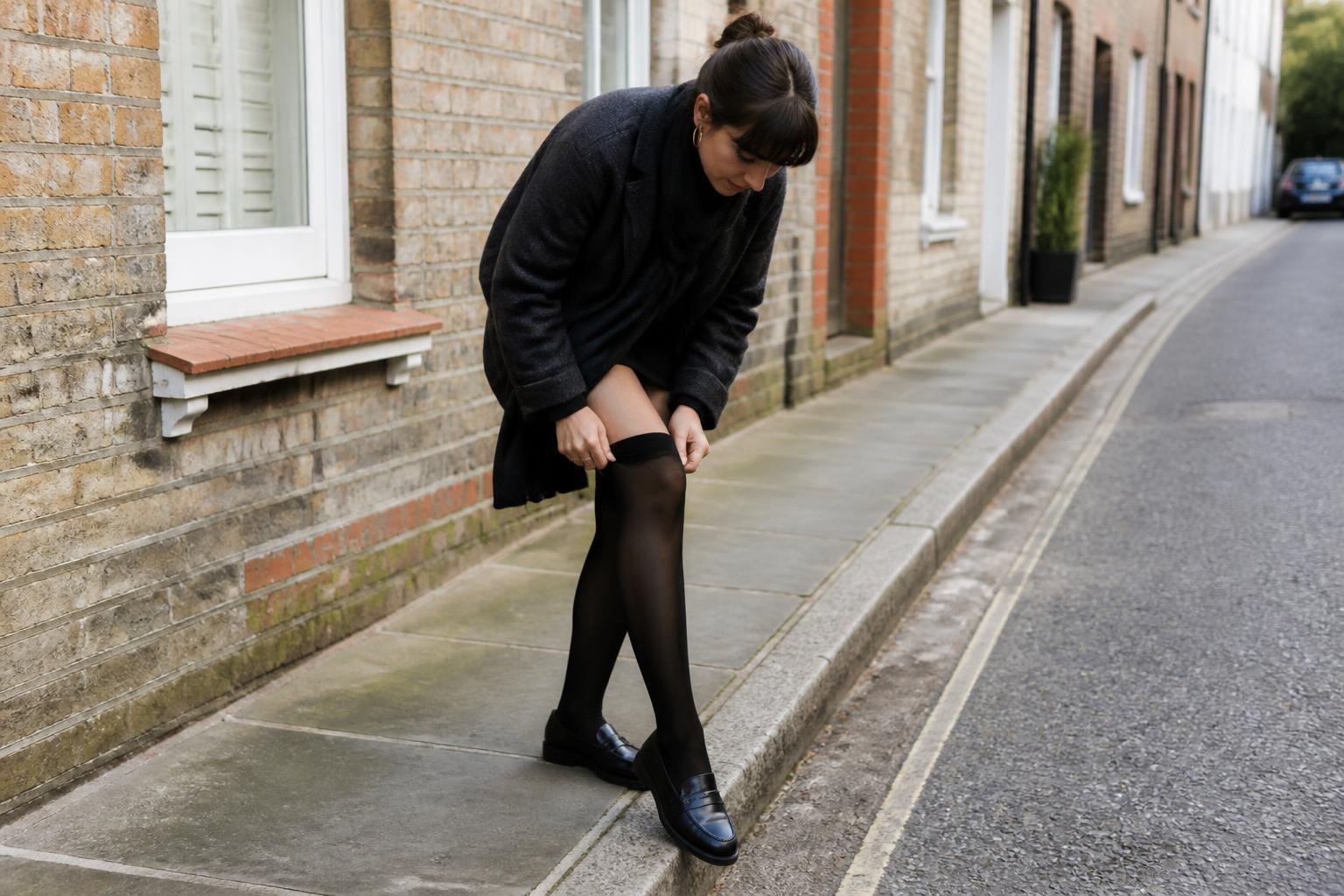
The third is dressing order. Put tights on first and take the time to distribute the fabric properly from foot to waist. Do not just yank from the top. Gather each leg in your hands, pull them up gradually, and make sure there is enough fabric through the thigh before you set the waistband. Then put on underwear if you are wearing it over the top, then your skirt or dress. If you rush this stage, you can trap too much fabric at the ankle or knee, which later steals length from the body and drags the top down.
If the waistband rolls, try folding it once only if the pair still sits securely. More than one fold usually makes things worse because it creates a tight band that can gradually work itself downward. If folding causes pressure and the gusset drops, the rise is too short and no amount of fiddling will turn it into a comfortable pair.
For skirts and dresses that cling, a very thin slip can help if it is not too slick. The goal is to stop the outer garment grabbing the tights and pulling them as you move. This is one of those cases where testing the whole outfit matters more than judging the tights on their own.
Some people use body adhesive or fashion tape at the waist. We would treat that as a last resort. Adhesives can irritate skin, leave residue, and put stress on delicate knit fabric. If you do try one, patch test first and keep it well away from very sheer denier tights, where removal can do more harm than good.
If you are dealing with minor fabric fatigue rather than a total fit mismatch, a pair of shaping briefs over the top can buy more wear out of them. It is not a permanent fix, but it can make a nearly-there pair useful for another season.
And if your tights are generally in decent condition but need better routine care to stay wearable, it is worth having a few simple tools to hand. A mesh laundry bag, a gentle detergent, and a basic sewing kit do more for hosiery lifespan than most “miracle” products. Our guide to building a fabric care kit that helps clothes get worn again covers the sort of practical kit that earns its keep.
Can washing make tights fall down?
Yes, absolutely. Washing can be a major reason tights start falling down when they did not at first.
The key issue is elastane damage. Heat, friction, and harsh detergent can all reduce stretch recovery over time. Once the elastic fibres weaken, the waistband loses snap and the legs can become baggy at the knees and ankles. That combination is a clear sign that laundering, wear, or both have taken a toll.
The care label matters here. In the UK, hosiery labels normally give fibre composition and care symbols. Follow those rather than guessing. Most tights do best with a cool or lukewarm wash, ideally in a mesh bag, with similar lightweight items. A full wash with towels, jeans, or anything with zips is rough on them even if they come out without a snag.
Hand washing is gentler, but only if it is actually gentle. Very hot water, aggressive wringing, or leaving tights soaking for ages is not helpful. A short wash in cool water with a mild detergent is enough for most pairs. Rinse well, press out water in a towel, and dry flat or hang carefully away from direct heat.
Tumble drying is one of the quickest ways to shorten the life of stretch fabric unless the care label specifically allows it, which many tights do not. Radiators are not much better. High heat can make elastic brittle, even if the damage is not obvious straight away.
Fabric conditioner is often unnecessary and can sometimes leave residues that affect the feel of stretch fabrics. A plain mild detergent is usually the better option. If the tights have picked up odour because they were left damp too long, fix the drying routine rather than masking it with extra products. Our guide on stopping washing from coming out with a damp smell goes through the practical drying and laundry habits that help.
A useful test is to compare a freshly washed pair with a newer pair from the same brand, if you have one. If the older pair feels softer, looser, and less springy around the waistband, the elasticity has probably gone. At that point, washing more carefully may slow further decline, but it will not restore lost recovery.
When to repair, repurpose or stop wearing them
Not every slipping problem is worth fixing, and not every pair needs binning at the first sign of trouble. The decision usually comes down to where the problem sits.
If the waistband seam has partially come unstitched but the elastic itself still has life, that is often repairable. Use a fine needle and matching thread, and restitch the seam carefully without pulling it tight. The aim is to secure the fabric, not gather it. This is a small repair and often worth doing on good quality opaque tights.
If the waistband elastic has twisted inside a casing, you may be able to ease it flat again by hand after washing and drying. If it has actually stretched out or gone rippled, repair is less promising. Replacing hosiery elastic neatly is possible, but for ordinary everyday tights it is rarely worth the time unless the pair is unusually good quality or part of a costume or uniform you need to keep in service.
If the gusset seam has opened slightly, mend it sooner rather than later. A small ladder or split near the gusset often becomes a much bigger problem after one more wear. Fine hand stitching can extend the life of opaque tights quite well, though it is less successful on very sheer pairs.
If the legs are bagging at the knees and ankles as well as the waist dropping, that is usually a sign the fabric has lost overall recovery. There is no meaningful repair for that. You may still get use from them under trousers for warmth, or at home, but they are no longer reliable as proper hosiery.
Repurposing makes sense when the pair is clean and the fabric still has some strength. Old tights can be useful for tying bundles of textiles, stuffing delicate shoes for storage, polishing, or light household jobs where soft stretch fabric helps. They can also be cut into strips for gentle plant ties. What is less useful is keeping a drawer full of “maybe” tights that you never trust enough to wear out. If you spend the day hauling them up, they are not earning the space.
A simple rule helps. Repair when the structure is sound and the fault is local. Repurpose when the fabric is intact but no longer dependable to wear. Stop wearing them as tights when the elasticity has gone, the waistband no longer grips, or the body fit was wrong from the start and every workaround is a faff.
That last point matters. Learning how to stop tights falling down is often less about a clever trick and more about being honest about the pair in front of you. If they are the wrong rise, too short in the body, or washed past their best, there may be no elegant rescue. But if the issue is dressing order, minor waistband slippage, or a small seam problem, a few practical changes can keep them in rotation and save you replacing them sooner than necessary.

Questions about this article or a correction to suggest? Get in touch. Read more about our editorial approach.