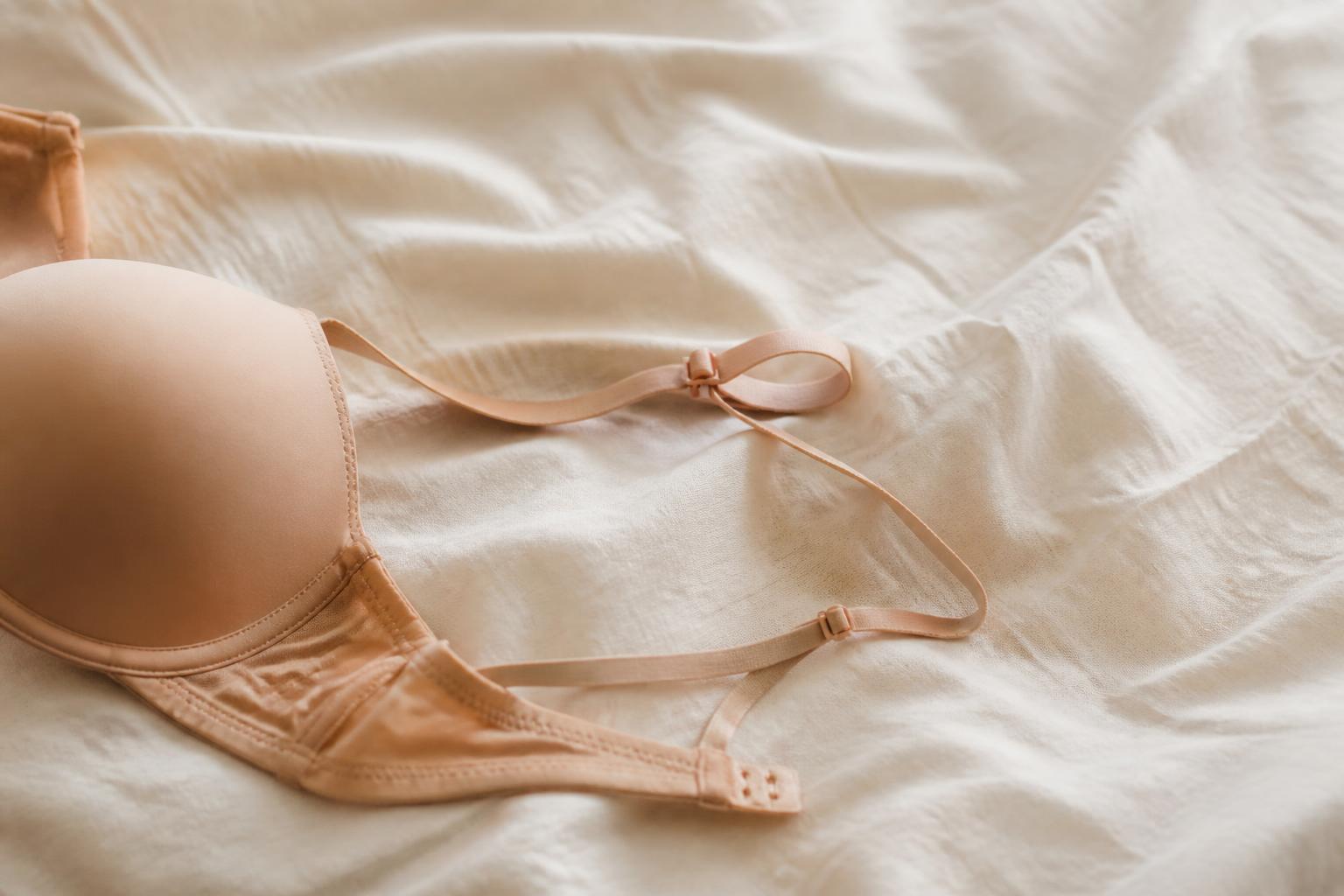
If your bra straps keep sliding off your shoulders, the answer is usually not to pull them tighter and hope for the best. In most cases, slipping straps point to one of five things: the band is too loose, the cups are the wrong size or shape, the straps sit too wide for your frame, your shoulders slope more than the bra expects, or the elastic and hardware have simply worn out.
So if you are trying to work out how to stop bra straps falling down, start with fit before you buy clips, pads or a replacement. A small adjustment, a different hook setting, or a simple repair is often enough. If the bra is old, stretched or wrong for your shape, though, no amount of fiddling will make it reliable.
Why bra straps fall down in the first place
Bra straps are not supposed to do all the lifting. In a well-fitting bra, most support comes from the band sitting firm and level around the ribcage. If the band is too loose, it rides up at the back and the straps end up taking more strain than they were designed for. That extra pull often makes them creep outwards and slip off.
Cup fit matters as well. If the cups are too small, breast tissue can push the bra forward or outward, which changes where the straps sit on the shoulders. If the cups are too large, the bra may not sit securely against the body, and the straps can shift because the whole front of the bra is not anchored properly. A shape mismatch can do the same thing. For example, a balconette with wide-set straps may be perfectly fine in size terms, but still awkward if your shoulders are narrow.
Strap placement is a big one, and it is often mistaken for a sizing problem. Some bras are designed with straps attached quite close to the edge of the cup. That can work well under open necklines, but if your shoulders slope or your frame is narrow, those straps may always sit too far out. In that case the issue is not that you are wearing the wrong size, but that you need a different style, such as a plunge, racerback, or a bra with more centrally placed straps.
Shoulder shape also plays a part. Some people have square shoulders and can wear almost any strap placement without trouble. Others have sloping shoulders, and even a good bra may need a slightly different design to stay put. This is one reason a bra that works beautifully for a friend can be hopeless on you.
Then there is wear and tear. Elastic loses recovery over time. Sliders loosen. Strap elastic softens, twists or thins. Once that happens, the straps may not stay at the length you set, or they may stretch during the day and start slipping by lunchtime. If the bra is several years old, washed frequently, or tumble dried against care instructions, the problem may be less about fit and more about age.
The quick fit checks to do before you change anything
Before you buy accessories or start sewing, do a few checks at home. You only need a mirror, a few minutes, and the bra you actually wear most often.
First, check the band. Fasten the bra on the loosest hooks, unless it is already old and you have moved inwards over time. The band should feel firm, not painful, and should sit level all the way round. If the back is noticeably higher than the front, the band is likely too loose. You should be able to fit a couple of fingers underneath comfortably, but not pull it far away from the body.
Next, look at the cups. Breast tissue should sit in the cups without spilling over the top or sides, and without obvious gaping. If there is wrinkling, empty space, or cutting in, do not assume the straps are the problem. The cups may be the wrong size or shape, and that can throw the whole fit off.
Then check the straps themselves. Tighten them so they sit securely, but do not dig in. A useful rule of thumb is that you should be able to slide two fingers under the strap. If you have to shorten the straps almost to their limit to stop them falling, that usually points to a fit or style issue rather than a strap-adjustment issue. If one strap slips more than the other, check whether the slider is holding properly or whether the strap has twisted.
After that, do a movement test. Raise your arms, roll your shoulders, and walk about for a few minutes. A bra that only behaves when you stand still in front of the mirror is not really solved. If the straps slide as soon as you move, you need to look at the whole fit, not just tighten things more.
Finally, check where the support is coming from. If loosening the straps a little makes the bra feel as if it drops away from your body, the band is probably not doing enough work. That is a common clue when people are trying to solve slipping straps but are really wearing a loose band.
Simple fixes you can try today
Start with the easiest adjustment first, reset the straps fully. Loosen them, put the bra on properly, scoop the breast tissue into the cups, then tighten each strap bit by bit. Many of us adjust one side more than the other without noticing, especially if one shoulder sits slightly lower. A fresh reset often helps.
If the bra is not brand new, try the next hook setting in. A band that has stretched slightly may still be perfectly wearable on a tighter row of hooks. That can bring the straps into a better position without making them painfully short.
A racerback clip is one of the simplest low-effort fixes if the bra fits reasonably well but the straps sit too wide for your shoulders. It pulls the straps closer together at the back, which can stop them slipping and can also hide straps under certain tops. It is not the right fix for every bra, though. If it makes the straps bite into your neck or changes the cup position too much, the underlying fit is off.
You can also try a J-hook if your bra has one built in, or convert the straps temporarily with a small clip. If you go this route, check the care label and fabric first. Delicate mesh, lace-backed bras, and very light fabrics do not always cope well with extra tension in a new direction.
Silicone or fabric shoulder cushions can help if your shoulders are particularly sloped, but they are best treated as a comfort aid, not a cure. If the band is loose or the cups are wrong, pads may stop the slipping for an hour or two while the bra fit remains poor.
It is also worth matching tops to bra shape. Wide-neck jumpers, boat necks and some scoop necks can make ordinary bra straps feel less stable because the fabric leaves them exposed and easier to shift. If you know a certain top always seems to drag a strap outwards, try it with a racerback, a plunge, or a bra with straps set closer in. This is not about buying a whole new wardrobe, just pairing what you already own more strategically.
If you rotate bras, bring a second or third bra into regular use rather than wearing the same one day after day. Elastic recovers better when it gets a rest between wears. The same principle applies across the wardrobe, which is why good maintenance habits often stretch the life of everyday items. If you are tightening straps and hooks more often than you used to, it can help to review your general care routine and keep a few basics on hand, as in our guide to building a fabric care kit that actually gets clothes worn again.
When a small repair is worth doing
A small repair is worth considering when the bra still fits well in the band and cups, but one part of the strap system has worn out. The most common examples are stretched strap elastic, a slider that will not hold its position, or stitching that has come loose where the strap meets the back band.
If the slider is slipping, inspect it closely first. Sometimes the strap has simply twisted or the fabric has gone smooth with wear, so the slider no longer grips well. In some cases, a few hand stitches can secure the strap at your preferred length. That is a practical fix for a bra you know works, especially if you tend to keep the straps at the same setting all the time. Use matching polyester thread and small stitches, and avoid sewing through moulded cup padding unless you are confident, as it can show through the outer fabric.
If the strap elastic itself has lost bounce, shortening it slightly may buy you more time. This is best done only if the rest of the bra is in good condition. Unpick the stitching at the back attachment point, trim a small amount, then reattach securely. Do not cut first and hope for the best. Measure against the other side and test carefully. If both straps are equally tired, repair both so the fit stays balanced.
Loose stitching at the ring or slider is usually repairable. Use a fine needle, reinforce the original stitch line, and keep clear of underwires and channeling. If the fabric is delicate, do not force a thick needle through it, as that can create runs or weak spots.
Be realistic about limits. If the band elastic is tired all the way round, or the cups have distorted, strap repairs will not restore proper support. Likewise, if the care label says hand wash only and the fabric is fragile, a repair may hold less well than you expect. There is no single legal rule in the UK requiring specific bra care wording beyond general textile labelling standards, and care labels broadly align with the symbols used across Europe, but brands can still vary in their construction. It is worth following the label on the garment in front of you rather than assuming all bras can be treated the same way.
How washing and storage can make straps slip sooner
Heat, agitation and rough handling are hard on elastic. If you want straps to keep their length and grip, washing habits matter.
Start with the care label. If the bra says hand wash, that is the safest route. If it allows machine washing, use a lingerie bag, fasten the hooks, and choose a cool, gentle cycle. In UK homes, where mixed loads and small washer drums are common, bras often get tangled with heavier items like jeans, towels and hoodies. That twisting and pulling can stretch straps and damage sliders long before the bra looks old.
Use a mild detergent and go easy on quantity. Residue can build up in elastic fibres and make them feel stiff or tired. If laundry is not drying properly and ends up smelling stale, it is worth fixing that too, because rewashing and overdrying delicate items shortens their life. Our guide to stopping clothes smelling damp after washing covers the practical checks that help.
Avoid tumble drying unless the care label specifically allows it and you are prepared for shorter garment life. For most bras, especially those with elastane, heat weakens stretch and recovery. Lay bras flat to dry or hang them carefully from the centre gore, not by one strap, which can pull the shape out over time.
Storage matters more than people think. Do not cram moulded bras into an overfilled drawer with cups folded into each other and straps knotted round everything else. Keep them laid flat where possible, or nested gently. This protects the cups and stops straps from getting twisted and overstretched every time you rummage.
A simple wardrobe reset can help here. If underwear is shoved into the smallest available corner, it tends to get treated roughly. Better storage does not need fancy organisers, just enough space and a consistent place to put things back. The same principle applies to the rest of the wardrobe too, especially with pieces that need a bit of care to last, which we cover in our guide to choosing fabric that lasts in a real wardrobe.
When it is time to stop adjusting and replace the bra
Sometimes the honest answer is that the bra is done. If you have tightened the straps repeatedly, moved to the tightest hooks, tried clips, checked the cups, and the straps still slide off, replacement is usually more sensible than further tweaking.
The clearest signs are these: the band rides up even on the tightest hooks, the straps have to be shortened almost fully to function, the sliders will not stay put, the elastic feels papery or limp, or the cups no longer sit where they should. Underwires poking, distorted cup edges, and twisted side seams also point to end-of-life wear rather than a small fix.
It is also time to stop adjusting if the bra never really worked. Some bras are simply the wrong shape for your body. If the straps have always sat too wide, no amount of shortening will change where they are attached. In that case, replacing the bra with a style that suits your shoulders and neckline preferences will save you constant annoyance.
If cost is the sticking point, focus on replacing the bras that fail in actual wear, not the ones that merely look a bit tired in the drawer. One supportive everyday bra that stays put is more useful than three that need constant readjustment. Second-hand is rarely the best route for bras unless they are unworn with tags, because elastic condition and previous wear are hard to judge accurately.
The useful test is simple. Ask whether the bra supports you for a normal day without needing attention. If you have to tug the straps back up every few minutes, it is no longer doing its job. At that point, the best solution is not another gadget or another round of tightening. It is a bra with a firm band, the right cup fit, and strap placement that actually works for your shoulders.

Questions about this article or a correction to suggest? Get in touch. Read more about our editorial approach.