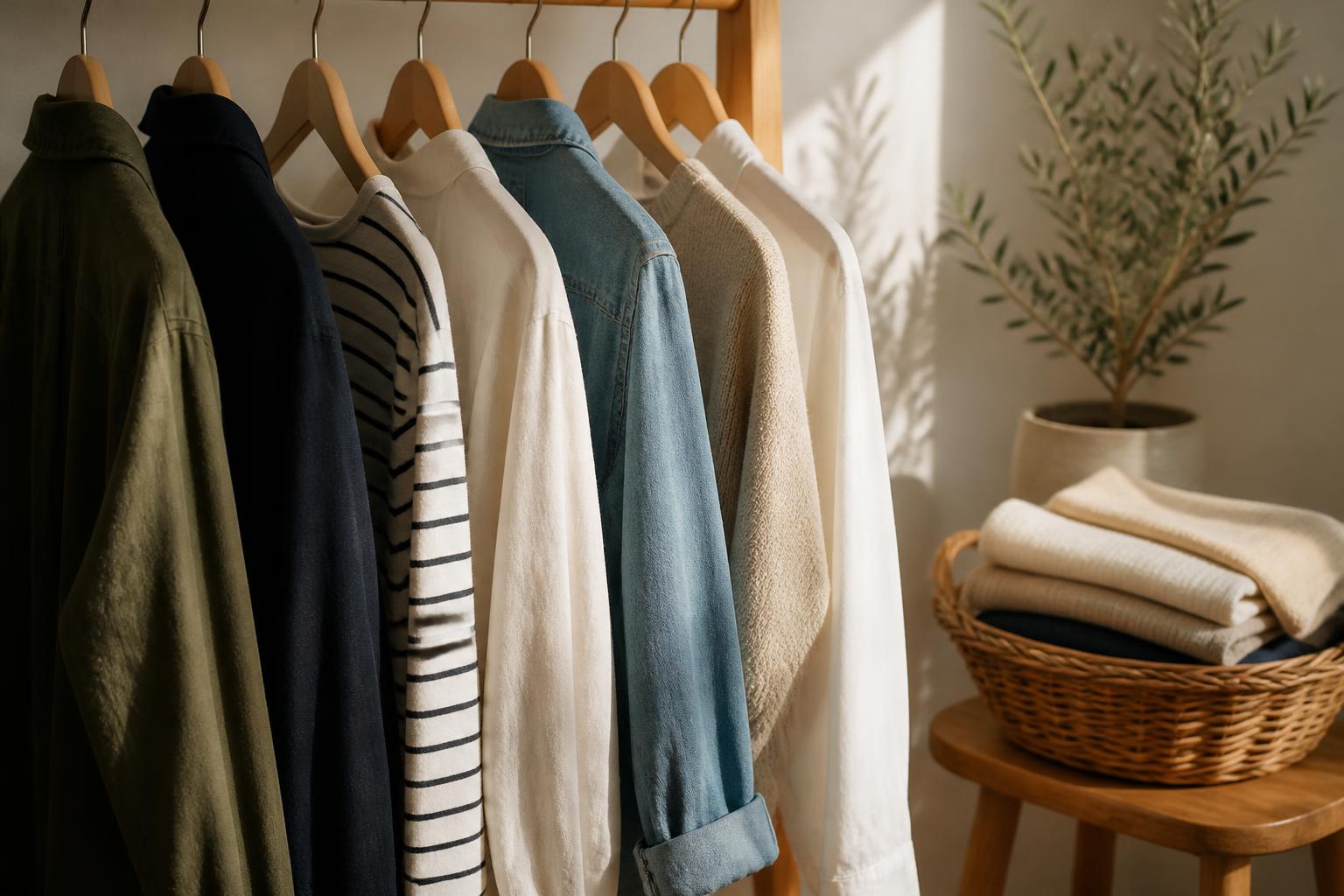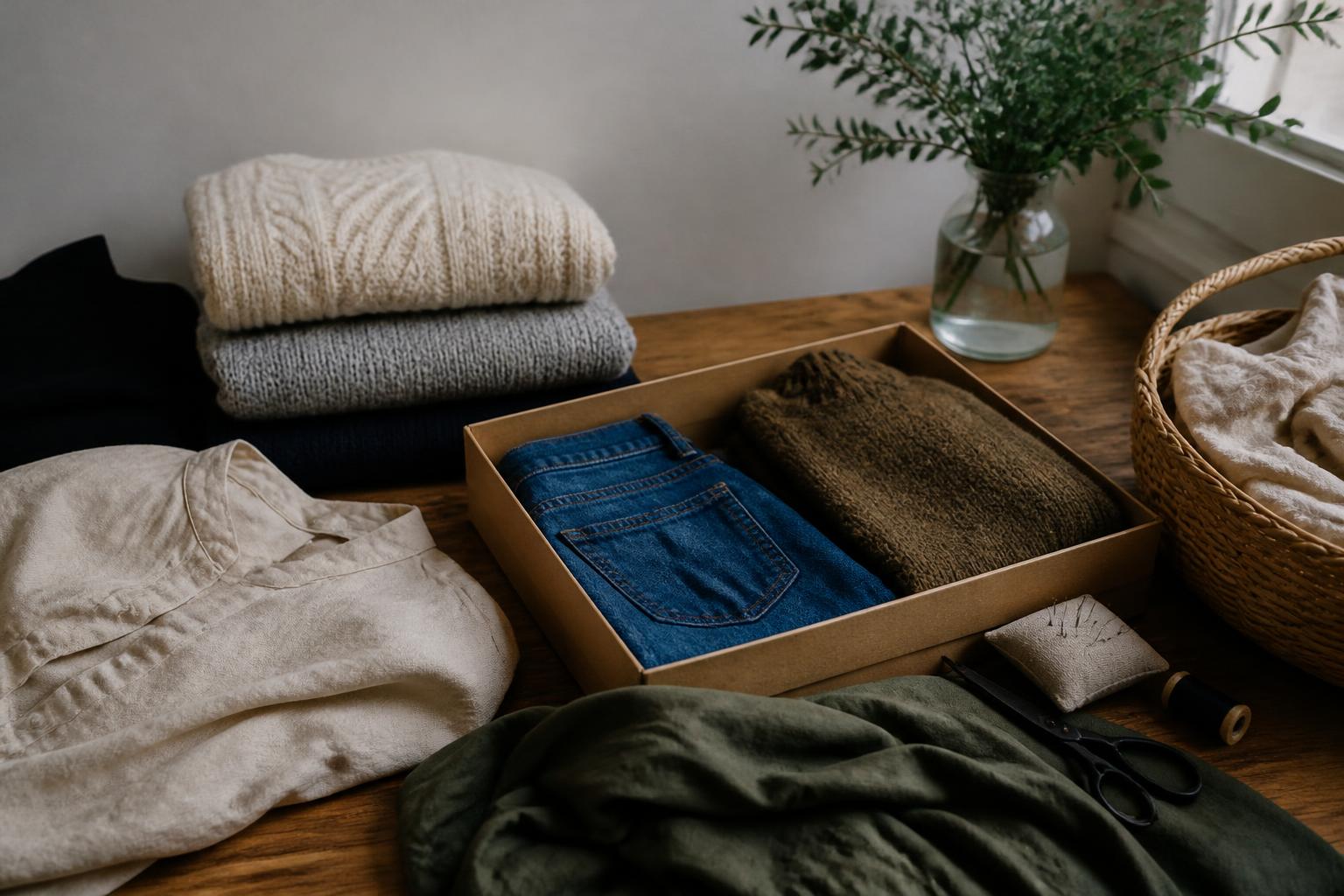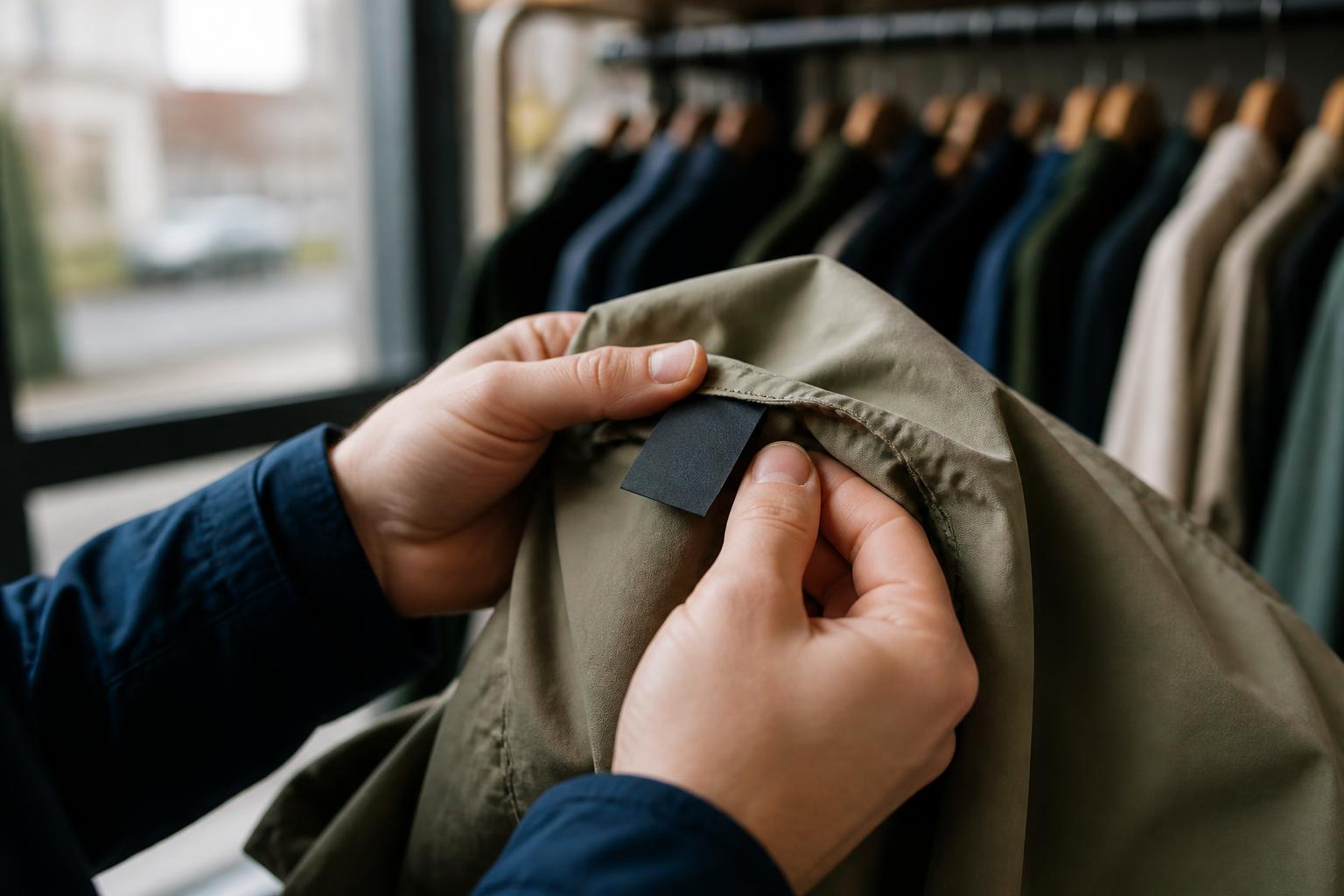
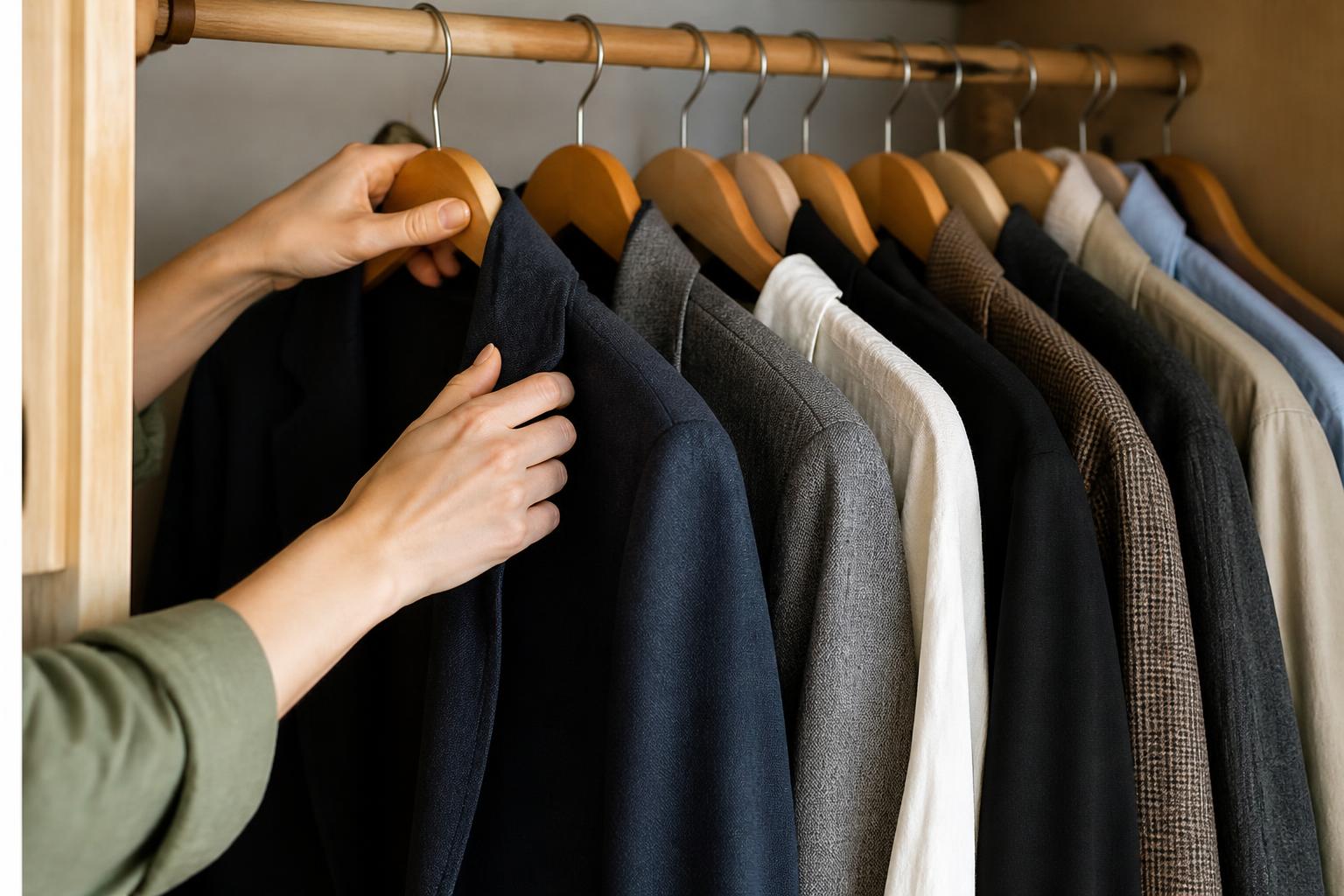
A good office wardrobe does not need to be big. It needs to get you through a normal working week without constant washing, panic ironing, or buying “smart” clothes that only work with one outfit. For most people, a useful capsule office wardrobe is a small set of pieces that fit the actual job, the actual commute, and the actual amount of care you are willing to do on a Tuesday night.
That means starting with your life, not a generic list of “wardrobe essentials”. If you work in a casual office, travel by train, and only do one wash at the weekend, your wardrobe needs will be different from someone in a formal office who drives to work and uses dry cleaning regularly. The aim is not fewer clothes for the sake of it. The aim is enough of the right clothes, in fabrics and shapes you will genuinely wear and maintain.
What a small office wardrobe actually needs to do
Before you count pieces, define the job.
A small office wardrobe has to cover four things at once. It has to meet your workplace dress code, cope with your commute, fit your laundry routine, and create enough combinations for the number of office days you actually do.
Start with dress code. “Office wear” can mean anything from dark denim and knitwear to tailoring and polished shoes. If your workplace expects jackets for meetings, there is no point building around fine jumpers and wide-leg chinos alone. Equally, if your office is relaxed, a wardrobe full of stiff shirts and dry-clean-only trousers will sit untouched while you reach for the same washable basics.
Then look at your commute. Walking ten minutes from the car park is different from cycling, standing on a platform in February, or carrying a laptop across town. A useful wardrobe often needs one layer that can handle the journey and one that works indoors. This is where many people overbuy “smart” pieces and underbuy practical outer layers, comfortable shoes, or bags that distribute weight properly. If that is a weak point, our guide to bags that work harder in your wardrobe will help you choose something that earns its place.
Laundry matters just as much. If you wash midweek, you can manage with fewer tops. If you avoid frequent washing because you air clothes and spot clean, you may still need enough shirts or tops to rotate while one is being laundered or steamed. If you rent and do not have a tumble dryer, that affects drying time. If you rely on a local dry cleaner, the cost and collection routine become part of the wardrobe plan.
Finally, count real outfit needs, not imaginary ones. How many office days do you do in a normal week? How many of those involve client meetings, presentations, site visits, or after-work plans? A wardrobe for three office days and two work-from-home days should not be built like a five-day city-office uniform.
A simple way to assess this is to write down last week’s outfits. Not ideal outfits, real ones. Note what you wore, what you repeated, what needed washing, and what you wished had been clean. That will tell you far more than any checklist online.
How many pieces are enough for most working weeks?
For many people, enough looks like this for a five-day office week:
- 4 to 6 office-appropriate tops or shirts
- 3 to 4 pairs of trousers, skirts, or other bottoms
- 2 to 3 layering pieces, such as cardigans, jumpers, or overshirts
- 1 to 2 smarter pieces, such as a blazer or tailored jacket
- 2 pairs of office shoes
- 1 practical outer layer for commuting
- 1 work bag
- Optional extras, such as a dress, tie, belt, or weather-specific shoes
That is not a rule. It is a working range.
Why this amount? Tops usually need washing more often than trousers or jackets, especially if they sit next to the skin. Bottoms can often be worn several times between washes, depending on the fabric and your commute. Layers stretch outfits further by changing how a base outfit looks and by reducing the need to wash outer garments so often.
For a hybrid schedule, reduce the numbers according to the days you are actually in the office. If you go in two days a week, you may only need 3 to 4 tops, 2 to 3 bottoms, 2 layers, and 2 pairs of shoes. If one of those office days is much more formal than the other, build for that higher standard and make the pieces flexible enough to dress down.
If you wear a uniform for some of the week, or your workplace provides branded items, count those separately. The rest of your office wardrobe only needs to cover the days when you are choosing your own clothes.
Weather matters more in the UK than many wardrobe guides admit. A wardrobe that works in May can fail completely by November if your shoes leak, your coat is too light, or your only knitwear pills badly under a bag strap. If you live somewhere wet or windy, it can be worth keeping one pair of office shoes at work and commuting in something more robust.
Washing frequency also changes the count. If you wash once a week and do not want to run a half-empty load for one blouse, you need enough tops to get through the full cycle. If you hand wash or use a delicates bag, factor in drying time. Fine knits, lined trousers, and heavier shirts can take longer to dry in a UK home, especially in winter.
The key test is this. Can you get through a normal working week, plus one unexpected event, without feeling forced into laundry or shopping? If not, you do not necessarily need more clothes overall. You may just need more of the category that runs out first.
The core pieces worth building around
The best office wardrobe pieces do not just “go with lots of things”. They are comfortable enough to wear repeatedly, durable enough to survive friction and washing, and simple enough to style in more than one way.
Tops are often the real workhorses. For many readers, that means shirts, blouses, fine knits, or neat jersey tops in colours that work across most of the wardrobe. Look for shapes that layer easily under knitwear and jackets without bunching. If a shirt only works tucked into one pair of trousers, it is less versatile than it looks on the hanger.
Bottoms do more of the weekly heavy lifting than people expect. A pair of well-cut trousers in navy, charcoal, black, or another useful neutral will usually outperform a more “interesting” pair that only suits one top or one shoe. If skirts or dresses are your preference, the same rule applies. Choose cuts that work with at least two shoe options and more than one outer layer.
A cardigan or structured knit is often more useful than a blazer in relaxed offices. It adds warmth, works across seasons, and usually needs less formal styling. In a smarter office, one blazer that fits well across the shoulders and works with multiple bottoms can be enough, especially if you do not need full tailoring every day.
Shoes deserve more thought than they usually get. Two pairs are often enough if both are genuinely comfortable and suitable for your route to work. One can be more formal, the other more practical. If both pairs rub, leak, or only work with one trouser length, they are not versatile. Leather and suede can last well with proper care, but only if you let shoes rest between wears and use weather protection where suitable.
Outerwear is part of the office wardrobe, not an extra. A coat that crushes every jacket, shows rain marks instantly, or cannot fit over a jumper will make the rest of the wardrobe harder to use. In much of the UK, a water-resistant coat with room for layers is often a better investment than something purely decorative.
The pieces worth building around are usually the ones that solve several problems at once. They fit the office standard, survive the commute, and do not create extra maintenance. Those are the garments to repeat in slightly different versions if you find one that works.
How to choose fabrics and finishes you will actually maintain
A garment is only a bargain if you can live with its care requirements.
Start with the care label before you buy. In the UK, clothing sold here should carry fibre content and care information. That label tells you whether the item is machine washable, hand washable, or dry clean only. For many office wardrobes, too many dry-clean-only pieces create friction very quickly. One blazer may be manageable. Five blouses and three pairs of trousers that all need specialist cleaning are another matter.
Read fibre content with your weekly routine in mind. Cotton, linen, wool, viscose, polyester, and blends all behave differently. Cotton is often easy to wash but can crease. Linen is breathable but usually wrinkles more, which may or may not matter in your office. Wool can be excellent for trousers and knitwear because it resists odour and often needs less frequent washing, but some wool items require more careful laundering. Viscose can drape well for office wear, but some versions crease, shrink, or wear poorly if the fabric is flimsy. Polyester blends can be practical and easier to wash, though they vary hugely in feel and longevity.
Weight and weave matter as much as fibre. A dense twill trouser will often wear better than a very lightweight weave, regardless of whether both are made from similar fibres. A tightly knitted jumper usually resists distortion better than a loose one. If you want a better sense of how fabric choices affect real-life wear, our guide to clothing fabrics that last in real wardrobes breaks down what to look for.
Construction details are worth checking too. Look at seams, hems, buttons, zips, and linings. Is the hem generous enough to alter if needed? Are spare buttons included? Is the fabric already pulling at the seat or underarm on the hanger? Does the lining feel sweaty or restrictive? These small details affect how often a garment gets worn and how easily it can be repaired.
Be realistic about ironing and steaming. If you know you will not iron before work, do not buy a wardrobe full of fabrics that look unfinished without pressing. If you are happy to steam a shirt while getting ready, that widens your options. There is no moral value in high-maintenance clothes.
The same goes for stain sensitivity. Cream trousers, silk blouses, and delicate knits may all be beautiful, but if you commute with coffee and sit on public transport, practicality matters. Darker colours, subtle patterns, and textured fabrics can be easier to keep looking presentable between washes.
Once you own the clothes, care habits make a big difference. Airing garments, brushing wool, spot cleaning marks quickly, and storing pieces properly can reduce washing and extend wear. We cover the basics in our guide to wardrobe care that helps clothes last longer.
How to fill gaps without buying a whole new wardrobe
Most office wardrobe problems are not solved by starting from scratch.
Begin by identifying the exact gap. Is it that you have no smart layer for meetings? Not enough washable tops to cover a full week? Shoes that only work with cropped trousers? Be specific. “I need better work clothes” is too vague to shop from.
Next, review what you already own but are not using. Sometimes the issue is not the garment itself but fit, missing buttons, worn hems, or a lack of one connecting piece. A pair of trousers that sits unworn because it is half an inch too long may become a staple after a simple alteration. A blazer can feel wrong because the sleeves need shortening. A cardigan may just need de-pilling and better storage.
Repairs and alterations are often cheaper than replacement, especially for trousers, skirts, coats, and better-quality jackets. Basic alterations in the UK commonly include hemming, taking in a waist, replacing a zip, or moving a button position. Not every garment is worth altering, but if the fabric and fit are otherwise good, it is usually worth pricing the job before you buy a new version.
Second-hand shopping is particularly useful for office wear because many formal or semi-formal pieces have been lightly worn. Tailoring, leather shoes, wool jumpers, silk shirts, and work bags often show up in better condition than trend-led casual items. Focus on brands and fabrics you already know suit you, and always check measurements rather than relying on the size label alone.
When buying second-hand, inspect high-friction areas first. Look at underarms, cuffs, hems, inner thighs, seat, pockets, and bag corners. Check for shine on wool trousers, pilling under the arms, stretched knit cuffs, and sole wear on shoes. Ask for close photos if shopping online. Dry-clean-only pieces can still be good buys, but include cleaning costs in your decision.
If you are filling a gap with something new, buy for repetition. The right question is not “Do I like this?” but “Can I wear this at least twice a week in different ways?” If the answer is no, it is probably not a gap-filler.
A simple order of operations helps:
- List the outfits you need for a normal week.
- Notice what category runs short first.
- Check whether care, repair, or tailoring would solve it.
- Search second-hand for the most expensive categories first.
- Buy new only when you know the exact role the item needs to play.
That process is less exciting than a wardrobe overhaul, but it usually leads to a more useful result. It also helps you avoid buying duplicates of the wrong thing, which is one of the easiest ways a supposedly minimal wardrobe becomes cluttered.
A capsule office wardrobe should make weekday dressing easier, not stricter. If you build it around your real schedule, your real tolerance for maintenance, and clothes that can handle repeated wear, it will do more with less. Not because you forced your wardrobe into a formula, but because each piece has a clear job and earns its place.

Questions about this article or a correction to suggest? Get in touch. Read more about our editorial approach.