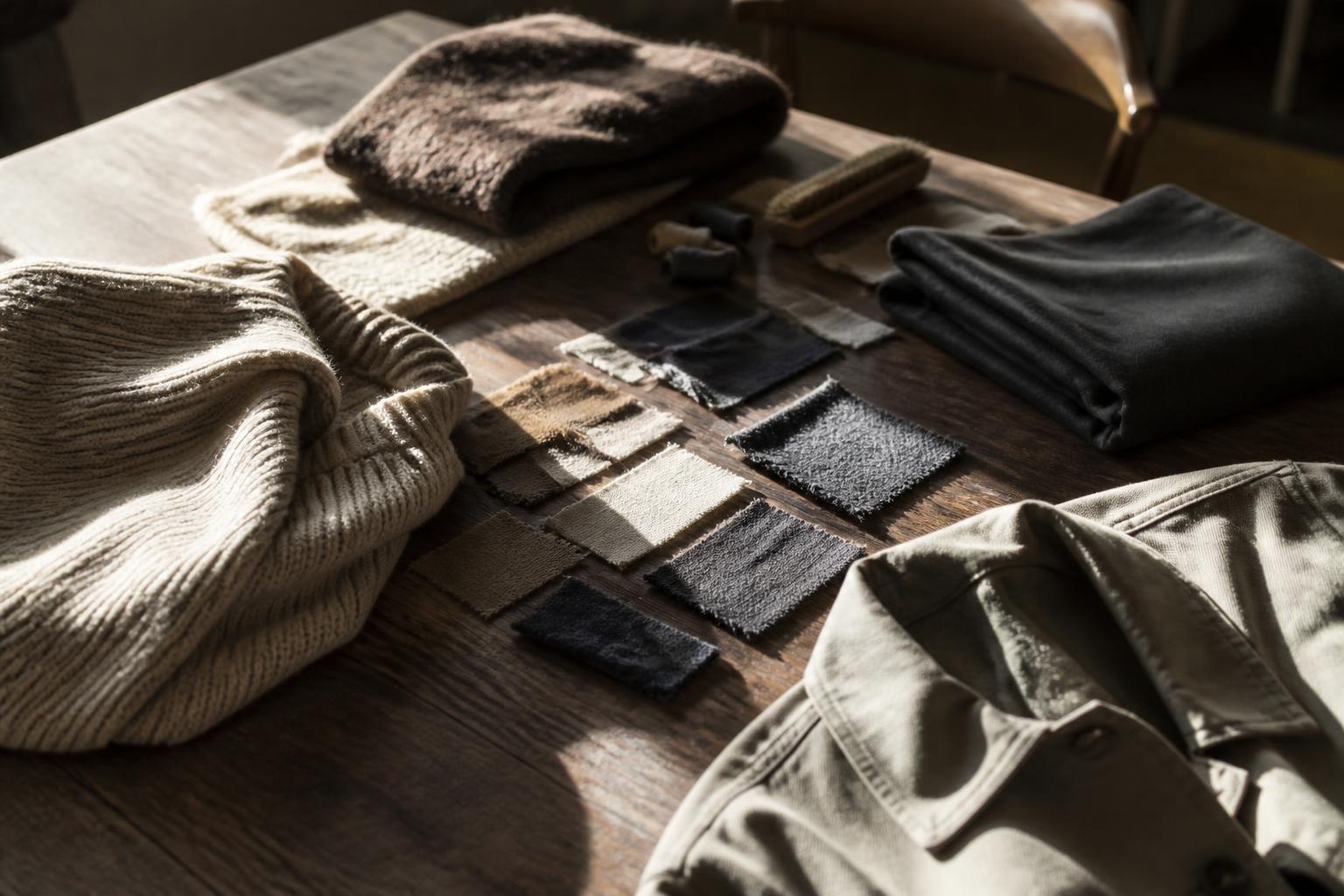
If you want to judge London fashion brands without falling for greenwash, start with one simple rule. Ignore the moodboard first and look for verifiable details. A brand can be based in London, designed in London, photographed in London and sold from a London postcode without making clothes there, paying well, using lower impact fibres or offering garments that last in an ordinary wardrobe.
For most of us, the useful test is not whether a brand sounds ethical, but whether its clothes are practical to own. That means checking what the garment is made from, where and how it was made, what the care label demands, whether it can be repaired, and whether it still makes sense if you later need to alter, resell or hand it on. That is the difference between a convincing story and a genuinely useful purchase.
What people usually mean by a London sustainable fashion brand
When people talk about sustainable fashion brands in London, they often mean one of four different things.
First, they may mean a brand whose company is based in London. That tells you where the office is, not necessarily where the fabric was woven, where the garment was cut and sewn, or where returns go.
Second, they may mean a brand designed in London. Design location matters if you care about local creative work, but it is not proof of lower environmental impact or better labour standards.
Third, they may mean made in London, or made in the UK. That is a more specific claim, but it still needs unpacking. A garment can be cut and sewn in London using imported fabric, imported trims and imported packaging. There is nothing inherently wrong with that, but it is different from a fully local supply chain. If a brand says "Made in England" or "Made in the UK", check whether that claim appears on the product page, on the sewn-in label and in the brand’s delivery or about pages. Consistency matters.
Fourth, they may simply mean a London-facing retail brand with a sustainability message. That is the broadest category, and the easiest place for greenwash to creep in.
The term "sustainable" itself is also slippery. A brand may be talking about organic fibres, deadstock fabric, small-batch production, living wages, plastic-free packaging, repair services, made-to-order production, resale, or carbon claims. These are not interchangeable. A brand using deadstock may still have weak sizing consistency. A made-to-order label may still use delicate fabric that needs specialist dry cleaning. A local maker may still produce clothes that are hard to alter or impossible to repair neatly.
This is where UK readers need to be especially careful with imported language from EU brand marketing. In the UK, product information and consumer protection rules still require claims to be clear and not misleading, but after Brexit you should not assume that every EU-wide labelling or scheme reference works identically here. If a brand relies on broad wording such as "eco", "conscious" or "responsible", treat that as a prompt to look for evidence, not as evidence itself.
A genuinely useful London brand for an everyday wardrobe is not just one with a good values page. It is one that tells you enough to judge the garment as a thing you will wash, wear, store, mend and possibly sell on.
How to assess a brand’s claims before you buy
Start with the product page, not the homepage. The homepage is where brands sell a feeling. The product page is where they should give facts.
Check the fibre content properly
Look for the exact fibre composition, such as 100% organic cotton, 55% linen and 45% viscose, or outer 100% wool with lining 100% polyester. If the page says only "natural fibres", "plant based" or "conscious materials", that is not enough.
Then ask whether the claim is specific and traceable. Good examples include:
- GOTS certified organic cotton
- RWS certified wool
- European Flax linen
- TENCEL Lyocell rather than the vaguer "eco viscose"
- recycled polyester with a stated standard
If a certification is named, check the scheme’s own rules. GOTS, for example, covers processing as well as fibre, but only certified operators can claim certification. A brand should not imply that a whole garment is certified if only one component is. The same goes for recycled claims. If a zip, thread or lining is conventional, that does not cancel the garment, but it should be described honestly.
Be cautious with bamboo. In clothing, it is often rayon or viscose made from bamboo pulp, not mechanically processed bamboo fibre. That does not automatically make it bad, but the chemistry and processing are different from what many shoppers assume.
Check manufacturing claims
If a brand says "made ethically in London" or "produced responsibly in Europe", look for the actual factory country and, ideally, the factory name or at least region. "Europe" is too broad to be meaningful on its own. "Made in Portugal" tells you more. "Made by a family-run factory in Porto" tells you more again, especially if the brand explains what it checks there.
Useful evidence includes:
- named factories
- a supplier list
- a manufacturing map
- an annual impact report
- a modern slavery statement, if the business is large enough to publish one under UK rules
- details of audits, union relationships, or long-term factory partnerships
A modern slavery statement is not proof that a brand is excellent. It is one compliance document. But if a larger company talks constantly about ethics and you cannot find one, that is worth noting.
Check shipping and fulfilment claims
"Shipped from London" does not mean made in London. "Carbon neutral delivery" often rests on offsetting, not on lower-emissions transport. If delivery speed is unusually fast for a supposedly small-batch operation, ask yourself where stock is actually held and how often it is moved.
Look for practical details:
- where orders are dispatched from
- whether duties are relevant for UK customers
- whether returns are consolidated or individually couriered
- whether packaging is reusable or simply recyclable
- whether the brand encourages fewer, better-planned orders
Check labour claims without expecting perfection theatre
You are unlikely to get payroll records from a product page, but you can still distinguish between vague virtue and useful disclosure. Stronger labour claims usually mention:
- who makes the clothes
- whether workers are employees or subcontracted
- whether the brand uses a code of conduct
- whether there is third-party auditing
- whether wages are discussed in terms stronger than "fair"
- whether the brand acknowledges limitations
Weak claims sound like this:
- ethically made
- carefully crafted
- produced with love
- supporting artisans
Those phrases may be true, but they are not evidence.
When we are weighing up claims, we also find it helpful to put them back into wardrobe terms. If you need help translating big ethical language into everyday buying decisions, our guide to what ethical fashion means for your everyday wardrobe is a good place to start.
Why care labels tell you more than marketing does
A care label is one of the most underrated pieces of buying information. It tells you what the garment will ask of you after checkout, and that affects cost, effort and lifespan far more than most brand copy does.
If a dress is marketed as an easy staple but the care label says dry clean only, cool iron inside out, do not tumble dry, reshape while damp, you are not buying ease. You are buying maintenance.
Before you buy, zoom in on the care instructions if they are shown. If they are not, that is already useful information. Many brands are happy to talk about fibre stories but less keen to show you that a simple-looking blouse creases badly, bleeds dye, shrinks easily or needs flat drying.
Here is what to watch for.
Washing instructions
Machine wash at 30°C is usually manageable for most wardrobes. Hand wash only is not impossible, but it can become a burden if you are buying everyday pieces. Wool, silk and some viscose blends may need gentler handling than the styling suggests.
A "wash separately" instruction can be a clue that the dye may run. "Wash inside out" often suggests the surface could abrade or fade. "Use mild detergent only" matters for wool, silk and some finishes.
Drying instructions
Do not tumble dry is common and not a deal-breaker. But if a garment also needs reshaping, flat drying or drip drying away from heat, you need the space and time for that. Heavy cotton knits, viscose, wool and some linen blends can become awkward very quickly in a small UK home.
Ironing instructions
Low iron only can indicate heat-sensitive fibres or finishes. If you already know you dislike steaming or pressing, that matters. Viscose is a classic example of a fabric that can look lovely on the rail and become annoying in real life if you are not prepared for its care needs. We cover the practical side in our guide to ironing viscose without leaving shiny marks.
Dry cleaning symbols
Dry clean only should prompt a pause, especially for light-coloured garments worn close to the skin, tailored pieces you expect to wear often, or anything likely to pick up deodorant, makeup or rain marks. Specialist cleaning can be worth it for a coat or suit. It is less appealing for a casual blouse that needs frequent cleaning.
Care labels also tell you something about durability. If a fabric becomes misshapen, shiny, felted or limp after ordinary washing, the sustainability claim starts to look thin. A garment that survives repeated care well is usually a better wardrobe investment than one with an impressive fibre story and fussy maintenance.
If you are trying to build a wardrobe that genuinely functions day to day, not just in campaign photos, our piece on using a sustainable fashion blog in real life explains how we turn this sort of information into sensible buying choices.
What to look for in construction, repairs and spare parts
A garment that cannot be maintained is rarely a good buy, however worthy the branding. Construction tells you whether you can live with the item for years, rather than one season.
Start with the seams. Are they straight, even and properly finished? On woven garments, French seams, bound seams or neat overlocking are usually better signs than loose threads and raw edges hidden by styling. On knitwear, look at the links between panels and the stability of cuffs, necklines and side seams.
Then look at stress points:
- buttons at the bust
- crotch seams on trousers
- underarm seams
- pocket corners
- belt loops
- zip ends
These are the areas most likely to fail first. Reinforcement here is a good sign.
Fastenings matter more than many shoppers realise. A coat with standard buttons is usually easier to maintain than one with a custom magnetic fastening you cannot replace. A dress with an ordinary concealed zip can often be repaired by a local alterations service. A top with a decorative branded closure may be much harder.
This is where spare parts become important. Ask:
- does the garment come with a spare button
- are replacement buttons sold or available on request
- can the brand provide matching thread, fabric patches or extra trims
- does the brand offer repairs in-house or recommend repair partners
Few brands do all of this, but the best are increasingly clear about what happens after damage. Even a simple promise to help source replacement buttons is more useful than a generic statement about circularity.
Fabric choice affects repairability too. Dense cotton drill, denim, wool coating and many plain woven linens can usually be patched, darned or altered with decent results. Very sheer fabrics, heavily coated materials, bonded layers and some synthetics are harder to repair invisibly. If invisibility matters to you, that changes the calculation.
Also consider seam allowance. Trousers, skirts and dresses with a bit of allowance can sometimes be let out or adjusted. Very skimpy seam allowances leave little room for alterations. Product photos rarely show this, but second-hand listings sometimes do, and in-store inspection certainly can.
Lining is another clue. A fully lined jacket may wear better and alter more neatly than an unlined one, but it is also more complex to repair. Neither is automatically better. The question is whether the construction matches the role you need the garment to play.
How to compare second-hand potential and wardrobe fit
A lot of greenwash disappears when you ask one blunt question. Will this still make sense in my wardrobe in two years, and if not, is it likely to sell on well enough to soften the mistake?
Second-hand potential depends on more than brand prestige. It usually comes down to five things.
1. Fibre and condition risk
Natural fibres with clear labelling often perform better in resale than mystery blends, but only if they hold up in wear. A linen shirt that shrinks, twists or thins out under the arms will not do well second-hand. Nor will a viscose dress that always looks crumpled and shiny. If you are unsure how a fibre behaves in normal washing, check before buying. For example, linen can be excellent in a working wardrobe, but only if you understand its care and shrinkage risks.
2. Colour and styling longevity
Very trend-led shapes date faster in resale. So do difficult colours that only suit a narrow slice of wardrobes. That does not mean buy only navy and black. It means be honest about how often you will wear the item and how many outfits it joins without fuss.
3. Sizing consistency
Brands with erratic sizing tend to do worse second-hand because buyers hesitate. If reviews repeatedly mention that trousers come up tiny, sleeves run short or knitwear grows after wear, resale becomes harder. Consistent measurements, not just labelled sizes, matter.
4. Maintainability after the first owner
Can the hem be altered? Can a missing button be matched? Will a dry cleaner take it? Can bobbling be removed safely? A garment with straightforward maintenance has a better chance of a useful second life.
5. Real wardrobe fit
This is the part many sustainability conversations skip. A supposedly responsible garment is still a poor purchase if it duplicates what you own, clashes with your shoes, needs a special bra, or only works with dry-clean-only layers.
When we assess clothes for ourselves, we ask:
- what will I wear this with in the next fortnight
- can I wash and dry it in my actual home
- does it suit the weather I actually live in
- will I still reach for it when the novelty wears off
- if it does not work, is there a clear resale route
The strongest sustainable choice is often the one that quietly earns its place and keeps earning it. Sometimes that is a London-made piece from a small label. Sometimes it is a well-made second-hand item from a mainstream brand. Sometimes it is deciding not to buy yet.
If you are building a wardrobe on a budget, this matters just as much for menswear, where "investment" language can hide a lot of impractical buying. Our guide to sustainable mens fashion for a real UK wardrobe goes into that in more detail.
Judging London fashion brands without greenwash is less about spotting perfect brands and more about asking better questions. Where exactly was this made? What is it made from? What does the care label demand? Can it be repaired? Will it work with what I already own? If a brand answers clearly, that is a good sign. If it answers with atmosphere, keep your card in your wallet a little longer.

Questions about this article or a correction to suggest? Get in touch. Read more about our editorial approach.