If you want to know how to get bobbles off jumpers, start gently. In most cases, you can remove pills at home without harming the knit, but the safest tool depends on the fibre, the thickness of the yarn and how open or delicate the stitch is. A sturdy merino crew neck can often cope with a fabric shaver used lightly. A fine cashmere knit usually needs a softer touch, such as a cashmere comb. Loose, brushed or very fragile knits may be better left alone.
The important thing is not to tug at the bobbles or attack them in mid-air. Support the fabric on a flat surface, work slowly, and stop if the knit starts to lift, snag or thin. Pilling is common, especially on sleeves, sides and underarms, and it is usually a sign of friction rather than instant proof that the jumper is poor quality.
What bobbles are and why some jumpers get them faster
Bobbles, also called pills, are little balls of tangled fibre that form on the surface of a fabric. They appear when loose fibres work their way out of the yarn through rubbing, then knot together. That rubbing can come from wearing a coat, carrying a bag, crossing your arms, leaning on a desk, or washing and drying the jumper.
Some fibres pill more readily than others.
Wool can pill, especially when it is soft and spun from shorter fibres. Merino is comfortable and common in jumpers, but some merino knits do bobble quite quickly at first. Cashmere is famously prone to pilling because it is so soft and fine. Cotton can pill too, particularly in jersey or lighter knits. Synthetics such as polyester and acrylic often pill because the fibres are strong, so once pills form they do not break away easily.
Blends can be especially frustrating. A wool-acrylic jumper may develop pills from the wool fibres lifting, while the acrylic helps the pills cling on for longer. That does not automatically make it a bad jumper. It just means the fabric behaviour is different.
Knit structure matters as much as fibre. A dense, tightly knitted jumper usually resists snagging better than a loose, airy knit. Brushed fabrics, fluffy yarns and haloed fibres, where the surface is meant to look soft and fuzzy, are more likely to show pilling because there is more fibre movement on the surface. Ribbed cuffs and underarms also pill quickly because they get repeated friction.
This is why pilling is wear-related. Even expensive knitwear can bobble in high-friction areas. In fact, very soft luxury fibres can pill more than tougher yarns. Quality still matters, especially in how long a garment keeps its shape and whether the fabric thins after de-pilling, but bobbles on their own are not a reliable pass-fail test.
Check the care label before you start
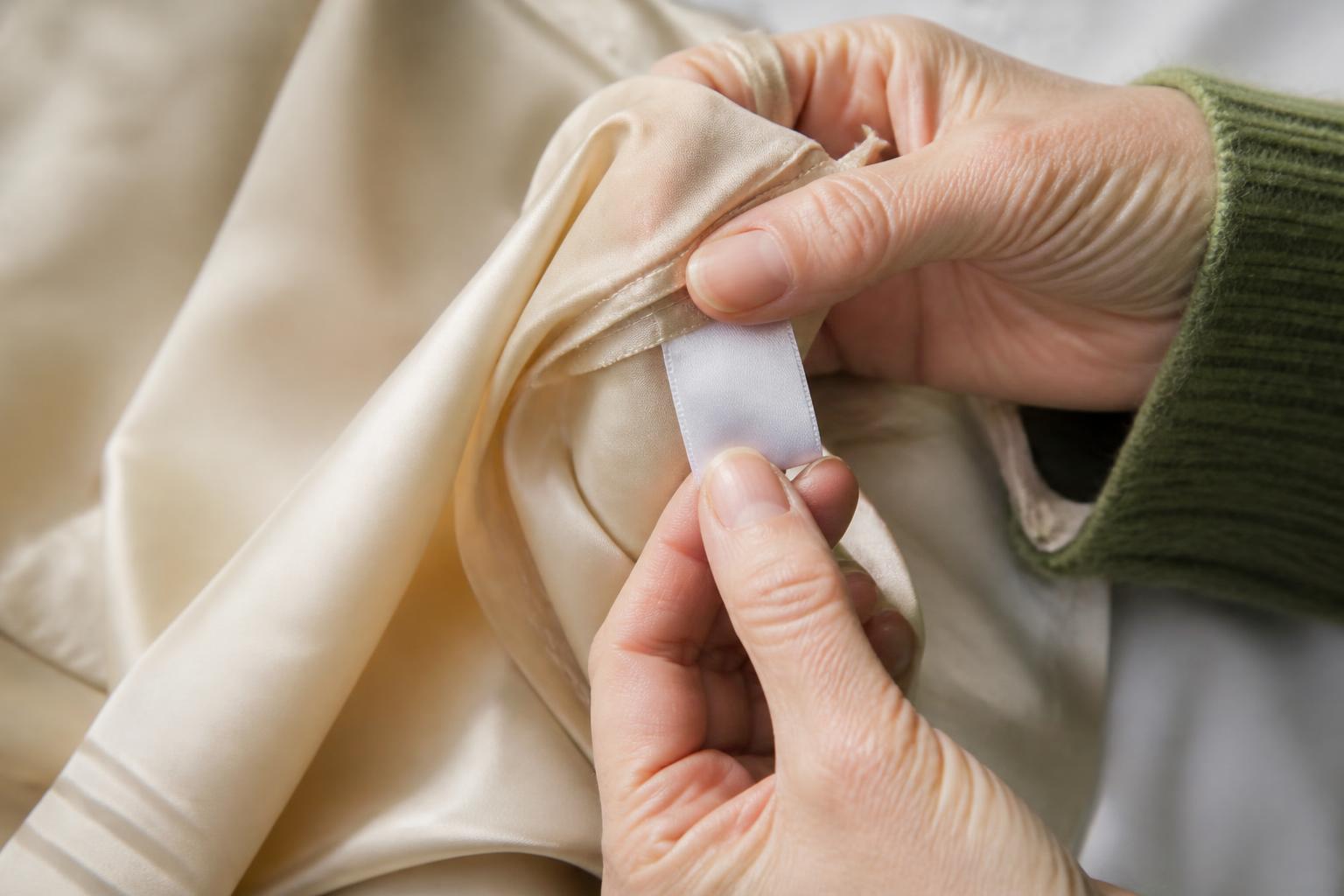
Before you do anything, read the care label inside the jumper. It is the quickest way to avoid turning a minor tidy-up into a repair job.
Check the fibre content first. A label that says 100% cashmere, lambswool, merino wool, cotton, acrylic or a blend tells you what level of caution is sensible. Then look at the care symbols and any written instructions. In the UK, garments usually follow internationally recognised care symbols, and the written guidance can be more specific than the symbols alone.
Pay attention to wording such as:
- hand wash only
- reshape while damp
- dry flat
- do not rub
- do not wring
- specialist dry clean only
If the manufacturer says dry clean only or specialist clean only, that instruction takes priority over general de-pilling advice. It does not always mean the jumper will fall apart if you touch it, but it does mean the brand considers the fabric or construction delicate enough to need stricter handling.
Also inspect the jumper itself in good light. Hold it flat and look for:
- loose loops or pulled threads
- thinning patches
- holes near seams or underarms
- very open stitches
- brushed or fluffy surfaces
- embellishments, sequins or beadwork near the pilled area
If the knit is already damaged, de-pilling can make that worse. A fabric shaver can catch a loose loop. A sweater stone can roughen a fine gauge knit. Scissors can snip the wrong strand if the pills are close to the fabric surface.
Sometimes the better choice is to leave a delicate knit alone, or to remove only the most obvious pills by hand with extreme care. If the jumper is already worn thin, there is a point where tidying the surface is not really solving the problem. That is often the moment to ask should you mend it or move it on.
The safest ways to remove bobbles at home
The safest method is always the least aggressive one that works on that particular knit. Test on a small, less visible area first, such as the lower side seam.
Using a fabric shaver
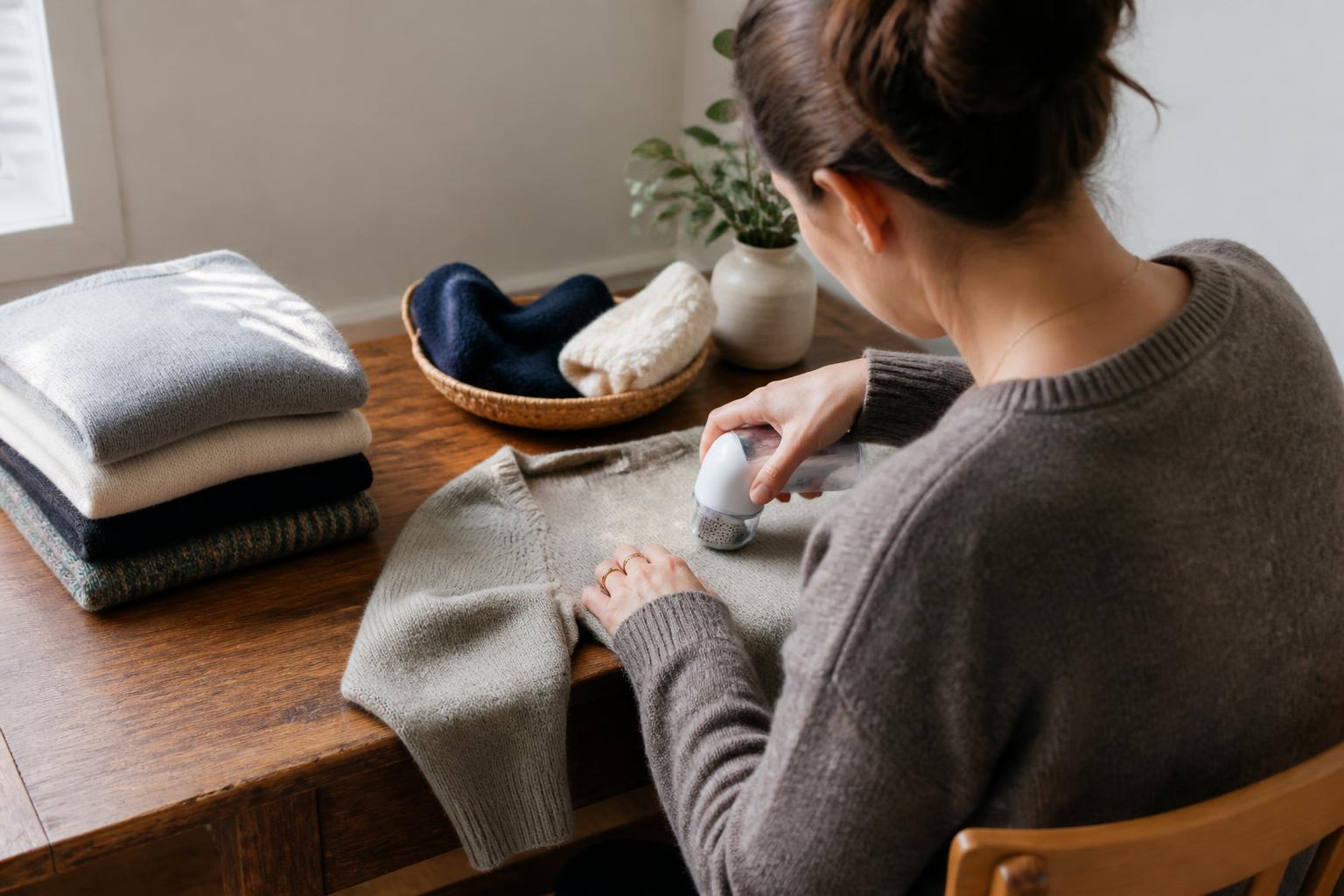
A fabric shaver, sometimes called a de-bobbler, is quick and useful on sturdier knits. Battery and rechargeable models are common in the UK. They can work well on wool blends, cotton and many synthetics.
How to do it:
- Wash and dry the jumper as directed on the care label first, if it is due a clean. Pills are easier to assess on a clean, fully dry garment.
- Lay the jumper flat on a table or ironing board with a towel underneath for light cushioning.
- Smooth the fabric with one hand so the area is taut but not stretched.
- Check that the shaver head is clean and properly attached.
- Use the lightest pressure possible and move in short, gentle passes over the surface.
- Empty the lint chamber as needed so the tool keeps cutting cleanly.
- Stop often and inspect the knit.
What prevents damage:
- Keep the fabric flat and supported.
- Never press hard to force pills through the guard.
- Avoid seams, raised ribs, cable sections and loose stitches until you know how the knit reacts.
- Do not use a shaver on very fluffy mohair-like surfaces or open knits unless the manufacturer explicitly allows robust handling.
Using a cashmere comb
A cashmere comb is usually safer than a shaver for fine cashmere and some soft wools. It lifts pills from the surface without cutting into the fabric, provided you use a light hand.
How to do it:
- Place the jumper flat on a firm surface.
- Hold the area taut with one hand.
- With the other hand, draw the comb lightly across the fabric in one direction.
- Work in small sections.
- Remove the collected fluff from the comb as you go.
What prevents damage:
- Use very little pressure.
- Do not scrub back and forth.
- Avoid repeated passes over the same spot, which can thin the yarn.
- Keep away from seams and decorative stitches if the comb starts to catch.
Using a sweater stone
A sweater stone is a pumice-like block designed to abrade pills away. It can be effective, but it is not the first thing we would reach for on a fine or expensive knit. It suits more robust fabrics.
How to do it:
- Lay the jumper flat and smooth.
- Test the stone on a hidden area first.
- Glide the stone very lightly in one direction over the pilled surface.
- Brush away the loosened fluff with your hand.
What prevents damage:
- Use minimal pressure.
- Do not use it on fine gauge wool, cashmere, brushed yarns or loose knits.
- Stop immediately if the surface looks rougher rather than cleaner.
Using small scissors
Small embroidery scissors or thread snips are best for isolated pills, not whole-jumper de-pilling. This is the slowest method, but sometimes the safest around delicate areas if you have a steady hand.
How to do it:
- Lay the jumper flat in strong light.
- Gently lift a pill away from the surface with your fingertips.
- Snip only the pill itself, not the fabric beneath it.
- Move one pill at a time.
What prevents damage:
- Never pull a pill up hard to make it easier to cut.
- Do not rush.
- If the pill seems anchored deep in the knit, leave it rather than risk cutting a yarn.
Which method suits wool, cashmere, cotton and synthetics
There is no single best tool for every jumper. Fibre content and knit structure matter more than brand or price.
Wool
For standard wool jumpers, especially medium-gauge merino or lambswool, a fabric shaver is often the most practical option. Use it lightly and avoid areas where the knit is more textured. For finer wool, a cashmere comb may be safer.
Use extra caution with:
- boiled wool with surface texture
- brushed wool
- cable knits with raised sections
- very fine gauge merino
If the wool feels thin or the pills sit very close to the fabric, switch to a comb or careful scissor work.
Cashmere
Cashmere usually responds best to a cashmere comb. That is the lower-risk starting point for most 100% cashmere jumpers. A fabric shaver can work on some denser cashmere knits, but it is easier to overdo it and remove too much fibre.
Use extra caution with:
- lightweight cashmere
- older cashmere that has thinned at elbows or underarms
- brushed cashmere or very fuzzy finishes
If the jumper is labelled dry clean only or specialist clean only, treat that as a sign to be especially conservative.
Cotton
Cotton jumpers and cotton-rich knits can often handle a fabric shaver well, especially if the knit is smooth and fairly sturdy. Small scissors also work for scattered pills. Cotton jersey and lighter knits may need a gentler pass because the surface can distort.
Use extra caution with:
- slub cotton
- open crochet-style knits
- very lightweight cotton blends
Synthetics
Acrylic, polyester and mixed-fibre jumpers often pill noticeably, and the pills can cling on because the fibres are strong. A fabric shaver is usually the most effective option. A sweater stone may work on tougher synthetic knits, but test first because some surfaces roughen quickly.
Use extra caution with:
- fluffy synthetic knits
- boucle textures
- brushed finishes
- loose yarns that catch easily
With synthetics, the risk is sometimes less about holes and more about creating a rough, slightly melted-looking surface if you use too much pressure or a blunt tool. Keep the touch light.
How to stop bobbles coming back so quickly
You cannot stop pilling altogether on every jumper. If a soft knit is going to rub, some surface wear is normal. What you can do is slow it down.
Wash less often, but wash properly
Jumpers do not need washing after every wear unless they are stained or have picked up odour. Over-washing adds friction. Between wears, airing a jumper for a day can be enough.
When you do wash:
- follow the care label
- turn the jumper inside out
- use a mesh laundry bag for machine-washable knits
- choose a wool or delicate cycle if the label allows machine washing
- keep the spin gentle
- use detergent suited to delicates or wool where appropriate
In the UK, many wool garments labelled machine washable are designed for cool wool cycles, but hand wash only should be taken literally. EU practice is broadly similar here, so there is no meaningful difference for most readers. The main point is that the written instruction on the label overrides general habit.
Avoid overloading the drum. A packed wash means more rubbing. Also avoid washing jumpers alongside abrasive items such as jeans, towels or garments with zips and hooks.
Dry flat, not draped
After washing, reshape the jumper and dry it flat on a towel or drying rack if the label calls for it. Hanging a wet knit can stretch it, and tumble drying can create more friction and heat than the fabric can tolerate.
If the care label says do not tumble dry, do not risk it. Even if the jumper survives one cycle, the surface may end up rougher and more prone to repeated pilling.
Reduce friction in daily wear
A lot of bobbling happens outside the wash.
Common friction points include:
- crossbody bag straps
- backpack straps
- coat linings
- seat belts
- desk edges
- folded arms against the body
You do not need to live like a museum curator, but it helps to notice patterns. If one jumper always pills under the arms and at the hip where your bag sits, that is useful information. Rotate it with other knits, or wear it on lower-friction days.
A smooth layer over or under the jumper can also help. For example, a shirt under a knit may reduce skin oils and rubbing from the body, while a less abrasive coat lining can reduce wear on the outside.
Store knits folded
Most jumpers are better folded than hung, especially wool and cashmere. Hanging can pull the shoulders out of shape and put strain on the knit. Store clean jumpers folded, dry and away from rough basket linings or overstuffed shelves where they snag against hardware.
If you use drawer dividers or storage boxes, choose smooth materials. The goal is not sterile perfection, just fewer opportunities for rubbing and catching.
Rotate what you wear
If you wear the same two jumpers on repeat, they will show wear faster. Rotation gives fibres time to recover between wears and spreads the friction across more garments. This is one of the simplest ways to make an everyday wardrobe last longer, especially if you rely on a small set of favourites.
That said, rotation will not transform a highly pill-prone knit into a non-pilling one. A soft cashmere jumper worn under a wool coat in winter is still likely to need occasional de-pilling. Prevention reduces frequency. It does not eliminate maintenance.
Accept a bit of upkeep
Some jumpers simply need periodic maintenance. That is normal, not failure. The aim is not to keep every knit looking untouched forever. It is to remove pills before they mat down, use the least damaging method, and recognise when a garment is still doing its job well.
If a jumper keeps bobbling heavily after every wear, check whether the fabric is thinning, the yarn is loosening, or the fit is causing excess rubbing. At that point, the question may be less about how to get bobbles off jumpers, and more about whether this particular piece is right for your life, your layering habits and the amount of upkeep you are willing to do.
A jumper that pills a bit but still fits well, feels good and lasts for years can be a perfectly sensible wardrobe piece. The trick is knowing when to tidy it up, when to handle it gently, and when to stop before de-pilling does more harm than the bobbles themselves.

Questions about this article or a correction to suggest? Get in touch. Read more about our editorial approach.