TOMS is often discussed through the story of its giving programme. That is one part of a company assessment, but it does not answer every question about a particular pair of shoes. Materials, fit, manufacturing information, care and expected use need their own attention.
This is a research-based guide to reading those claims, not a hands-on review or a rating of TOMS footwear. No pair has been purchased, worn or laboratory-tested for this article. The same method can help you compare other footwear brands without reducing the decision to one reassuring headline.
Begin with the current company statement
Company information checked on 23 September 2026. TOMS's official impact page says its giving model has evolved from its earlier One for One approach and now describes support for children's education, health and wellbeing. It also links its 2025 impact report.
Read the current statement rather than assuming an older slogan still describes every purchase. If a giving arrangement matters to your decision, check the terms relevant to the product and market in which you are buying. A historic story is not necessarily a current transaction promise.
Company reporting is a primary source for what the company says. It is not independent verification by this publication. Keep that distinction in mind when comparing the report with a product description or an outside assessment.
Separate giving from supply-chain questions
TOMS also publishes a Human Rights Policy and Responsible Supply Chain Disclosure. Its statement for fiscal year 2025 discusses third-party manufacturing and the company's approach to supply-chain responsibilities.
A charitable contribution and a sourcing policy answer different questions. You can value a giving programme while still asking which materials a shoe contains and what is known about production. Neither question cancels the other.
Look for dates, scope and the distinction between current activities and future aims. If a statement describes mapping suppliers or improving a process, do not silently convert that into a claim that every stage is already fully documented.
Read the specific pair's material information
Start with the exact product, colour and variant. Footwear can contain different materials in the upper, lining, sock and outer sole. A statement about one part should not become an assumption about all of them.
The UK footwear-labelling guidance explains the main component and material information used on labels. Use the product listing and physical label together. If a material claim is important to you and the description is incomplete, ask the seller before ordering.
“Vegan”, “recycled” or “plant-based” should prompt a more specific question rather than end the enquiry. Which components are covered? Is a percentage given? Does the seller explain the claim's basis? Materials and construction can differ across a brand's range, so an answer about one model should not be reused for every other pair.
Decide what the shoes need to do
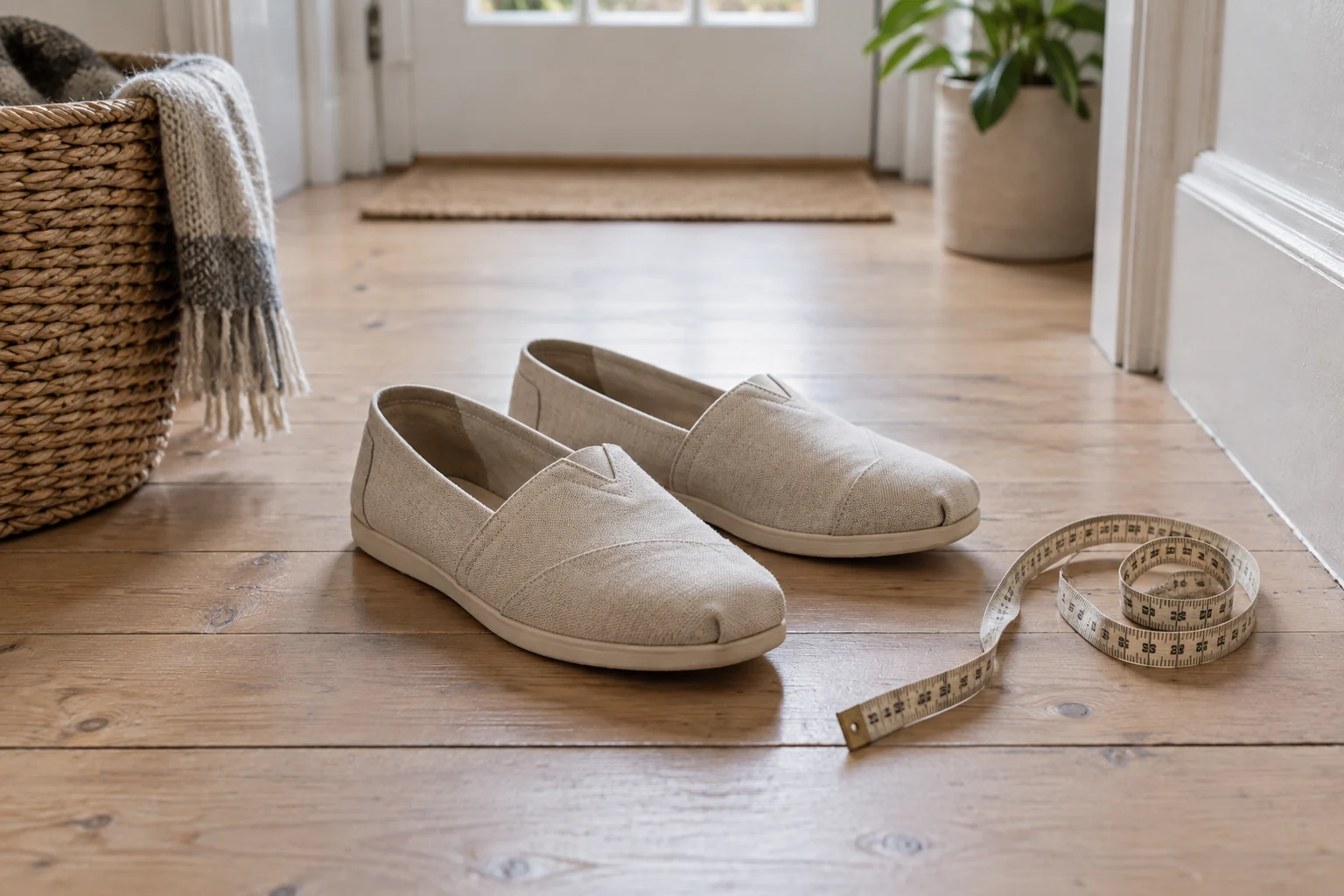
Write down the real use: occasional indoor wear, a regular walk to work or something else. Then assess the style against that use. A lightweight casual slip-on should not be assumed to provide every feature you would want from footwear for a different activity.
Check the seller's current sizing information and return arrangements. When trying shoes, use the socks you expect to wear and follow the retailer's instructions for keeping a returnable item in suitable condition. If the fit is wrong, the company story cannot make the pair comfortable.
Think about the conditions in which you will wear them and the care advice available. Ask how the specific material should be cleaned and dried. Do not assume a shoe can go into a washing machine simply because part of its upper looks like washable fabric.
Compare care and repair realistically
For a pair you already own, identify the problem before deciding to replace it. A local repairer may be able to advise on a fastening, seam or sole issue, but repair options depend on construction. Ask for an assessment rather than promising yourself that every shoe can be resoled.
For a new purchase, clear care information and a practical support route are useful. Save the product description and instructions with the receipt. If a take-back or resale programme is advertised, check whether it is available in the UK and whether your item qualifies; a global brand's programme may operate only in certain markets.
Build a comparison you can explain
Put each shortlisted pair in a simple table: purpose, fit, component materials, price, care, repair possibilities and supported company claims. Leave unknown fields visible. Avoid inventing a numerical ethics score that makes unlike kinds of evidence appear directly comparable.
You may decide that a pair meets your needs, that a different product is clearer on a priority, or that the shoes you own can remain useful. The worthwhile outcome is a decision about the actual item, informed by current evidence, rather than a verdict borrowed from an old slogan.

Questions about this article or a correction to suggest? Get in touch. Read more about our editorial approach.