A sustainability claim can be accurate, incomplete or too vague to help. The challenge is often not spotting an obvious falsehood, but working out whether a narrow fact is being presented as a much broader promise.
Use five questions: what is claimed, what does it cover, what supports it, which conditions apply and how relevant is it to your decision? You do not have to investigate every supplier to notice when the wording and evidence fail to connect.
1. What is the actual claim?
Start by rewriting the statement in plain language. “Conscious collection” does not tell you much about an item. A stated percentage of recycled material in a named component gives you a more specific proposition to examine.
Look at the overall impression as well as the sentence. Colours, leaves, badges and collection names can encourage an assumption that is not spelled out. Ask what you would believe after a quick glance, then check whether the supporting information really establishes it.
The CMA's Green Claims Code guidance explains the importance of clear, accurate fashion claims. For your own shopping, the useful habit is to identify the precise statement before deciding whether you trust it.
2. Does it describe the whole item or one part?
Check whether the claim refers to the outer fabric, lining, filling, packaging or complete garment. A statement about a recycled box is not a statement about the clothes inside. A material claim on one component should not silently expand to every component.
Percentages need a clear basis. If a product says “50% recycled”, ask 50% of what. If the explanation refers to a fibre blend, compare it with the full composition rather than assuming the item is entirely made from recovered material.
The same distinction applies to a brand's activities. A repair service for one range does not establish the same service for all products, and a company target does not necessarily describe present performance.
3. What evidence supports it?
Find the source and identify what kind of information it is. A company's policy, a supplier document, a certificate and an independent test report can all be useful, but they establish different things.
If a certification is mentioned, use the scheme's official information to understand its scope and checking route. For example, GOTS's official labelling guidance describes product-specific certification information. A reference to certified fabric does not automatically establish the certification status of every finished item.
Look for dates and a connection to the product. An authentic report about a different material or production period may not support the claim you are reading. If the link is missing, a reasonable question is: “Which part of this evidence applies to this product?”
4. Is there a comparison or condition hidden inside it?
“Uses less water” needs a comparison: less than which process, product or earlier version? “Recyclable” needs a practical route and relevant conditions. “Designed to last longer” needs an explanation of what was assessed or changed.
Do not fill in those details yourself. A broad claim can sound persuasive because the reader supplies the most favourable interpretation. Leave the claim incomplete until the seller provides the missing basis.
For take-back or resale services, check geography, eligible items and current terms. A programme in another country may not be available for your UK purchase. A future intention should not be treated as a service you can use today.
5. Does the claim help with your actual decision?
Even a well-supported statement may address something other than your main need. A verified material characteristic will not fix an uncomfortable fit, and a giving programme does not establish how a specific shoe can be repaired.
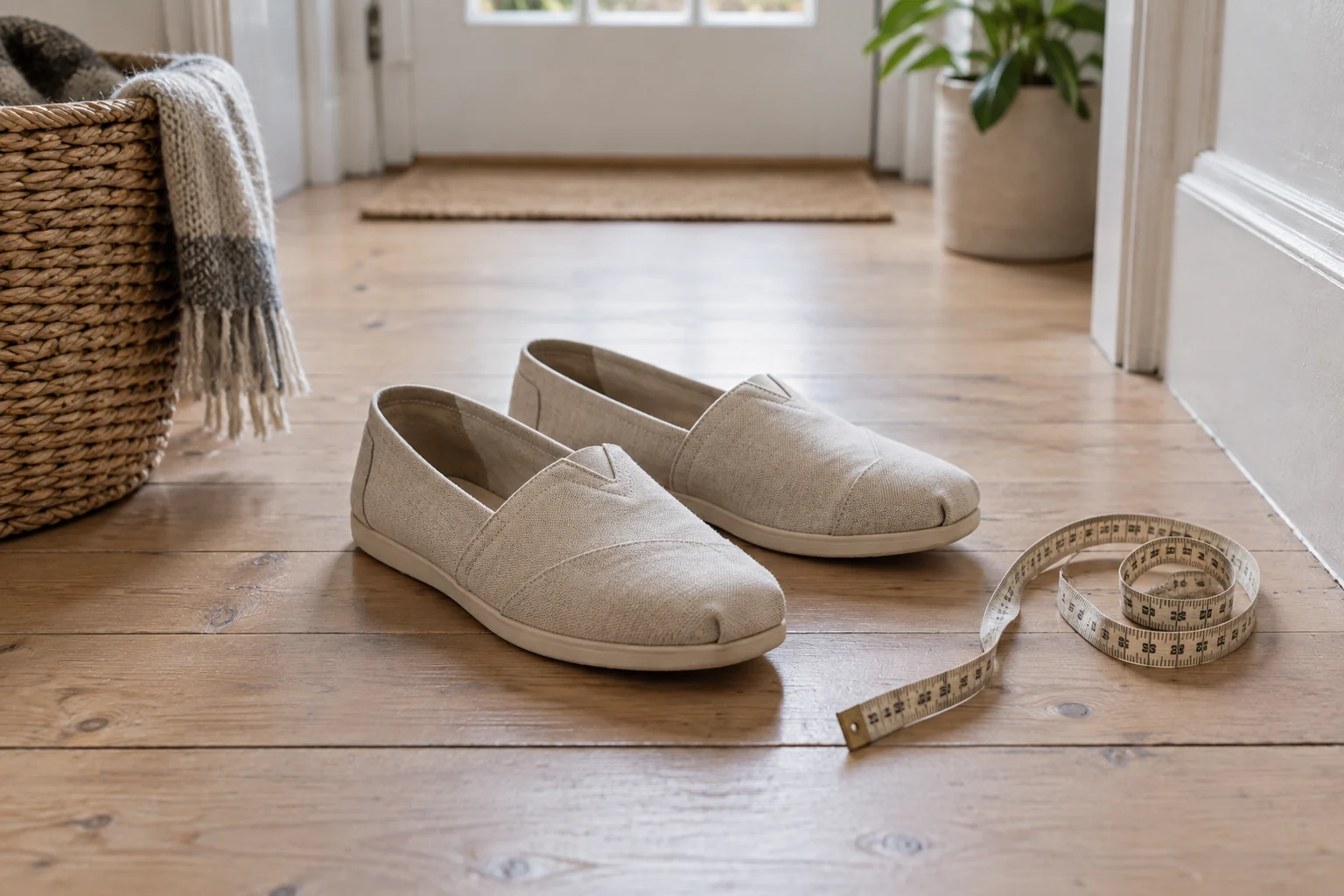
For an example of separating those questions, see our TOMS footwear guide. It considers company reporting and product-level questions independently, without pretending that one piece of information supplies an overall ethical score.
Decide which issues are most important for the purchase: perhaps animal-derived materials, a particular sourcing scheme, easy care or the ability to repair. Then evaluate the relevant evidence rather than collecting positive-sounding statements that do not change the practical choice.
Use an uncertainty column
A simple note can contain the item, claim, source and what remains unknown. “Clear”, “partly explained” and “not established” are often more honest descriptions than a numerical sustainability rating you cannot substantiate.
Do not assume a missing answer proves wrongdoing. A small retailer may need time to obtain information. Equally, do not treat a confident tone as evidence. The quality of the answer matters more than how reassuringly it is delivered.
If you contact a seller, ask one specific question at a time and save the reply with the product description. That makes any later clarification easier to understand.
Keep the purchase in perspective
You can make a reasonable choice without resolving every issue in the clothing industry. A supported claim can be one positive factor; an unanswered question can remain a limitation. Neither requires replacing useful clothes you already own.
The purpose of the checklist is to slow down the jump from attractive wording to assumed proof. Once the statement, scope and evidence are clear, you can decide whether the actual garment suits your needs and budget.

Questions about this article or a correction to suggest? Get in touch. Read more about our editorial approach.