Denim is often sold through its colour, cut and finish, but a useful pair of jeans also needs to fit your movements, suit your care routine and withstand the places where you put it to work. There is no single fabric weight or price point that guarantees that result.
Whether buying new, second-hand or deciding what to do with a worn pair, look at the complete garment. The composition, construction and condition are more informative together than a fashionable wash name.
Start with the movements you make
Try sitting, walking, bending and reaching in a way that reflects everyday use. Check the waist, rise and the room through the seat and thighs. A pair that feels acceptable for a moment in a fitting room may be uncomfortable after a commute or an afternoon at a desk.
Do not rely on a promise that an unsuitable fit will definitely transform with wear. Ask about the specific product if the seller describes how it may change, and distinguish that information from a general assumption about denim.
For an online or second-hand purchase, compare actual measurements with a pair you wear comfortably. Note how the measurements were taken and whether the item has been altered. A familiar size number is useful only when it corresponds with the garment in front of you.
Read the composition and inspect the construction
Check whether the fabric is all cotton or contains other fibres, including a stretch component. Then assess how it behaves in the finished garment. A blend may feel very different from another fabric carrying a similar headline description.
Look at pocket corners, belt loops, inner-leg seams, fastenings and hems. For a used pair, examine the seat, knees and areas where the thighs rub. Small, localised wear is a different repair proposition from fabric that has become thin across a large area.
WRAP's work on clothing durability distinguishes the assessment and testing needed to improve garment life. A shopper's visual check is useful, but it cannot establish a guaranteed number of wears or replace those tests.
Use the item's care instructions
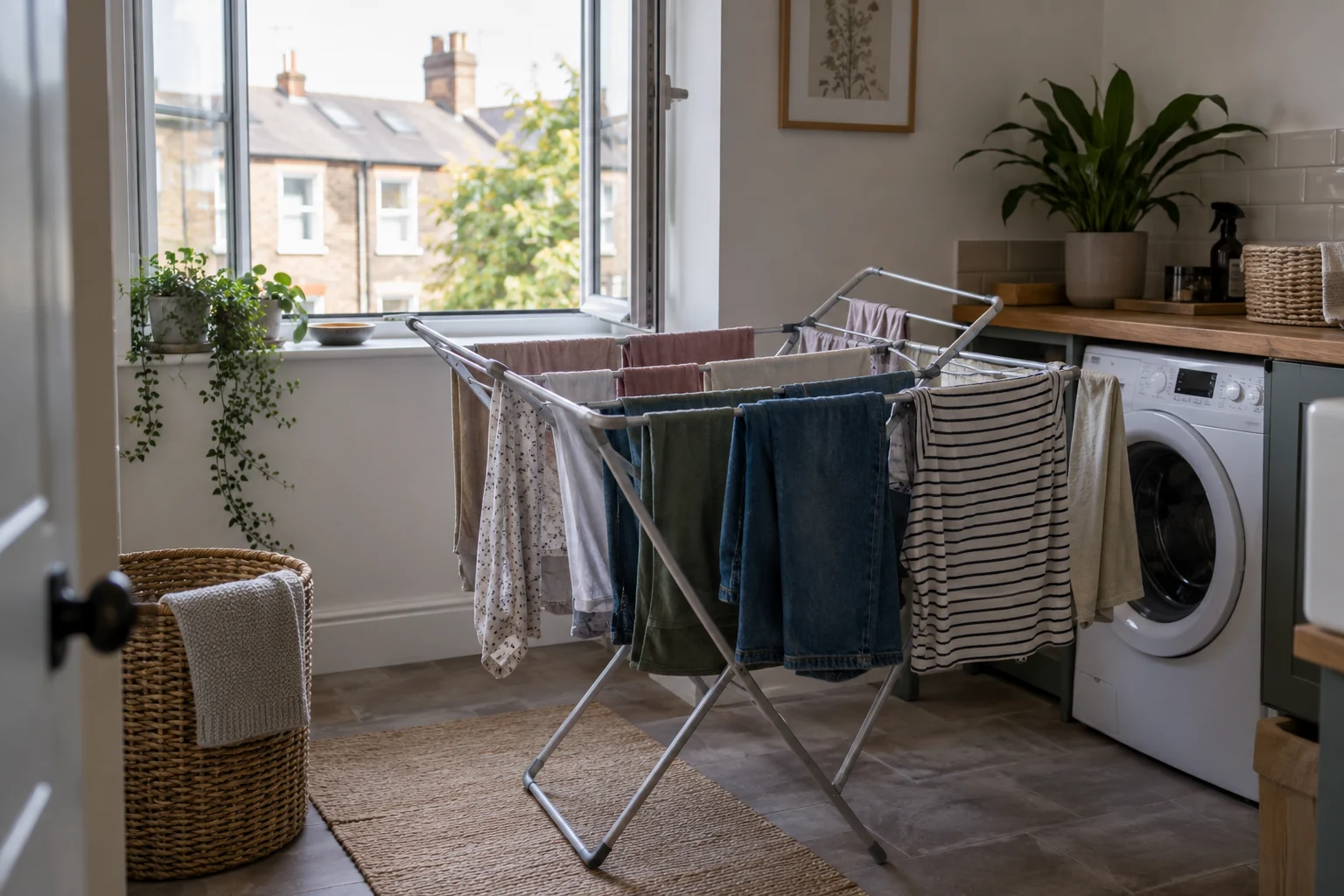
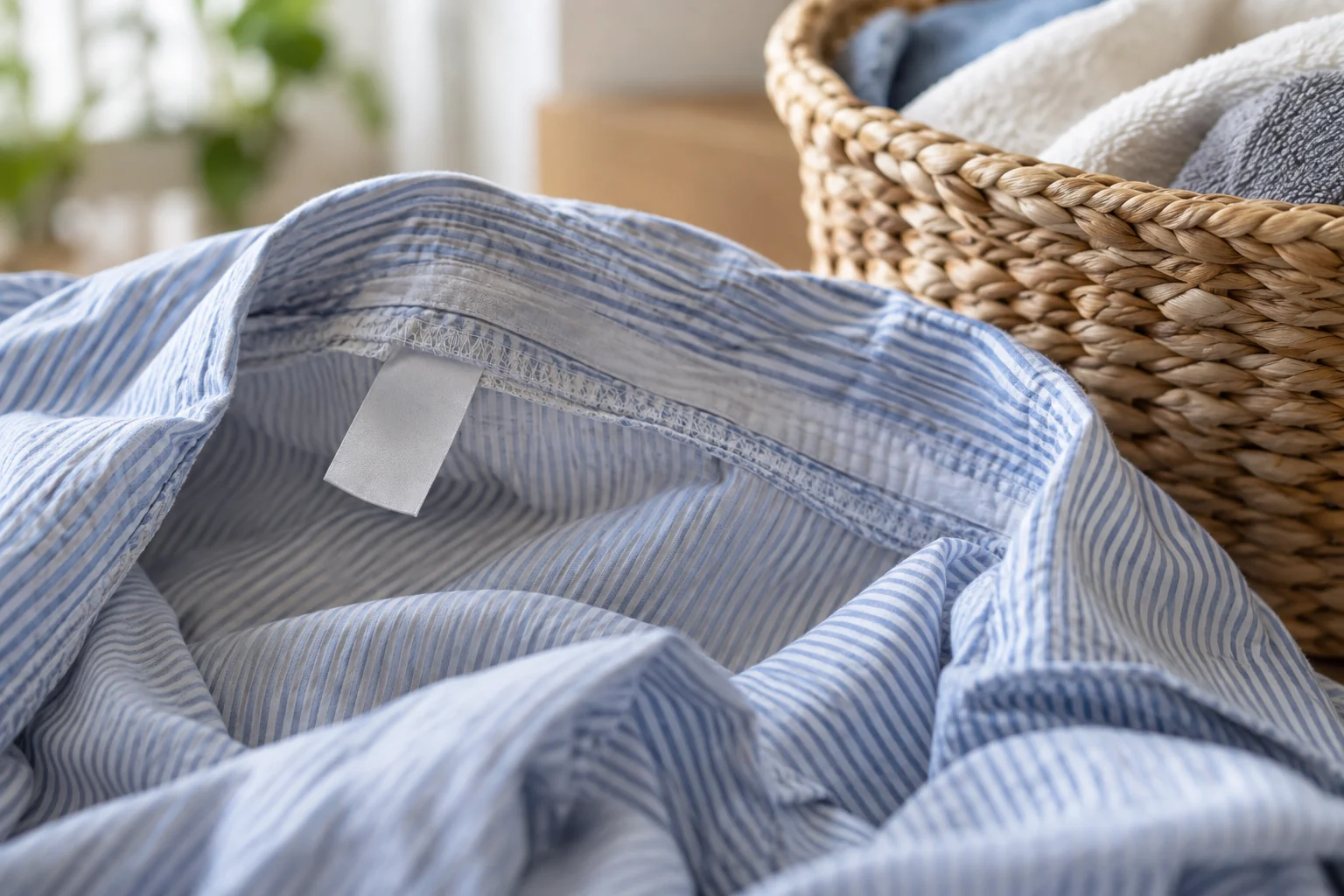
Check the garment label before choosing a wash or drying method. The Clevercare symbol reference can help decode it. Denim is a fabric category, not permission to apply one treatment to every pair of jeans.
Consider the full garment, including trims, coatings or decorative finishes. If the maker provides additional advice for that particular product, keep it with a photograph of the care label. Avoid internet rules such as never washing any jeans, or assuming every pair can tolerate the hottest or shortest programme.
Wash according to need and appropriate hygiene, using a compatible load and detergent instructions. If colour transfer is a concern raised by the manufacturer, take the stated precautions. Do not assume a dark fabric is safe against every pale surface merely because it has been washed once.
Notice wear before it becomes a large hole
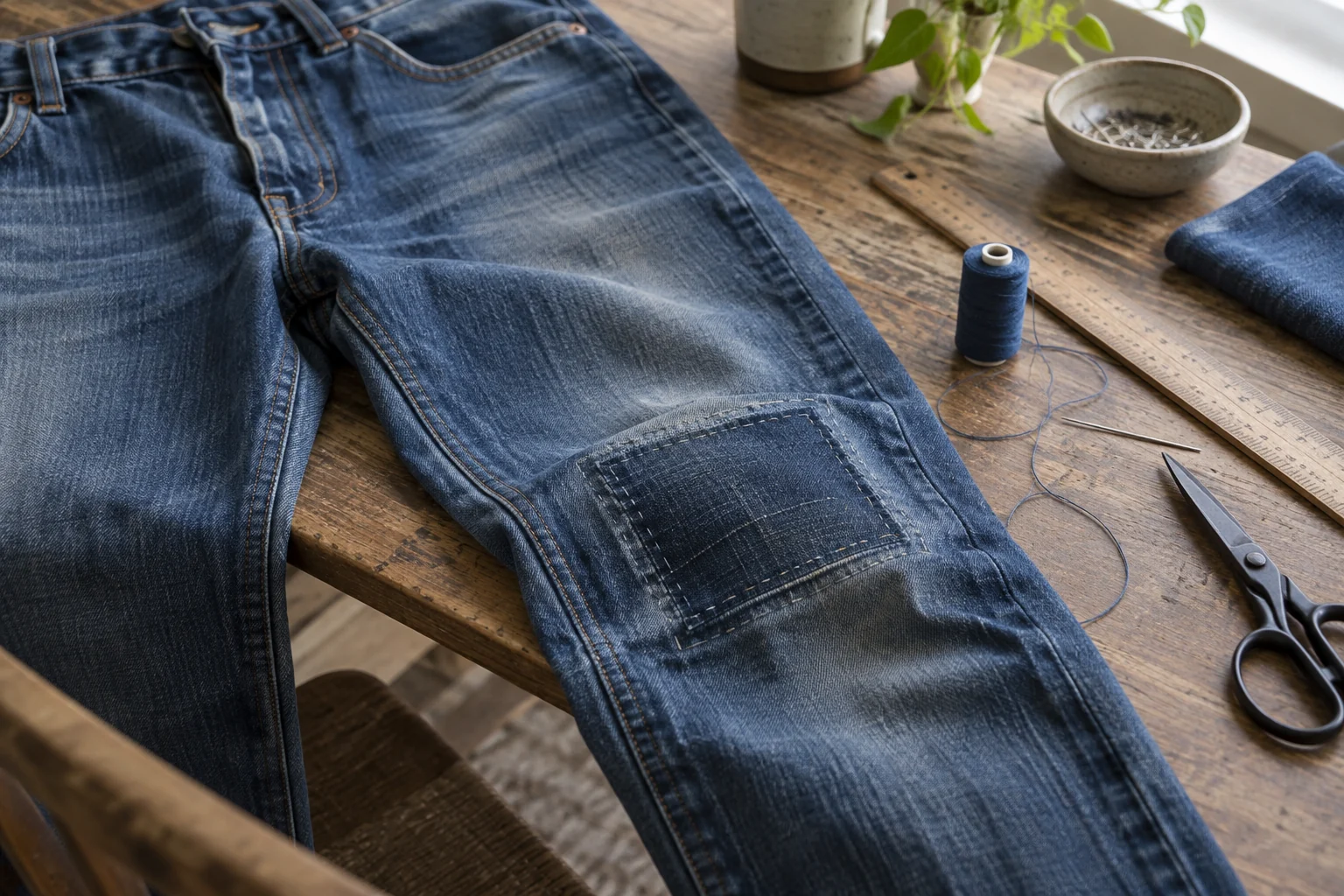
Turn the jeans inside out occasionally and inspect areas that experience friction. A repairer may have more options when surrounding fabric is still sound. Waiting until a broad area has disintegrated can make a discreet or durable repair harder.
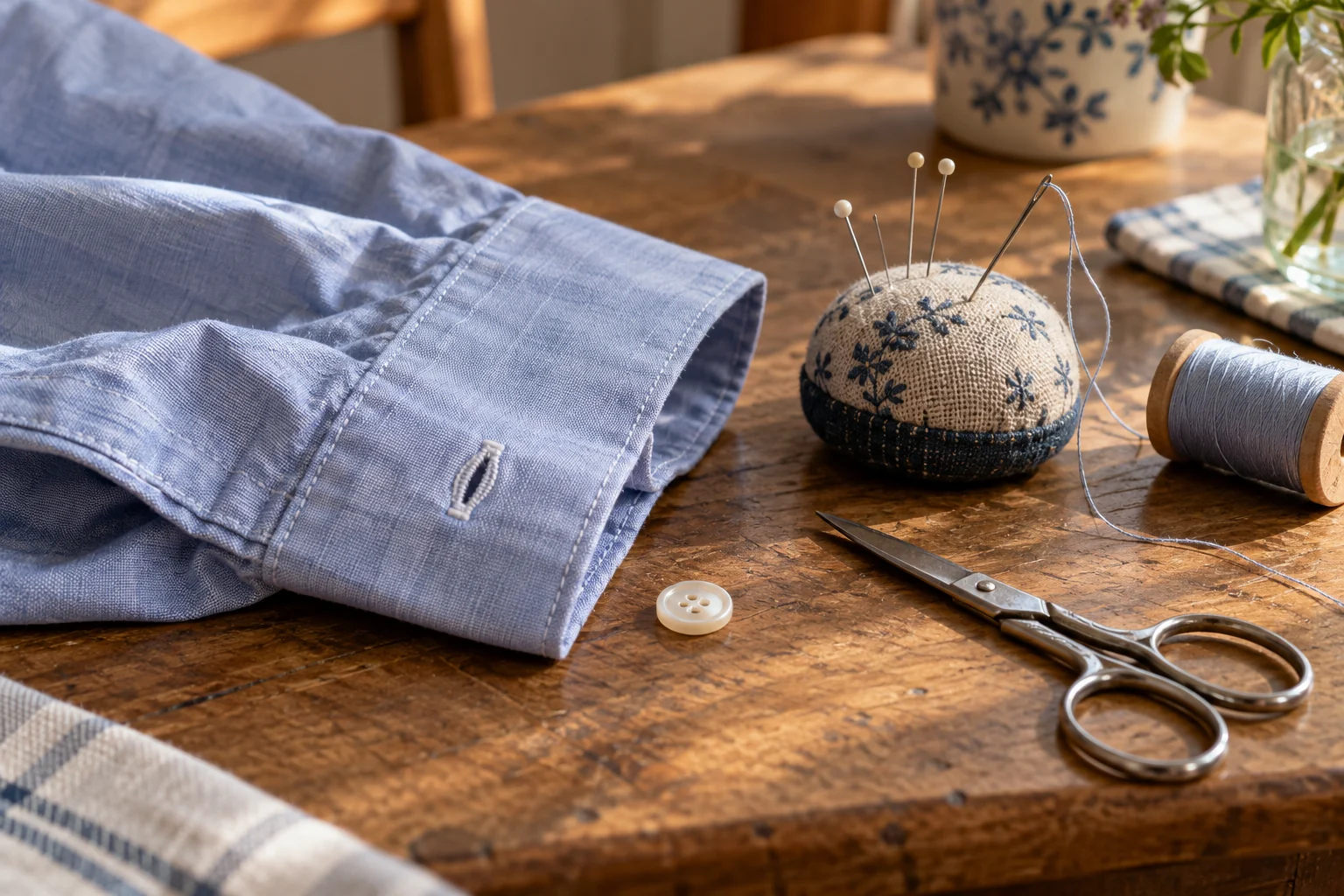
Photograph the area and ask what kind of repair is realistic. Options may include reinforcement, darning or a visible patch, depending on the fabric and damage. The right choice also depends on what appearance and feel you are comfortable with.
For a home repair, practise on spare fabric and avoid making the repaired area much stiffer than its surroundings. Secure a patch into sound material, not only into the already weak edges. Our small repairs guide is a starting point, not a substitute for a specialist assessment of extensive damage.
Compare repair cost with actual usefulness
A repair is easier to value when the jeans already fit well and get regular wear. Include comfort, familiarity and the time needed to find a replacement, as well as the repair price. Sentimental value can be part of the decision without pretending it is a measurable environmental saving.
If the fit has never worked, a repair may return the garment to a condition in which it still goes unworn. Ask whether an alteration is feasible, or whether a different reuse route makes more sense. Not every item needs to be kept indefinitely to justify its original purchase.
Make alterations deliberate
Before shortening a leg or changing a waist, confirm the intended fit with the shoes and layers you will wear. Ask how the alteration will affect the original finish and whether the quoted method meets your expectations.
For second-hand jeans, check for earlier alterations. A previously shortened hem may leave less fabric available for later changes. Photographs of the inside construction can help an alteration specialist advise before you buy.
Keep one pair's lessons for the next purchase
Note what made a pair useful: a comfortable rise, practical pockets, a care routine you could manage or a repairable area. Also note what failed. This personal record is more relevant than adopting somebody else's ideal denim specification.
Choosing, caring for and repairing denim works best as one continuing process. The aim is not a pair that never changes, but one whose fit and condition you understand well enough to keep using it sensibly.

Questions about this article or a correction to suggest? Get in touch. Read more about our editorial approach.