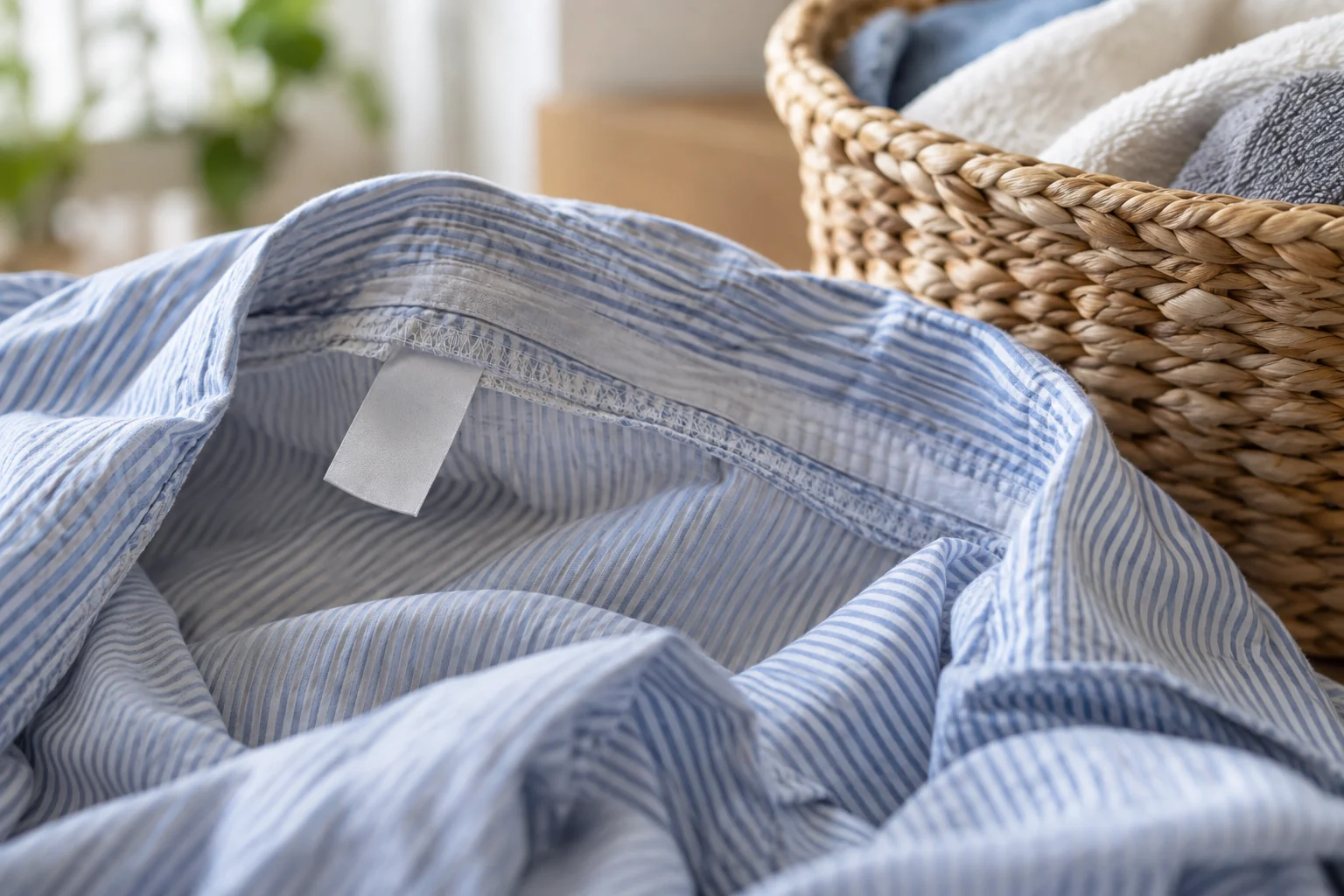
Care labels are easiest to use when you read them before the laundry pile reaches the machine. They describe the treatment appropriate for the complete garment, which can include linings, prints, trims and finishes as well as the main fabric.
If you have ever selected a programme from the word cotton and then discovered an awkward lining or decoration, this distinction is useful. Start with the garment's instructions, then choose a machine setting that fits them.
Recognise the five main groups
The Clevercare care-symbol index provides the reference images and explanations. The main groups concern washing, bleaching, drying, ironing and professional cleaning. Use the complete group of symbols rather than reading only the first washing temperature.
A wash tub relates to washing, a triangle to bleaching, a square to drying, an iron to ironing and a circle to professional care. Marks within or beneath a symbol refine the instruction. A crossed-out treatment should not be replaced by a guess that a gentler version must be safe.
Do not rely on a badly remembered chart when a symbol is unfamiliar. Open the reference and match it carefully. The cost of checking is small compared with discovering that a favourite item cannot tolerate the treatment you assumed.
Read the whole garment, not just its fibre
Two garments with similar fibre labels can have different care instructions. Their construction, dyes, coatings, decorations or linings may differ. Follow the item-specific instructions rather than applying one routine to everything in a material category.
Look for accompanying written instructions too. A detachable part may need separate treatment, or a garment may specify a particular drying arrangement. If the label is missing, use the manufacturer's information for the exact item where available; a similar-looking product is not necessarily an adequate substitute.
For a valuable or difficult item, ask an appropriate professional cleaner rather than experimenting. Explain what you know about its materials and any previous treatment. An uncertainty about the label is useful information to share, not something to hide.
Turn the instructions into sorting decisions
Set aside items needing different care before filling the machine. Then consider colour, soiling and compatible treatment. A load should suit the programme and machine capacity, not simply consist of everything that fits through the door.
For a shared household, use a small separate basket or bag for garments requiring attention. Keep the system easy enough that people use it. An elaborate set of categories is not useful if everything ends up in the same wash when the week gets busy.
Photograph labels on frequently confusing items. An album called “clothes care” can be easier to consult than trying to read a faded tag in poor light. If you remove a label for comfort, keep its photograph connected with the item.
Check the machine programme as well as the number
A programme includes more than water temperature. Mechanical action, spin and other settings can differ. Read your machine's manual so you know what its programme names mean, especially for delicate or specialist items.
Do not assume a short wash is appropriate for every lightly worn garment, or that a low-temperature setting resolves every other care restriction. Likewise, the temperature printed on a label should not be read as an instruction to apply the most intensive possible programme.
Use detergent according to its instructions and the load. If your item needs a particular product type, account for that before washing. Avoid improvised combinations of cleaners; a routine based on the garment and product instructions is easier to repeat safely.
Plan drying before starting the wash
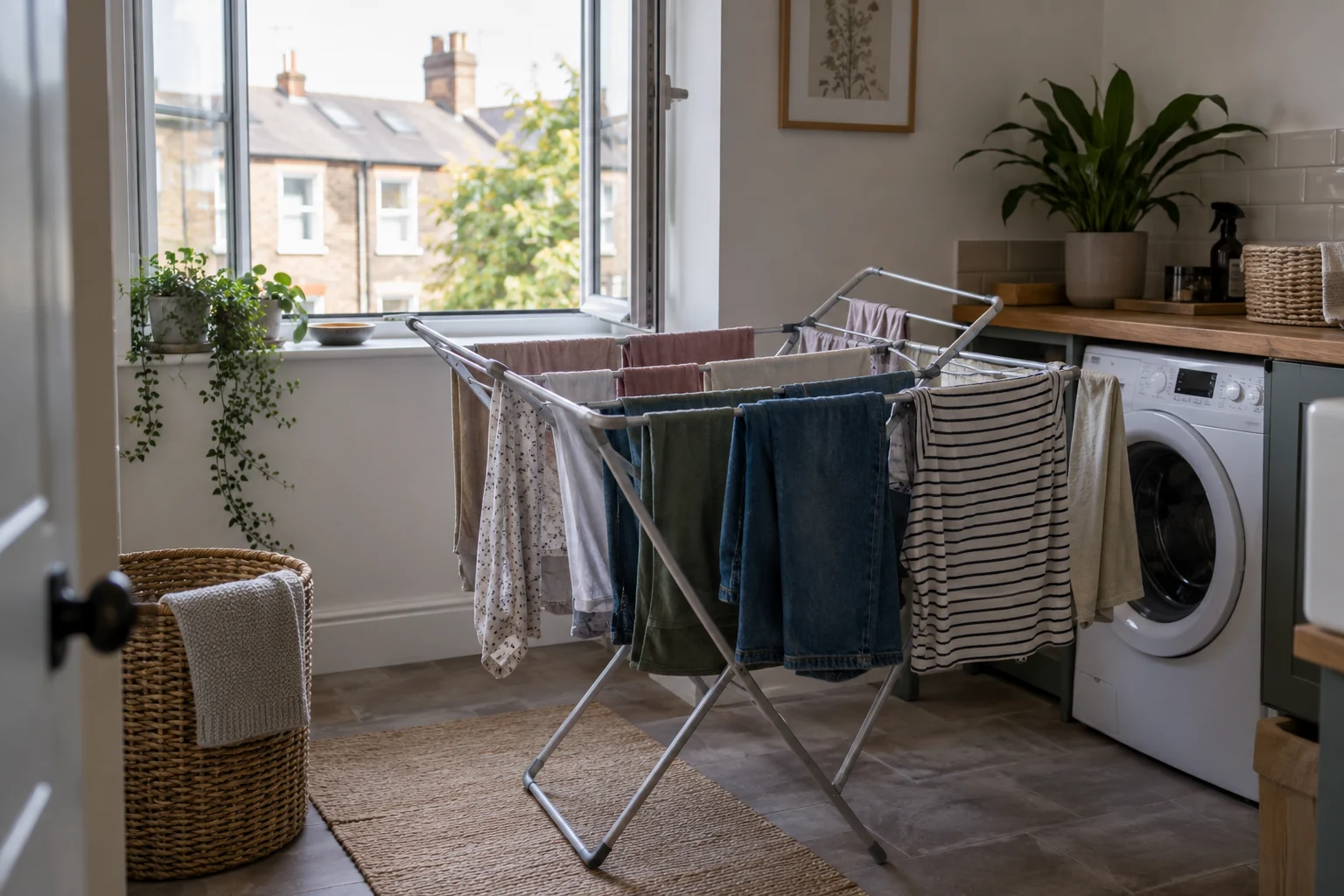
Check where the item will go afterwards. If it needs flat drying or cannot be tumble-dried, make space first. Leaving wet clothes in a heap while looking for room is an avoidable problem.
Use suitable support and ventilation for the arrangement the label permits. Do not assume every wet knit can be hung by its shoulders or every garment can tolerate direct heat. If there is a shade-drying instruction, include that in your plan too.
In a small home, it can be more practical to schedule a manageable load than wash everything at once. This is a household organisation choice, not a promise that one routine produces a fixed environmental saving.
Make repairs part of the care check
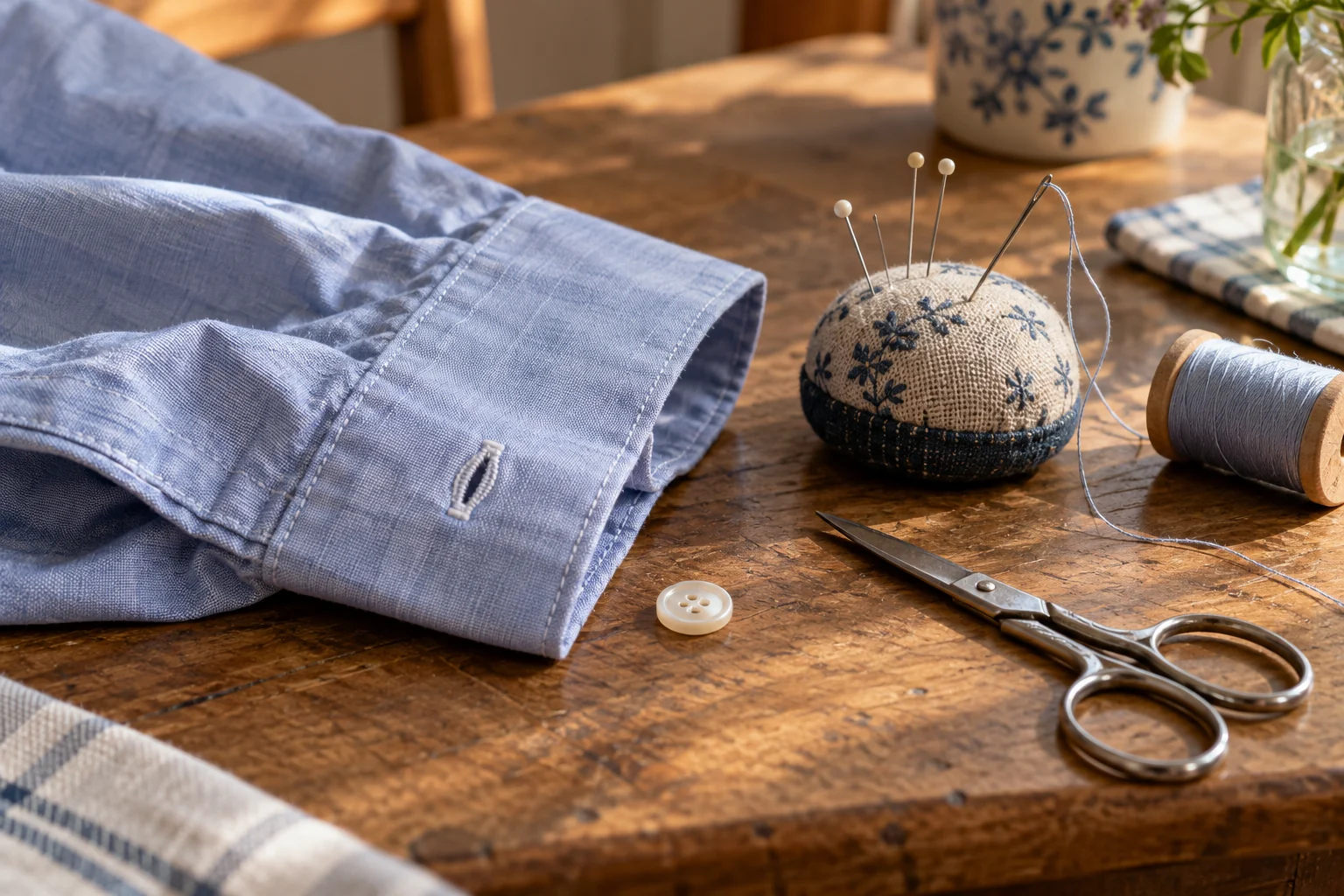
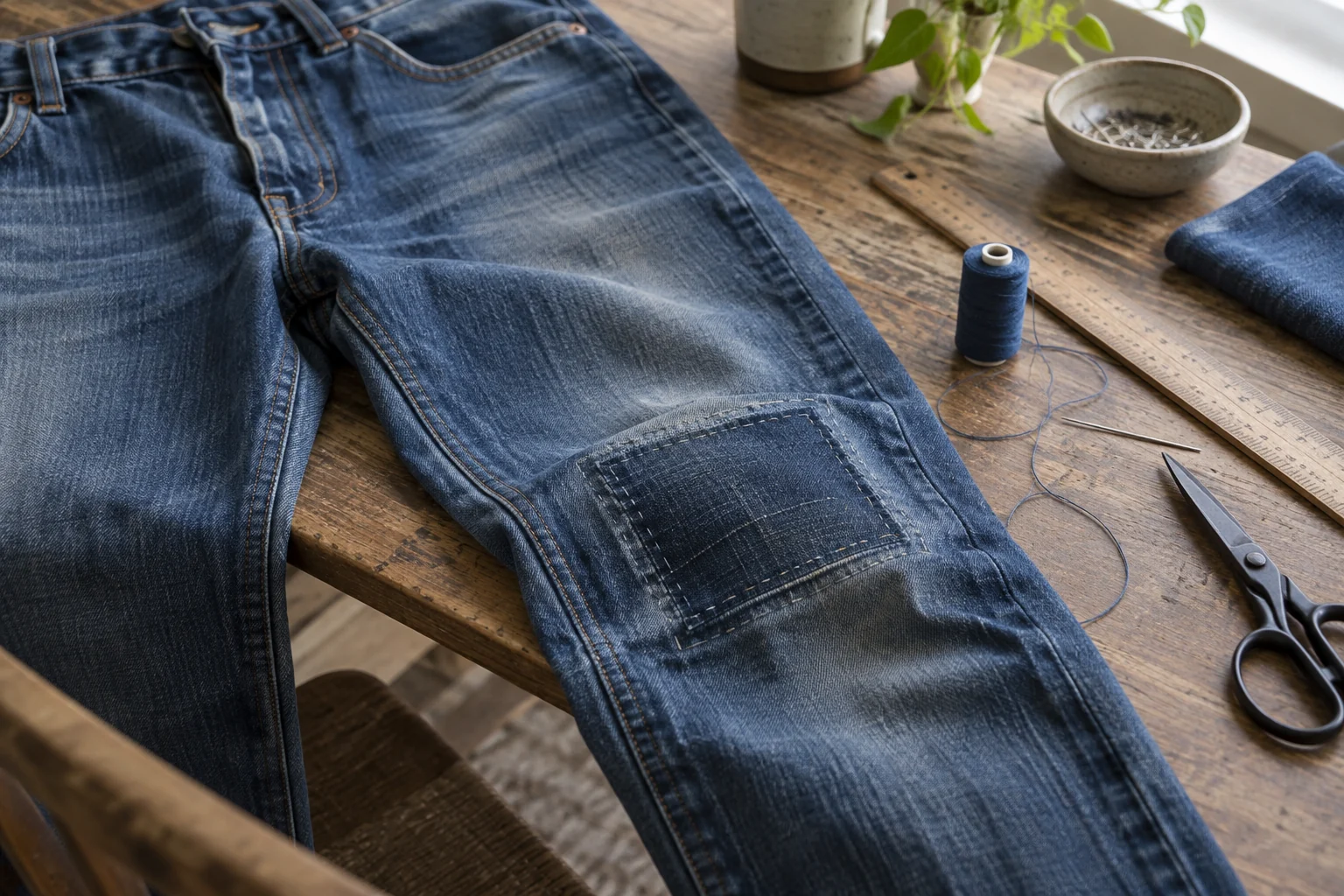
Before treatment, look for loose buttons, open seams or other faults that need attention. A small problem is easier to deal with when noticed promptly. Our repair guide explains some manageable jobs and when to seek help.
WRAP's clothing resource places care and continued use within the wider clothing picture. You do not need to memorise an environmental statistic to see the value in keeping a useful item wearable.
Keep one dependable reference
Save the official symbol index and your machine manual somewhere accessible. Use them when the label is unfamiliar, and keep the routine straightforward enough for ordinary busy days.
Care instructions are most valuable when they influence the whole process: choosing the item, sorting it, treating it and putting it away. Reading them once at the right moment can prevent a great deal of unnecessary guesswork later.

Questions about this article or a correction to suggest? Get in touch. Read more about our editorial approach.